Get Full Government Meeting Transcripts, Videos, & Alerts Forever!
Get email alerts on the Office Of Finance Fy26 topic
No spam. Unsubscribe anytime.
Office of Finance outlines FY26 workplan, tax-sale changes and administration of public‑safety tax credit
Summary
The Office of Finance presented its FY26 proposed budget, discussed a transition to a new treasury system, recent state tax-sale changes, and the initial rollout of the Public Safety Officer real property tax credit; staff said they have processed hundreds of applications.
The Office of Finance presented its FY26 proposed budget to the Government Operations and Fiscal Policy Committee on May 1, outlining staffing, system modernization and program administration priorities and responding to council questions about tax‑sale thresholds, abandoned properties and the Public Safety Officer real‑property tax credit.
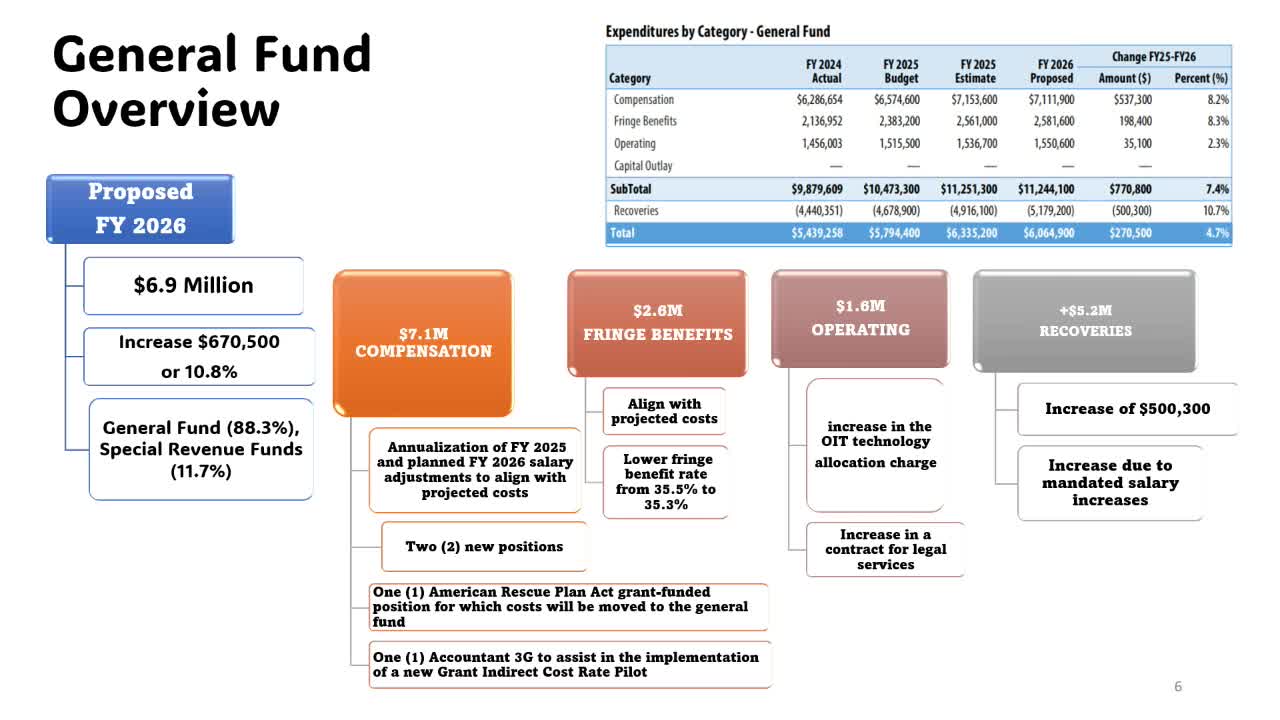
Finance staff said the FY26 proposed budget for the office is approximately $6.1 million (general fund portion) with compensation increases driven by annualized salary adjustments and two new positions: one ARPA-funded role being moved to the general fund and one accountant position to support a grant indirect-cost-rate pilot. The office noted revenue increases tied to mandated salary changes and reported vacancy and attrition levels similar to other administrative offices.
County staff described pending state changes to tax‑sale rules that will raise the threshold for residential owner‑occupied properties to $1,000 (from $500) and will cap tax‑sale interest for such properties at 10% (from a prior 20% level). Staff said the state is also centralizing the remittance process for short‑term rental and intermediary hotel taxes; intermediaries will remit collected taxes to the state, which will then distribute to counties.
On program administration, finance staff reported they processed roughly 497 applications for the new Public Safety Officer real‑property tax credit; 51 were denied and about 39 remained pending during the rollout. Communications issues initially caused confusion about eligibility — county staff said they clarified that the credit is for public‑safety officers employed by Prince George’s County, not for other categories of security or state employees who live in the county.
Committee members also raised concerns about abandoned properties and foreclosure trends. Finance staff said many parcels labeled “abandoned” may still have taxes paid by banks or others and that the office will provide more detailed foreclosure data to the council. The office reiterated that it is moving a multi‑year transition off legacy billing and collection systems into a modern treasury management system with a planned FY28 go‑live for property tax administration.
No committee vote on the finance budget was taken; staff said they will provide additional data on tax‑sale volumes, abandoned properties and reserve levels as follow‑up materials.