Get Full Government Meeting Transcripts, Videos, & Alerts Forever!
Get email alerts on the Neighborhood Grants topic
No spam. Unsubscribe anytime.
Olympia City Council approves 2025 Neighborhood Matching Grant awards totaling about $33,000
Summary
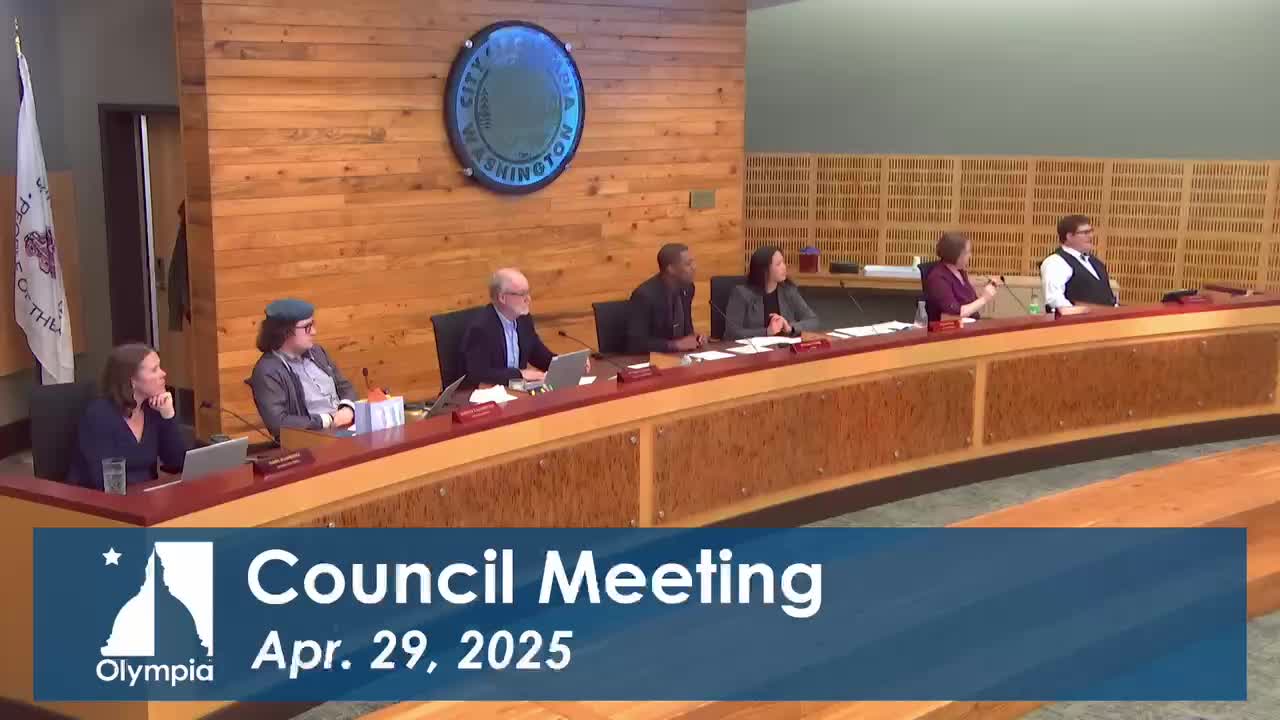
The council voted unanimously April 29 to adopt staff recommendations for the 2025 Neighborhood Matching Grant awards and authorize contract completion. Staff and council discussed program rules, timing, private-property limits and ways to expand participation.
Olympia City Council on April 29 unanimously approved staffrecommendations for the 2025 Neighborhood Matching Grant awards, authorizing contracts to distribute the program funds.
The grants program, run by Community Planning and Development, is reimbursement-based and requires a 50% match from each registered neighborhood association, which can be met with volunteer time, cash or donated materials. Brittney Gillia, an associate planner in CPED, told the council the 2025 recommended awards total $32,480 with an administrative fee of $553 for the online grants platform Submittable, and the adopted 2025 budget for the program is $33,000.
The program funds small neighborhood-led projects such as block parties, park cleanups, graffiti abatement, landscaping and outreach. Gillia said neighborhoods used roughly $28,000 of the prior cycle to leverage about $89,000 in volunteer time and donated value; for 2025 the recommended awards and match would leverage roughly $105,000 of value for the city.
Council discussion and public comment focused on how the program is administered and how to expand access. Peter Gutchen, vice president of the Northeast Neighborhood Association, asked the council to allow part of his group's grant to fund art workshops with Roosevelt School fifth graders and to install student-created story flags in a pocket park. Gillia said the review panel considered the request but concluded the submitted application did not demonstrate strong alignment with the program priorities this cycle.
Councilmember Vanessa Gilman moved the motion to approve the recommended proposals and to authorize contract completion. The motion passed unanimously.
Councilmembers and staff discussed several recurring issues: whether the program can fund projects on private property, how to support multi-year or recurring projects that stretch beyond the grantspending window, and how to reach neighborhoods that are not yet registered associations. Gillia and other staff said the program timeline is difficult to change this year because of budget, staff capacity and grant-software logistics, but suggested short-term alternatives including doing planting projects in the fall or requesting a one-time extension into the first quarter of the following year.
Councilmember Tim Vanderpool, who served on the review committee, said some applications were not fundable because of legal questions about using public funds on private property and urged staff and council to explore public-domain alternatives such as plazas or formally dedicated public areas that neighborhoods could use. Councilmember Cooper said the council should consider tying future funding to a per-capita formula.
The council directed staff to finalize contracts for the approved awards and to return with improvements to outreach and program mechanics in future budget and program reviews.