Get Full Government Meeting Transcripts, Videos, & Alerts Forever!
Get email alerts on the Federal Worker Assistance topic
No spam. Unsubscribe anytime.
Committee holds bill to create emergency aid for laid-off federal workers after questions on scope and cost
Summary
Prince George's County Government Operations and Fiscal Policy Committee moved to hold CB-24, the Federal Worker Emergency Assistance Act, after members and administration staff sought clearer program details, eligibility limits and fiscal estimates. Public speakers including a nonprofit CEO and a recently RIF'd federal manager urged passage.
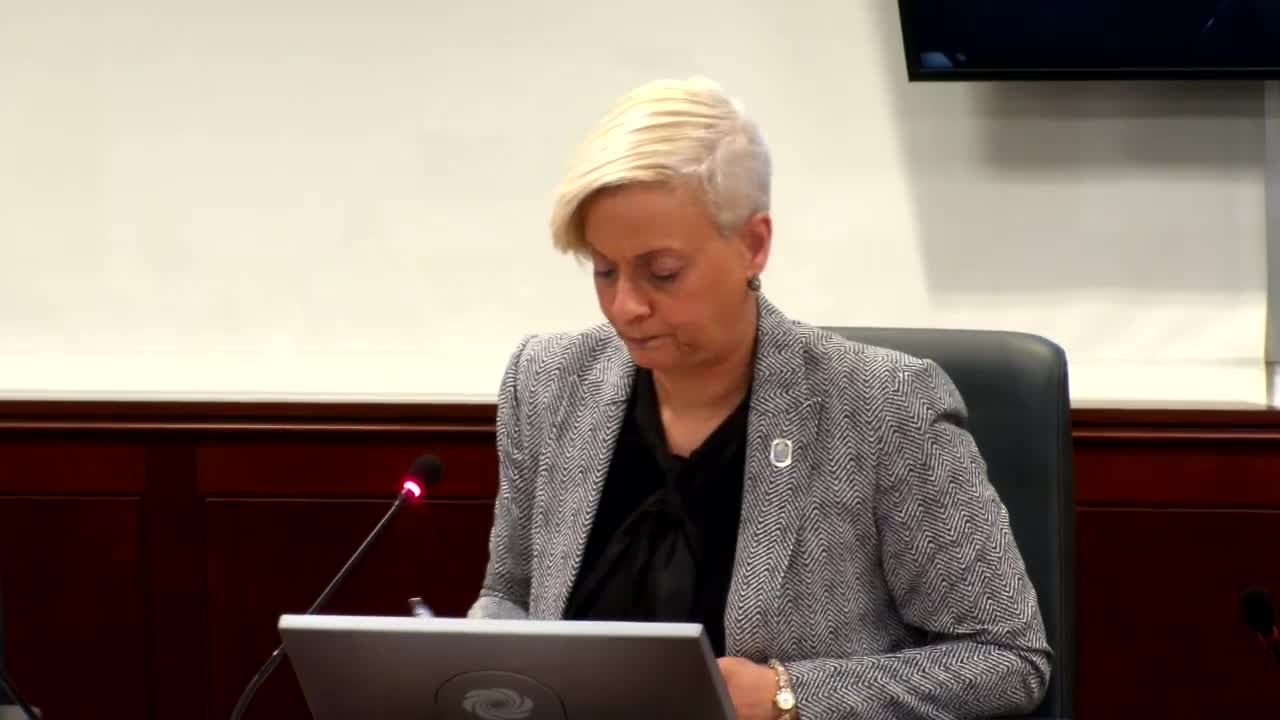
The Government Operations and Fiscal Policy Committee on May 1 held CB-24, the Federal Worker Emergency Assistance Act of Prince George's County, saying council members and county administration officials need more time to clarify eligibility, the program’s administrative costs and the fiscal estimates. Chair Ingrid Watson and committee members voted to hold the measure for further work.
The ordinance would create emergency financial assistance, job-placement support and essential services for laid-off federal workers living in Prince George’s County. “The legislative intent is to ensure stability for those among the 30,000 federal workers whose livelihoods have been impacted here in Prince George's County,” presenter Chuck Tuck said in the committee overview.
Supporters at the hearing said the county needs a targeted response for federal workers caught by recent reductions. Crystal Faison, president and CEO of Shepherd Energy, told the committee she “unequivocally support[s] CB 24” while urging that long-term energy-cost inequities also be addressed. Demetria Lisenby, a 28-year federal employee notified April 1 that her division was eliminated, said the bill’s job-placement and workforce-training provisions are “critical and a compassionate step forward” for displaced workers.
County administration staff and budget analysts pressed for more specificity. Akinda Skinner of the county executive’s office asked the committee to clarify the expected number of eligible residents; she noted the fiscal analysis included different figures (a $16.25 million estimate tied to 16,250 participants and a higher projection tied to 30,000 affected workers). The administration also asked for information about the local implementation costs — for example, what Montgomery County paid to stand up comparable services — and for clearer language on the proposed property-tax deferment, including how it would interact with existing state deferral rules for seniors.
Policy analysts told the committee they provided ranges rather than a single eligibility count because the scope of possible federal separations is fluid and because certain programs described in CB-24 (for example, a food voucher program) currently lack programmatic detail and would require additional administrative resources. Council Member Begay, sponsor of the bill, said she intended the program to cover only workers who were unexpectedly laid off, not retirees or voluntary buyouts. “This bill was not made to just give out a check to anyone,” Begay said.
After discussion, a motion to hold CB-24 was moved and seconded so sponsors and the administration could negotiate details and funding. The clerk recorded the motion to hold as carrying 4–0.
What’s next: Council members said they want two to three weeks to meet with administration staff to clarify eligibility definitions, the structure of job-recovery supports, administrative costs and the mechanics of any property-tax deferments before returning the bill to committee.