Get Full Government Meeting Transcripts, Videos, & Alerts Forever!
Get email alerts on the City Budget topic
No spam. Unsubscribe anytime.
Budget Committee reviews mayor's $13.95 billion FY 2526 plan that eliminates 1,647 filled positions to close roughly $900 million gap
Summary
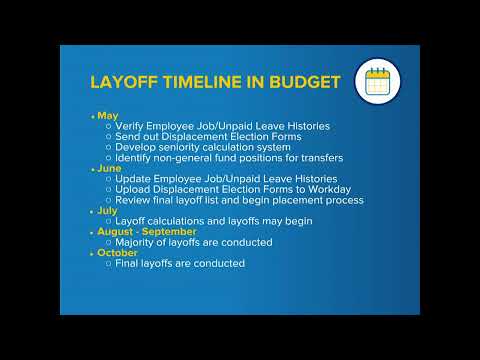
The Budget and Finance Committee reviewed the mayor's proposed FY 2526 spending plan, which relies on the elimination of 1,647 filled positions, special-fund shifts and department consolidations to close about a $900 million shortfall and restore reserves amid warnings of recession risk and a recent bond-rating action.
The Los Angeles Budget and Finance Committee spent the third day of hearings on the mayor's proposed Fiscal Year 2526 budget, a $13.95 billion spending plan that city officials say closes roughly a $900 million shortfall by eliminating hundreds of positions, shifting costs to special funds and increasing reserves.
The plan, presented to the committee by Matt Hale, deputy mayor for finance, operations and innovation, and reviewed in detail by City Administrative Officer Matt Szabo, would reduce the city's regular workforce and consolidate several departments and commissions while setting aside nearly $500 million in reserves and other one-time buffers. "The budget proposes the elimination of a number of positions," Hale said during the presentation.
Why it matters: The package is aimed at returning the city to structural balance but would shrink the workforce, slow some services and reorganize departments. Committee members repeatedly said they want alternatives that avoid layoffs, asked for memos quantifying trade-offs and warned that a recession or rising tariffs could undo projected savings and increase borrowing costs after a recent ratings action.
Key facts and proposals
- Size and shortfall: The mayor's proposed budget totals $13,950,000,000 and projects general-fund growth of about 0.36 percent; officials said closing the gap required "extremely significant and impactful decisions." Szabo told the committee the gap to close exceeded $900 million.
- Positions and savings: The proposal identifies elimination of 1,647 filled positions and 1,076 vacant positions. City staff estimated the eliminations generate roughly $282 million in near-term savings (about $151 million from filled positions and $131 million from vacant positions) and a full-year payroll reduction value of about $225 million for the filled positions if sustained.
- Reserves and one-time accounting: The proposed budget directs a large one-time appropriation to restore reserves: roughly $484 million (about 6.01 percent of general-fund revenue) in the reserve fund, about $208 million in the budget-stabilization fund and a $30 million unappropriated-balance reserve for midyear adjustments. The CAO said the plan also sets aside $200 million for liability claims and uses $263 million in one-time expenditures while counting $76 million in one-time revenues.
- Department consolidation and commission changes: The mayor's office proposes consolidating Aging, the Economic and Workforce Development Department and Youth Development into a new Community Investment for Families Department (CIFD), and recommends folding several commissions or eliminating others, including the Innovation and Performance Commission and the Climate Emergency Mobilization Office. The administration estimates direct-salary savings from the CIFD consolidation of about $5 million, plus non-salary efficiencies. Committee members pressed for details on operational impacts and for memos quantifying savings and service effects.
- Public safety and sworn staffing: The proposal does not include layoffs for sworn police or fire positions, the administration said. Civilian layoffs at LAPD and LAFD are proposed, however, and committee members urged caution, noting potential service and recruitment implications.
- Homelessness and related programs: The budget keeps funding for bridge housing, tiny-home villages, safe parking, and other homelessness programs and identifies $21 million in a general fund appropriation for Insight Safe; the administration said some homeless-related funding will be placed in unappropriated balances pending final council appropriation and anticipated county reimbursements tied to an Alliance settlement accounting.
- Unarmed Model of Crisis Response (UMCR): The CAO and mayor's office confirmed continued funding for the unarmed crisis response pilot at roughly $9.4 million for the coming year, with the CAO asked to provide a memo on costs and feasibility of citywide expansion.
- Procurement and staffing: The mayor's package recommends shifting most functions of the Office of City Procurement into the Bureau of Contract Administration. Committee members and staff warned the proposed eliminations could reduce technical support for small-business onboarding to the city's e-procurement system (RAMP) and asked for a memo on operational impacts and offsets.
- Capital and Olympic readiness: The CAO and departments flagged constraints on capital spending (the CTIP) and questioned whether proposed staff reductions would leave city crews unavailable to execute Olympic-related public-right-of-way projects. Members asked for project-level lists, timelines and whether projects could be delayed or contracted. The CAO cautioned that delaying capital work can raise future costs.
- Credit rating and recession risk: Szabo said S&P lowered its long-term rating for the city's general-obligation bonds and warned that a recession like past downturns would turn projected surpluses into deficits in the hundreds of millions. He presented a scenario in which revenue declines consistent with prior recessions would produce multi-hundred-million-dollar deficits in the out years absent additional structural changes.
Committee responses and next steps
Committee members repeatedly requested targeted budget memos from the CAO, CLA and departments: lists of revenue-generating positions proposed for cuts, the status and annual operating cost of road-map shelter sites, a project-by-project CTIP deferral list and an analysis of TOT (transient occupancy tax) risk tied to declining international travel. The chair submitted a formal memo request ("Memo 1") for the CAO and CLA to identify potential savings in the largest general-fund allocations.
Several members asked the CAO to map options to avoid layoffs if state aid or negotiated labor concessions arrive: deferred cost-of-living adjustments, position swaps, transfers of eligible positions into special funds or proprietary departments, targeted rescission of new staffing additions, and carefully structured furloughs or separation incentives. The CAO provided a menu of options, cautioning that one-time revenues should not be used to support ongoing payroll obligations.
A committee vote to restore $5 million for animal-services field positions was requested by members and the chair asked the CLA to draft a memo showing how that restoration would be applied to positions and operating accounts.
Quotations from the record
- Chairwoman (name not specified in transcript) said: "This is not a budget any of us would choose. Not me, not the members of this committee, and not the mayor."
- Matt Hale, deputy mayor for finance, operations and innovation: "The budget proposes the elimination of a number of positions, including, unfortunately, filled positions as we've all discussed already." (presentation on the mayor's balancing approach)
- Matt Szabo, City Administrative Officer: "The mayor's proposed budget makes the difficult but necessary reductions required to correct the structural imbalance the city faces due to economic headwinds and rising costs." (overview to the committee)
What the committee asked departments to deliver
- CAO: memos quantifying revenue risk (TOT), lists of revenue-generating positions proposed for elimination and options for transfers to special funds or proprietary departments to avoid layoffs. - CLA: a memo specifying which projects and programs are funded from two new general-fund line items tied to homelessness accounting and a plan for restoring animal-services field positions using unappropriated-balance funds. - Bureau of Engineering and public works: project-level schedules and staffing plans for transport, street-lighting and Olympic public-right-of-way improvements.
Context and caveats
The committee discussion repeatedly emphasized constraints the city faces from economically sensitive tax streams (hotel, sales and business taxes), rising liability payouts and pension and labor-cost pressures. The administration's outlook assumes the proposed staffing reductions remain in place through the four-year forecast and assumes no new unbudgeted labor costs beyond current contractual obligations; both assumptions were flagged by the CAO as key risks. Several members emphasized that any restorations must be replaced with structural reductions to avoid creating larger future gaps.
The council's budget deliberations will continue with additional committee memos and department-level hearings. Officials said they are monitoring the state budget process for potential relief and that midyear financial-status reports could require further adjustments.
Ending
The Budget and Finance Committee will reconvene for department-by-department hearings and to review the memos requested from the CAO, CLA and departments. The committee recorded multiple follow-up requests and set a timetable for memos aimed at identifying alternatives to layoffs and clarifying service, financing and project timelines ahead of final budget adoption.