Get Full Government Meeting Transcripts, Videos, & Alerts Forever!
Get email alerts on the Municipal Bonds topic
No spam. Unsubscribe anytime.
Haysville board unanimously authorizes sale process for voter-approved $80 million school bonds
Summary
At a special meeting, the Haysville School District board voted 6-0 to authorize underwriter Stifel to proceed with marketing and selling voter-approved general obligation bonds to fund approximately $80 million in projects, while preserving the district's 13.714 mill levy target using reserve funds and reinvestment income.
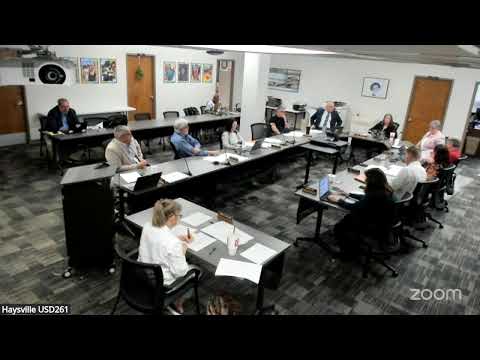
The Haysville School District board voted 6-0 at a special meeting this evening to adopt a resolution authorizing underwriter Stifel to move forward with the sale of voter-approved general obligation bonds to finance about $80 million in district projects.
Stifel representatives said market volatility driven by recent tariff proposals has pushed municipal yields higher, and the firm outlined a finance plan that uses the district’s cash basis reserve and reinvestment of proceeds to preserve a single mill levy levy rate of 13.714 mills for taxpayers.
Steve Sjogren, managing director of Stifel’s Wichita public finance office, told the board that municipal yields have risen sharply in recent months and that Stifel expects the district’s 20-year bonds to price in the range of about 4.75% to 5% in current market conditions. “We have a plan to mitigate this challenge,” Sjogren said, noting Stifel would pursue a rating from S&P Global Ratings and seek insurance that could lower the district’s borrowing cost.
Why it matters: the board’s action authorizes administrators and the district’s underwriter to complete rating and marketing steps needed to issue bonds voters authorized in a prior election. The vote, and the financing choices the district makes, will determine how much of the project fund is covered by interest earnings and premiums from the sale and how much, if any, must be drawn from the district’s cash reserve to keep the mill levy at the promised level.
Key elements of Stifel’s plan presented to the board included: - Authorized principal and project size: the election authorized issuance of up to $79,725,000 in bonds and the total project cost presented to the board was approximately $80,000,150. Stifel projected total available resources after reinvestment and premiums could be in the mid-$84 million range under some scenarios. - Interest-rate projections: Stifel presented two scenarios: a base case around 4.75% and a higher case near 5%. The firm said municipal yields rose more than 100 basis points in recent months and that short-term treasury yields and a volatile market contributed to the change. - Use of reserves and reinvestment: to preserve the board’s 13.714-mill target, Stifel recommended using a portion of the district’s cash basis reserve and reinvesting bond proceeds in the Kansas Municipal Investment Pool (MIP) or comparable investments while funds are not yet drawn. Based on the presented draw schedule and MIP assumptions, Stifel estimated reinvestment interest could add roughly $5.4 million to the bond trust estate (figure presented as an estimate and subject to market changes). Under one scenario the plan would draw about $850,000 per year from the reserve; under a higher-rate scenario the plan would draw about $900,000 per year. - Sale mechanics and timeline: Stifel outlined the calendar steps: a rating call with S&P Global (the firm expects at least an A rating), a bond order period and pricing targeted for June 10, board ratification on June 16, and an anticipated closing on July 8 when the underwriter would wire proceeds to the district. Stifel emphasized flexibility on timing, saying the district could delay entering the market if conditions deteriorated.
Board members and staff discussed state aid volatility and supply-chain timing as risks to project cash flow. District staff noted the district’s state aid level has fallen in prior cycles, and Stifel recommended conservative assumptions for state aid in modeling. On supply-chain questions, architects and contractors on the district’s committee said some long-lead mechanical and electrical items can remain on extended lead times, but they did not expect current lead times to prevent meeting the three-year encumbrance guidelines for bond-funded project spending.
The board also reviewed the project oversight structure: a bond committee that includes Alloy Architecture (the architect), the district’s contractor-at-risk, Stifel, and three board representatives (Tasha White, Barb, and Jen). The committee expects to meet roughly biweekly during active phases; the next committee meeting was scheduled for May 13 in the calendar presented.
After discussion the board member moved to accept the sale resolution as presented; a second was recorded, and the board voted 6-0 to approve the resolution. The resolution authorizes district officials and Stifel to proceed with rating, marketing, and other pre-sale steps and does not itself finalize sale pricing or final principal amounts. Stifel said final decisions about issuing the full authorized principal or reducing the par amount (offset by sale premium) would be returned to the board before market execution.
The meeting concluded with Stifel reiterating that the firm would return to the district with final market results before locking any sale. The district’s bond counsel, Gilmore & Bell, and the underwriter’s counsel, Quarles & Brady, will prepare offering documents and the transcript for the Kansas attorney general’s review before closing. Once approved and printed, bonds will be delivered through the Depository Trust Company and expected to close on July 8.
Next steps: district staff and Stifel will pursue the rating review with S&P Global, finalize the preliminary official statement, and return to the board before any final marketing and pricing decisions. The board will consider ratifying the sale at a June meeting if market conditions and the rating process allow.