Get email alerts on the Traffic Camera Program topic
No spam. Unsubscribe anytime.
Milton budgets traffic‑camera program for full year, plans dedicated traffic enforcement position
Summary
Council discussion clarified the Traffic Safety Camera Fund will reflect a full year of operations in 2026, support a traffic enforcement position (half funded by camera revenues), require time studies for personnel charges and start ticketing after a 30‑day warning period.
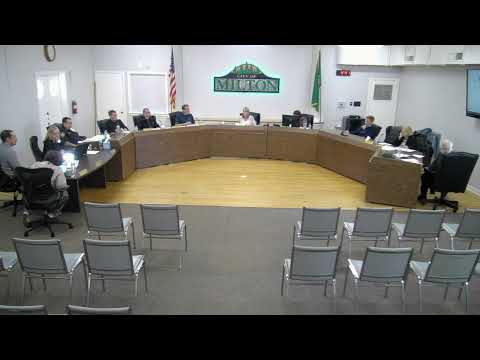
Milton City Council study session — City staff explained details of the Traffic Safety Camera Fund and related enforcement staffing at the Oct. 13 study session, saying the 2026 budget reflects a full year of operations for the automated camera program launched in 2025.
Finance staff noted the traffic safety camera fund’s expenditures are budgeted to increase about $377,000 (92.6%) in 2026 because 2025 included only six months of activity. Interim Finance Director Robec said revenues in the fund are expected to increase by about $1.3 million as the program reaches full implementation and that transfers to the Capital Improvement Fund for traffic safety activities are included in the fund’s budget.
Chief Hernandez described how personnel time will be tracked and charged to the camera fund. Hernandez said, “our finance is going to require a time study,” adding that the department will track officer time for video review and approvals so auditors can verify charges. Hernandez explained vendor estimates suggest roughly one minute to review and approve a violation, and the city is currently estimating about five hours per day of administrative review time for the assigned reviewing officer alongside five hours of field traffic enforcement duty.
Council Member Hall asked whether the traffic enforcement officer would be pulled to emergency calls; Hernandez said the traffic enforcement position would not be in the standard call rotation but would be available to back up other officers when necessary. Hall also asked whether the position had to be a new hire; staff said the assignment could be filled by an existing officer with demonstrated interest in traffic enforcement and that one officer had already been identified for the role.
Council Member Whelan asked about performance reporting. Robec said the camera vendor and back‑office system can generate regular reports on infractions and that staff will provide those reports to council and the public safety committee. Whelan noted ticketing will begin after a 30‑day warning period; staff confirmed ticketing starts 30 days after the program’s start date, which the presentation said began the previous Monday.
Council and staff discussed oversight for expenditures. Finance staff said restricted‑fund spending tied to capital projects will be tracked in a running spreadsheet to ensure transfers from impact‑fee and REIT funds are applied to eligible capital items.
Staff emphasized the program and the budget assumptions will be monitored and are likely to be adjusted as actual program activity and revenue become clear.
AI generated
The text on this page is AI generated. Summaries, highlights, analysis, and video transcripts are all produced from the original source material.
AI can make mistakes, so if you spot one, and we will fix it for everyone.
Note: the source content is unaltered by us. Any content source we link to, be it a video, an audio recording, or a document, is presented exactly as its publisher released it. That publisher is usually a government body, sometimes an individual official or another organisation.