Get Full Government Meeting Transcripts, Videos, & Alerts Forever!
Get email alerts on the Hrc Funding And Special Rapporteur Procedures topic
No spam. Unsubscribe anytime.
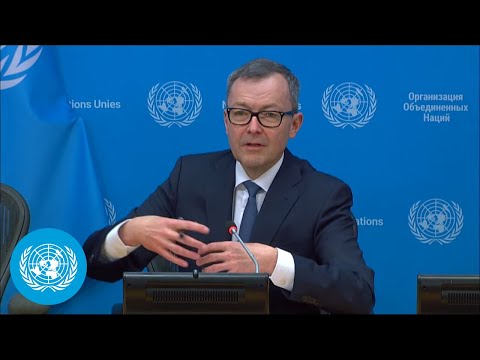
Lauber raises resource concerns for Human Rights Council; pledges review after questions over special rapporteur funding and procedures
Summary
At a New York press briefing, Ambassador Jörg Lauber warned of looming resource constraints affecting the council and OHCHR, and responded to media questions about alleged external funding for the special rapporteur on the occupied Palestinian territory and the procedure for investigating allegations against mandate-holders.
Ambassador Jörg Lauber said the Human Rights Council and supporting UN offices face resource constraints that could affect the council’s mandates and activities, and he said he will discuss those pressures with council members and the UN Secretariat.
At a New York press briefing, Lauber described two main funding streams that support council functions: (1) conference services and other operational costs provided by the UN Secretariat (interpreters, room setup, security) and (2) substantive support and reporting provided by the Office of the High Commissioner for Human Rights (OHCHR). He said both the Secretariat and OHCHR are facing resource constraints, and that the council will need to discuss where to concentrate mandates if resources are insufficient.
On allegations about funding for a travel by the special rapporteur on the occupied Palestinian territory, Francesca Albanese, Lauber told reporters he was not personally familiar with every detail of the case because it predated his presidency. He said the coordination committee for special procedures reviewed the matter and, in the committee’s recent response to the council, did not conclude there was noncompliance with the code of conduct by the mandate-holder. Lauber said he would look into the matter with the Secretariat and follow up with media.
Lauber outlined the procedure for handling allegations about mandate-holders: allegations are first considered by the coordination committee for special procedures; if the committee finds persistent noncompliance with the code of conduct, the committee communicates that conclusion through the president to the council, which may then consider measures.
Lauber also described how election and tenure of special mandate-holders work: the council elects mandate-holders at the start of their term; the council does not repeatedly reappoint them. Issue-specific mandate-holders are elected for three years and may remain for a maximum of six years if the mandate is renewed; country-specific mandate-holders likewise may serve up to six years through renewals. He noted the occupied Palestinian territory (OPT) mandate operates under different rules set out in its founding resolution.
On requests for public accounting of travel funding, Lauber said he understood the media’s concern and would seek further information from the Secretariat and the coordination committee, noting that some consultative procedures may be confidential.