Get Full Government Meeting Transcripts, Videos, & Alerts Forever!
Get email alerts on the Streets And Infrastructure topic
No spam. Unsubscribe anytime.
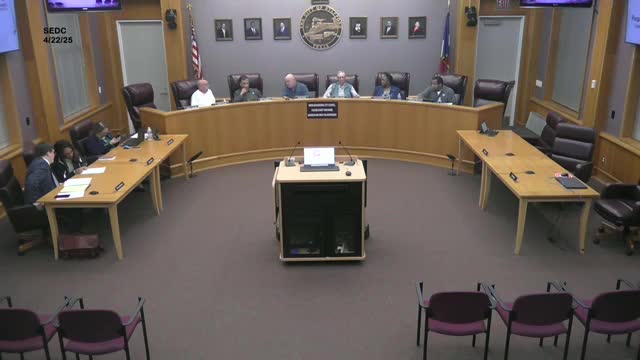
Stafford EDC presses for finish work in Island District, considers $3M–$4M street program
Summary
The Stafford Economic Development Corporation discussed completing unfinished streets and sidewalks in the Island District and explored a broader multi‑year street repair program. Staff will request a survey and cost estimate; board members raised the option of creating a multi‑year project bucket to fund repairs.
Members of the Stafford Economic Development Corporation spent significant time considering whether to finish small, unfinished streets and sidewalks in the Island District and how to approach a larger street‑repair program across commercial corridors.
The board asked staff to assemble a formal survey and cost estimate for the incomplete streets, sidewalks and adjacent drainage in the Island District and to return with a list of recommended short‑term fixes and larger capital projects. City Engineer Bob Jones told the board a focused program covering commercial corridors and thoroughfares would likely be more effective than one‑off patches, and said a three‑year, $3 million to $4 million program would let the city address pavement repairs, re‑striping, signage and other treatments that extend pavement life.
Board members emphasized tying any new work to the corporation’s available resources. Finance staff reported SEDC’s combined fund balance of about $21.1 million, but clarified that roughly $12.0 million is unassigned and available for new projects. That figure will be used as the starting point for prioritizing potential projects.
Jones and other speakers outlined the approach they recommended: (1) a survey/audit of streets and drainage to identify immediate maintenance and higher‑priority capital needs; (2) a ranked list of fixes by year so the board can decide whether to phase work or tackle larger corridors at once; and (3) a costed five‑ to ten‑year capital improvement picture to show how a program would affect the EDC’s cash balance and recurring maintenance needs. Jones estimated the study and prioritization work could be completed for roughly $50,000–$150,000 depending on scope.
Board members agreed to direct staff to request the survey and to prepare budget language that would allow the board to establish a capital “bucket” for streets and related public‑infrastructure work. Several directors said they preferred the bucket approach so staff could respond faster when maintenance or striping needs are identified, while preserving board and council oversight for specific allocations.
Next steps: staff will ask Public Works to produce a survey/audit of the Island District (streets, sidewalks and drainage), return cost estimates for both short‑term repairs and a three‑year program, and propose whether the work should be funded from unassigned funds or through a dedicated project bucket the board creates during budget planning.