Get Full Government Meeting Transcripts, Videos, & Alerts Forever!
Get email alerts on the Cost Allocation And Transparency topic
No spam. Unsubscribe anytime.
Consultants present parish cost-allocation plan; residents press for clarity on District 3 use
Summary
MGT Consultants presented St. Tammany Parish's cost-allocation plan and methodology. Residents and council members asked how allocations affect Sales Tax District 3; parish staff said about 6% of District 3 receipts funded administrative service allocations in 2024.
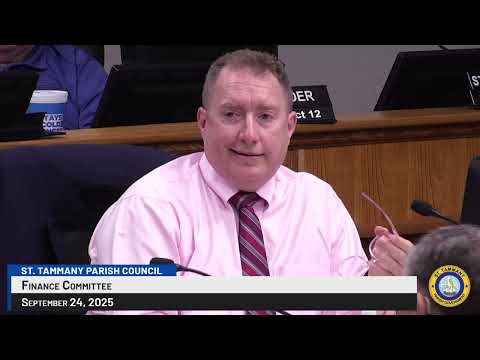
MGT Consultants on Thursday presented St. Tammany Parish officials with the parish government’s cost-allocation plan, explaining methodology the firm uses to assign administrative and indirect costs to operating programs and funds. Committee members and several residents pressed for clearer, concise summaries of how the plan affects Sales Tax District 3 and how many “tiers” of allocation are used in practice.
Parul Patel, director with MGT, described the firm’s role and methods: “cost allocation plans…identify the agency indirect or overhead cost and distribute those costs out to those funds, departments, divisions, and programs that are actually benefiting from that service,” and noted the parish receives two plans per year — a budget-based plan and a later true-up to actuals.
Matthew Wilson, an MGT consultant, said the parish’s most recent plan includes 13 administrative departments, 54 cost pools and 50 unique allocation statistics, and that the firm meets with each allocating department to confirm allocation bases and functional drivers.
During public comment, resident Alan Trifoli and other attendees asked for a simple, plain-language explanation of the number of allocation tiers and what is ultimately charged to Sales Tax District 3. That question drew lengthy discussion from council members and staff.
Annie, the finance presenter, answered a central factual question during the discussion: when asked whether 70% of District 3 receipts were being used to support parish government, she replied, “No. It is not 70%. It is only 6%.” She added that in 2024 approximately $5.4 million of District 3 funding was used to support the parish’s allocating departments, and that because the public-works fund receives other revenue sources in addition to the sales tax, the share attributable to District 3 alone would be less than 6% of total public-works funding.
Council members and staff discussed the need for a short, readable summary of the cost-allocation structure — the parish already prepares a one-page summary for the budget packet and the full plan documents (which can run to several hundred pages) are available. MGT and finance staff said they can provide slide decks and a one-page breakdown showing methodology, the allocating departments, and how cost pools are applied to major funding sources such as Sales Tax District 3.
No formal action was taken on the cost-allocation presentation; the committee accepted the presentation and asked staff to provide more accessible summaries and to follow up with additional clarifying material for council members and members of the public.