Get Full Government Meeting Transcripts, Videos, & Alerts Forever!
Get email alerts on the Public Comment Rules topic
No spam. Unsubscribe anytime.
City staff clarify public-comment rules and First Amendment limits after recent disruptions
Summary
City Manager John Holman and City Attorney Kelly Concrete outlined rules for public comment at Spokane Valley council meetings, distinguishing protected speech from disruptive conduct that may be curtailed and explaining that personal attacks are discouraged but often protected unless they disrupt the meeting or are unrelated to city business.
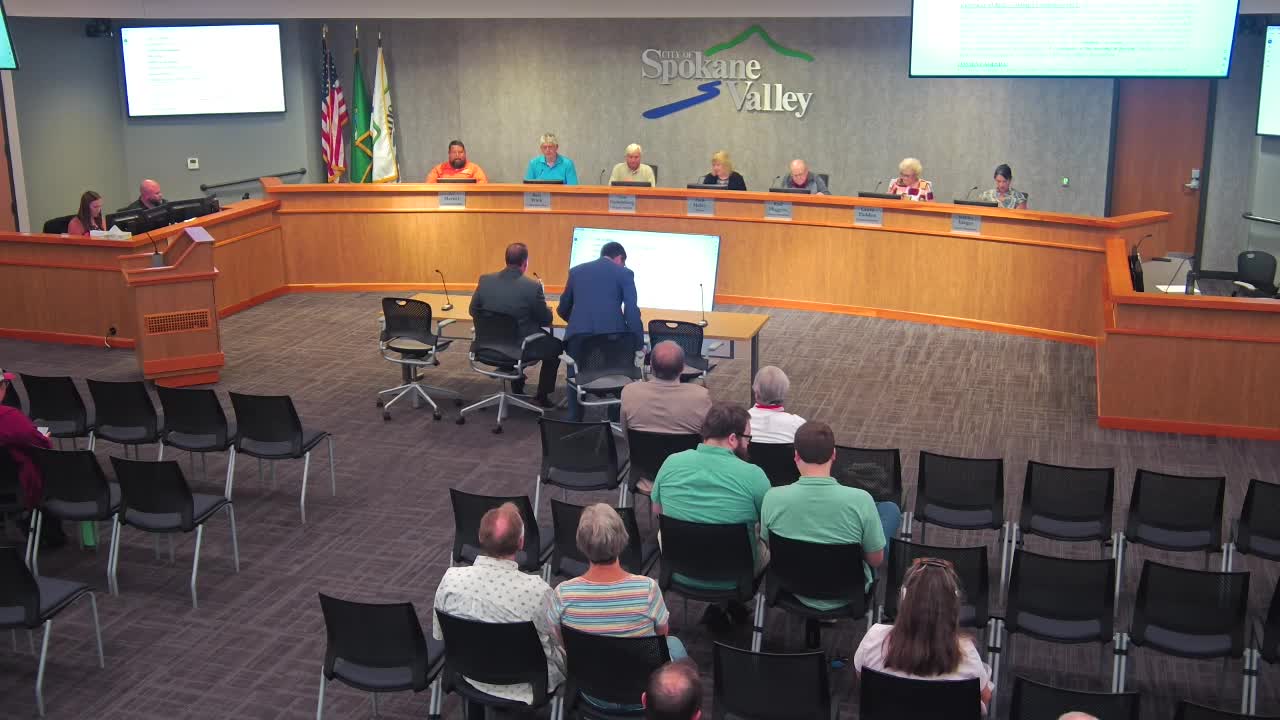
City Manager John Holman and City Attorney Kelly Concrete addressed council and the public before the general public comment period to clarify the city's governance manual and legal limits on restricting speech at council meetings.
Holman said the general public comment period is for matters related to city business and that members of the public may comment once per meeting; he also said the period is not intended for extended dialogue and that staff follow up by phone or email when speakers request responses. Holman emphasized that demonstrations, applause and audience outbursts that disrupt council business are not allowed and that the mayor may end a speaker's time for violation of procedures; persistent violations can result in losing the privilege to speak for 90 days under the governance manual.
Kelly Concrete framed the discussion in constitutional law: Spokane Valley sits in the Ninth Circuit, he said, and the council cannot stop public comment based on viewpoint alone. “The city cannot end or stop a person's public comment during the general public comment period unless their conduct is actually disrupting the meeting,” Concrete said. He defined examples of “actual disruption” to include (1) exceeding allotted time after being asked to stop, (2) audience members shouting from the gallery to interject, and (3) a speaker instructing the audience to stand, clap or demonstrate.
Concrete explained why the governance manual “discourages” personal attacks rather than outright banning them: in many cases derogatory remarks can be tied to city business or policy and therefore are constitutionally protected unless they disrupt the meeting’s orderly process. He said a council member or the mayor can raise a point of order to ask a speaker to explain how remarks relate to city business and that the presiding officer may then rule. Concrete recommended “thick skin” for elected officials and urged consistent application of rules to all speakers.
Holman and Concrete both said the governance manual allows any council member to raise a point of order during public comment, not only the mayor, and that the mayor may call a brief recess or end public comments for the night if disruptions continue.
Council members asked clarifying questions about the word “may” in the governance manual (whether the mayor or council must end an offending speaker's time); Concrete said “may” indicates permission but not a requirement and that the determination depends on whether conduct is actually disruptive. Merkel raised concerns about inconsistent past application, citing an instance in June when a comment was ended for naming council members; Concrete said his review indicated the manual has been applied even-handedly across viewpoints.
Holman warned that the city has seen particularly problematic disruptions in the last 21 months, and stressed that any restrictions must be applied uniformly. The council did not adopt new rules at this meeting; the city attorney's guidance was presented as legal context and direction for consistent enforcement at future meetings.