Get Full Government Meeting Transcripts, Videos, & Alerts Forever!
Get email alerts on the Stormwater Management topic
No spam. Unsubscribe anytime.
County adopts stormwater management plan and repetitive‑loss area analysis
Summary
The board unanimously adopted a countywide stormwater management plan and a repetitive‑loss area analysis to prioritize flood mitigation, water‑quality projects and funding strategies tied to the Indian River Lagoon BMAP and community rating score improvements.
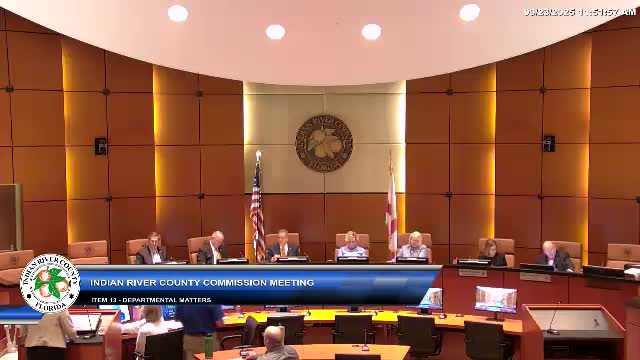
The Board adopted two interrelated planning documents on Sept. 23: a comprehensive Stormwater Management Plan and a Repetitive‑Loss Area Analysis (RLAA). Staff and consultants said the plans identify priority projects to reduce flood risk and meet water‑quality targets for the Central Indian River Lagoon Basin Management Action Plan (BMAP).
Natural Resources Director Kylie Intula and consultant Brian Flynn (Environmental Science Associates) presented highlights of the stormwater plan, which ranks nine priority focus areas and proposes 29 conceptual projects to increase storage, improve conveyance and retrofit lagoon outfalls for water‑quality benefit. The plan ranks projects using criteria that include water‑quality benefit, flood‑reduction potential and programmatic feasibility; estimated implementation costs for the full list range from roughly $10 million for high‑priority stand‑alone projects to more than $70 million for full implementation of all conceptual options.
The plan recommends developing an asset database, maximizing BMAP credit opportunities (including treating and harvesting vegetation from county stormwater ponds), creating an implementation program and pursuing funding sources. Staff emphasized the plan is a living document and that specific projects will require surveys, easement work and detailed design.
Separately, consultant Denise Mourning presented the RLAA, required for the county’s Community Rating System (CRS) classification because the county has more than 50 repetitive‑loss properties. The RLAA maps repetitive‑loss clusters, analyses causes and recommends mitigation pathways including elevation, drainage improvements and grant pursuit for mitigation funding.
Commissioners supported the broad recommendations, requested greater coordination with water‑control districts and municipalities (staff said outreach and follow‑up to Fellsmere Water Control District and the City of Sebastian would continue), and adopted both documents unanimously.