Get Full Government Meeting Transcripts, Videos, & Alerts Forever!
Get email alerts on the Youth Services Funding topic
No spam. Unsubscribe anytime.
Laredo council expands city support for Boys and Girls Club, asks staff for broader plan
Summary
Council authorized more short-term funding for the Boys and Girls Club of Laredo and directed staff to return within two meetings with a proposal for a longer-term agreement and program support.
On Sept. 2, 2025, the Laredo City Council voted to increase the city's immediate financial support for the Boys and Girls Club of Laredo and directed management to return within two council meetings with a negotiated proposal for a longer-term partnership.
The council first approved authorization for the city manager to negotiate an additional $100,000 above a previously authorized $150,000 (bringing the negotiated cap to $250,000). Later in the meeting, after further discussion, council members directed management to bring back a proposal without a preset cap so the city and the nonprofit could consider a broader multi-year agreement and in-kind support options.
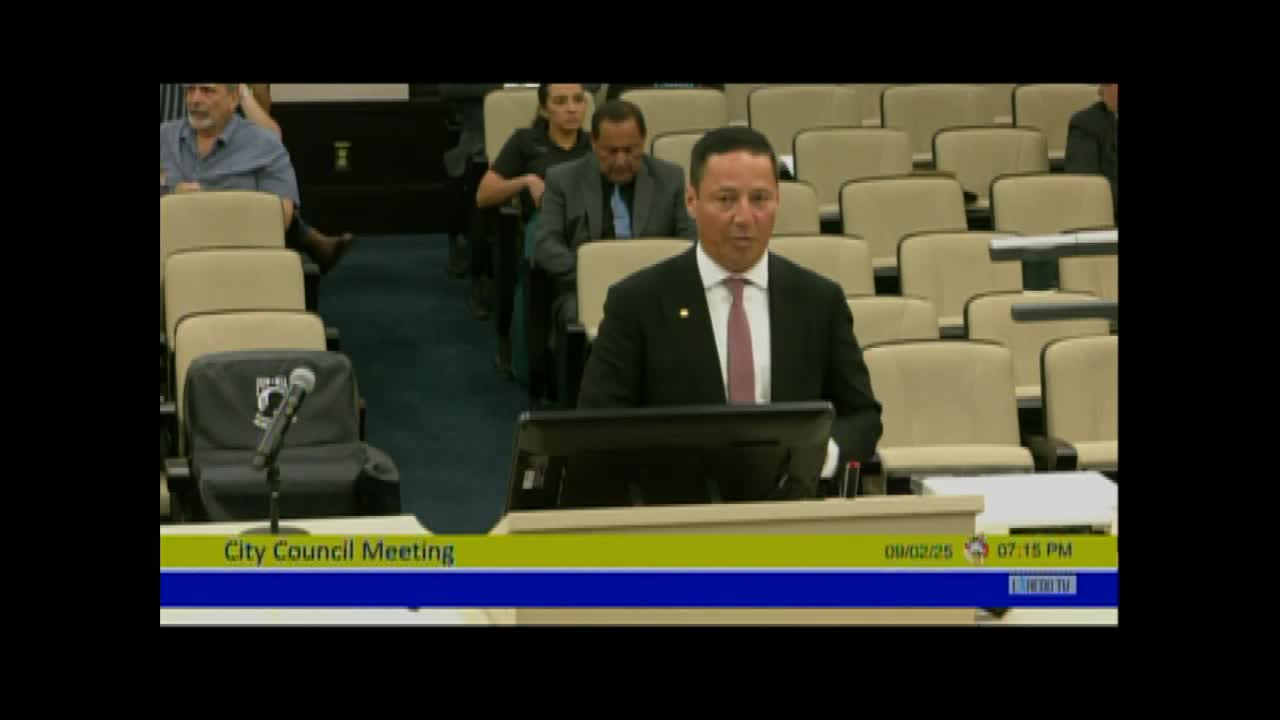
The vote followed a presentation from Joey Deyes, who identified himself as a resident and as the president of the Boys and Girls Club of Laredo. Deyes described an expansion of programming across three club sites (Lamar Bruni Vergara, Northwest, and the main/Benavides club), noted growth in enrollment and sports programming, and asked the council to increase the city's financial commitment so the nonprofit could expand services for older youth and cover rising operating costs.
Deyes said the club charges $10 per child per year and aims to keep that nominal fee in place to avoid barriers to participation; he told the council, "we do not turn children away." He told council members that the organization raises roughly $2 million annually overall, with the city, Webb County and United Way together making up under 40% of the club's operating budget and private donors and program revenue covering the remainder.
City staff and the manager described the city's draft approach to a longer-term relationship. Staff noted the city already provides an in-kind lease of a building on Old Santa Maria for a nominal $1 per year, and that the value of that in-kind space plus a $150,000 annual payment had been calculated as part of the city's draft support package. City management said using an expanded contract or memorandum of understanding rather than recurring third-party grants would allow both the city and the club to plan multiyear support and to include performance metrics in any agreement.
Council members pressed on details including current program capacity, use of school facilities, school-district funding cuts that are driving higher demand for after-school care, and whether ISDs contribute to the club's costs (Deyes said the club currently receives no funds from LISD and had previously received some from UISD). Several council members and staff said they favored moving from annual third-party grant awards to a multi-year agreement tied to performance measures and in-kind support.
The council's first action increased the previously authorized negotiation cap from $150,000 to $250,000; a later motion instructed management to return with a proposal within two council meetings without a preset cap so council could consider a multi-year agreement and additional in-kind contributions. Both motions passed. The council also directed staff to explore options for facilities partnerships and other noncash supports that could be part of a longer-term contract.
Next steps: city management will negotiate with the Boys and Girls Club and bring back a written proposal for council review within two meetings. That proposal is expected to show options that combine direct payments, in-kind lease value and performance metrics for youth programming and expanded teen services.
Why this matters: council and nonprofit leaders said the club serves children across Laredo's highest-need neighborhoods, provides meals and after-school programming amid cuts to school-based services, and is expanding efforts for teens ages 13—18. The council's direction to return with a multiyear proposal aims to create more predictable funding for that expansion and tie city support to measurable outcomes.