Get Full Government Meeting Transcripts, Videos, & Alerts Forever!
Get email alerts on the Surface Water Master Plan topic
No spam. Unsubscribe anytime.
Shoreline staff advance 2025–2030 Surface Water Master Plan; council to consider formal adoption Oct. 13
Summary
Shoreline staff presented a final draft of the 2025–2030 Surface Water Master Plan and told council they will return Oct. 13 with a resolution (5‑49) to adopt the plan, which pairs program expansions with performance measures and a rate schedule already authorized in the budget.
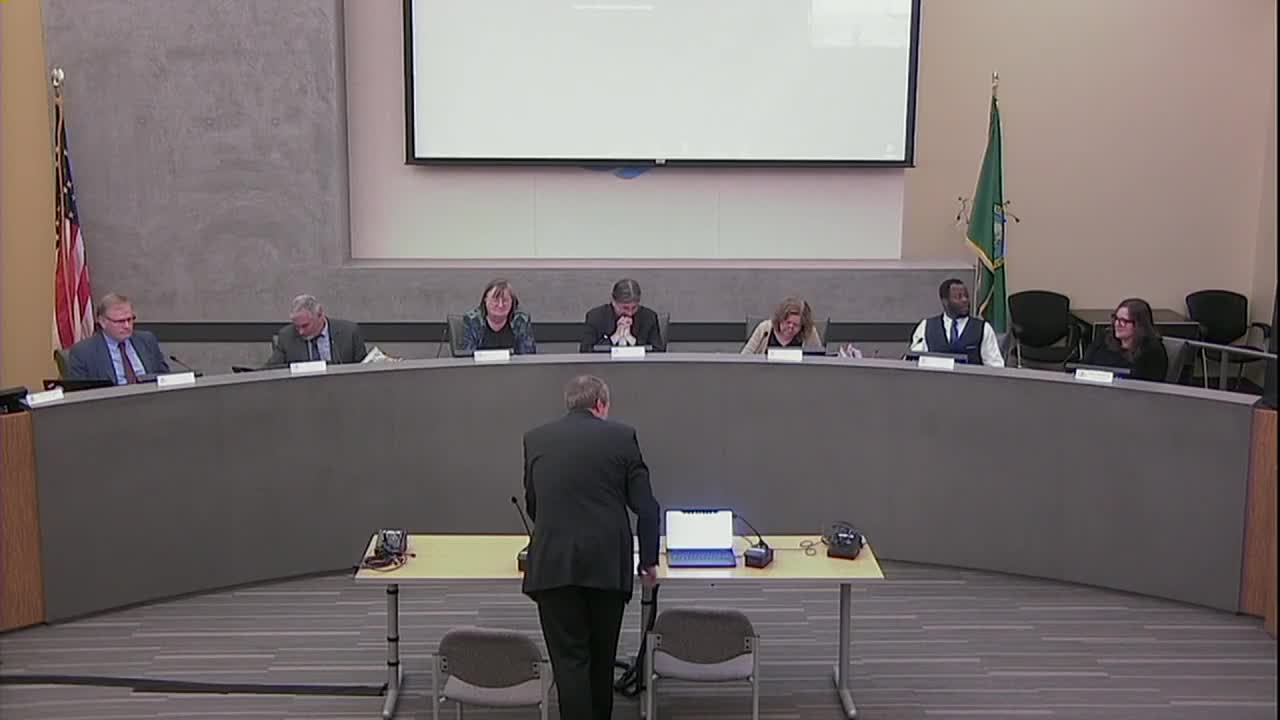
City surface‑water staff presented the draft 2025–2030 Surface Water Master Plan on Sept. 8 and told the Shoreline City Council they intend to return Oct. 13 with a resolution (5‑49) to adopt the plan as a functional utility document and to pursue related implementation steps.
John Featherstone, the city’s surface water and wastewater systems manager, said the plan is the product of substantial public engagement, consultant work and internal review. Staff packaged program and revenue options in four service‑level packages and recommended “option 4,” the most comprehensive package the city studied. The plan ties program expansion to performance measures and to a rate structure the council authorized in the 2025 biennial budget.
Featherstone told the council the adopted budget already included a 12.5% rate increase for 2025; staff’s financial analysis anticipates 8.5% annual increases through 2030 under the option‑4 program. The city plans to implement an equivalent service unit (ESU) billing model in 2027 and to consider a general facilities charge (GFC) for new development in 2027. Staff said they will review rate assumptions through the city’s biennial budgeting process and return with details as programs proceed.
Staff described early implementation steps already underway: capital studies on retrofit opportunities in the Bone Creek basin and stream classification/habitat studies (both on the consent calendar that night), procurement of a new street sweeper expected next year, expansion of the “Soak It Up” rebate program (which rapidly exhausted its biennial allocation and now has a waiting list), hiring for an inspector position, and planned expansion of water‑quality monitoring this fall.
Featherstone also reviewed performance measures staff intend to track, including stream health indicators, greenification measures (private‑site low‑impact development), permit compliance, and street‑sweeping effectiveness. He noted parts of the plan that will be adopted later under the comprehensive plan’s capital facilities element.
Council members praised the plan’s scope and implementation orientation and thanked Featherstone for his work; Featherstone said this would be his last council presentation before leaving city service. Multiple council members indicated they saw no objection to placing the plan on a future consent calendar for adoption on Oct. 13.
If adopted, the plan will guide surface‑water investments, program expansions and rate adjustments through 2030 and set a suite of performance measures staff will report on annually.