Get Full Government Meeting Transcripts, Videos, & Alerts Forever!
Get email alerts on the Economic Development Storefronts topic
No spam. Unsubscribe anytime.
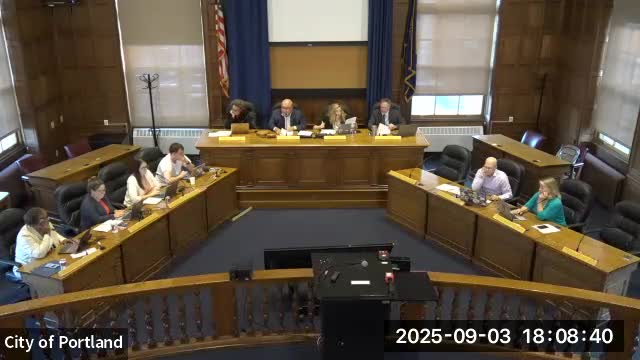
Portland council adopts vacant-storefront ordinance tied to PAD overlay after amendments
Summary
The City Council approved an ordinance creating a commercial vacancy registry and temporary-activation program for storefronts in the Pedestrian Activities District (PAD), including a requirement that the city may provide and install temporary art and a revised fee schedule. The measure passed after several amendments and hours of public comment.
The Portland City Council approved an amendment to the City Code to address long-term vacant ground-floor commercial spaces in the downtown Pedestrian Activities District (PAD). The ordinance creates a registry for storefront vacancies, authorizes the city to provide and install temporary art in vacant windows, and establishes a tiered fee schedule for property owners who do not participate in activation efforts.
Council supporters said the measure is a targeted tool to make sidewalks and storefronts look active while staff and property owners pursue longer-term leasing solutions. “The only thing that it really does is a registry… the only thing that it really does, is the city will pay to put art in your windows,” Councilor McNevich said during debate, summarizing the ordinance’s core function.
The ordinance ties a commercial-vacancy program to the PAD overlay in Chapter 14 of the city code so the rules apply to the downtown corridor and Old Port storefronts. Under the final version adopted by the council, the city may register a vacant storefront, work with owners to activate it, and — if an owner declines the city activation option — apply a graduated fee schedule. Councilors adopted an amendment increasing the first-tier six-month fee to $500 (the sponsor described that change as increasing a previously token amount to $500) and adopted clarifying language that the city will “provide and install” temporary art so owners would not be required to produce or install displays themselves.
Public commenters were split. Supporters including Bev Eulenhake, who said the city needs both cleanup and activation in the Congress Street corridor, urged delay only to refine details; several business and broker representatives asked staff to clarify exemptions and to preserve the city’s ability to encourage new development. Opponents including George Roe said the measure threatens property owners and would not address underlying market or safety concerns, and urged the council to focus on policing and other interventions first.
Planning staff and the planning board had recommended a narrower geographic application and originally proposed an exemption for newly constructed retail spaces; the council first rejected the exemption and then amended the ordinance to include new construction in the registry and activation program. Director Kevin Craft of the Planning Department told councilors the planning board’s initial exemption aimed to protect owners pursuing a specific tenant for a newly built storefront, but staff said the registry can also help new projects by collecting data and connecting potential tenants.
Councilors debated whether the ordinance is primarily “carrot” or “stick.” Supporters framed it as a low-cost activation tool and data source for economic development; critics said it risks symbolic fixes without addressing perceptions of safety. The council adopted several amendments on the floor (including the fee change and the “provide and install” clarification) before approving the final ordinance.
The ordinance was approved after multiple amendments and roll-call votes. The measure will be implemented by city staff working with the planning and economic development teams; the ordinance also authorizes creation of a public-facing registry and a program to place temporary art in qualifying storefronts while owners pursue permanent tenants.
Looking ahead, staff said they will develop the registry, coordinate with the city’s GIS and IT departments, and work with downtown stakeholders — including property owners, brokers and arts organizations — to operationalize the activation program and public-art installations.