Get Full Government Meeting Transcripts, Videos, & Alerts Forever!
Get email alerts on the Trail Business Recruitment topic
No spam. Unsubscribe anytime.
Committee debates trail‑friendly business recruitment; members ask legal questions about contracts and authority
Summary
Committee members discussed recruiting trail‑adjacent businesses to provide restroom access, debated whether the committee may bind the city or require contracts, and recommended collecting business feedback before pursuing formal agreements.
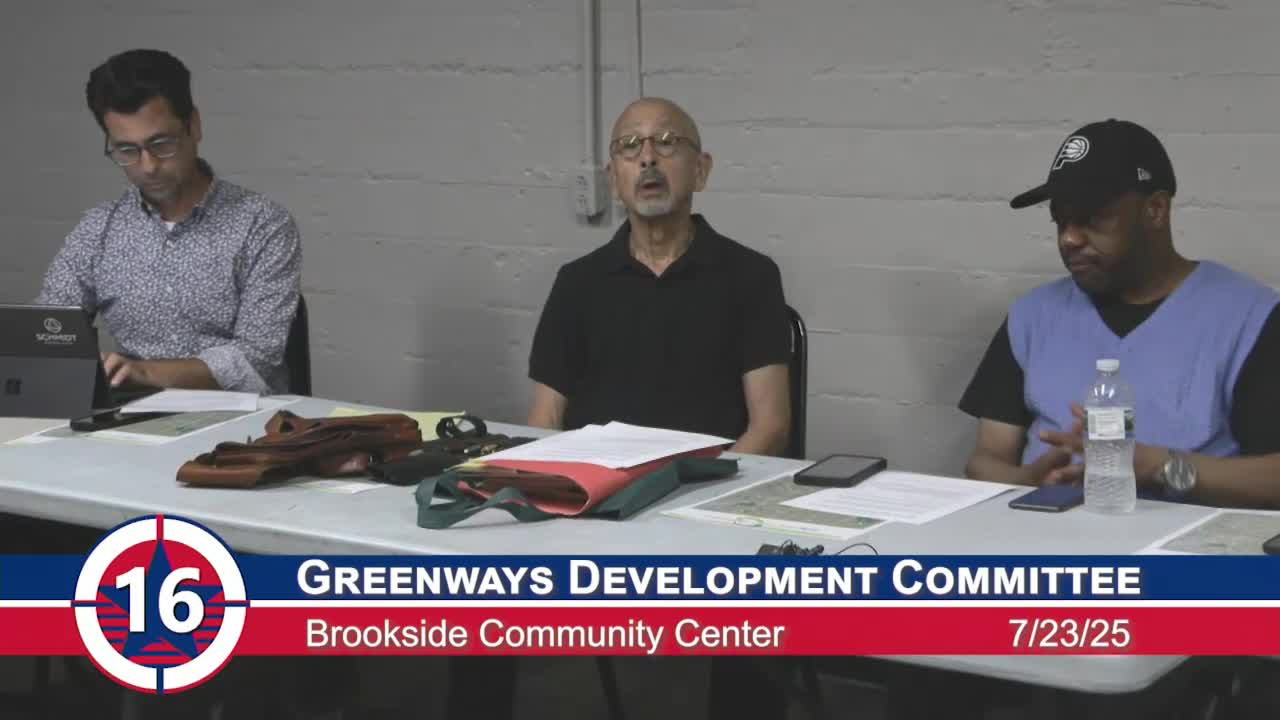
Members of the Indianapolis Greenways Development Committee spent a substantive portion of the July 23 meeting discussing a proposed “trail‑friendly business” program, legal limits on the committee’s authority, and how best to approach businesses.
Committee members described the recruitment concept as outreach to businesses located adjacent to trails to request that they allow trail users to use restrooms or water facilities. Proposals discussed ranged from an informal, voluntary model (a sticker or listing) to more formal written agreements or memoranda of understanding. Committee members repeatedly flagged two constraints: the committee cannot enter into contracts on the city’s behalf, and the city currently lacks guaranteed operations and maintenance funding for new municipal restrooms.
A committee member with legal training delivered a list of legal questions the group should resolve before conducting formal recruitment. Those questions included: whether a voluntary program can operate without written agreements; whether the Greenways Development Committee has authority to bind the city in any contract; and, if written agreements are required, which city body or department would be authorized to enter them. Several members urged the committee to seek formal legal guidance from city counsel on those points before asking businesses to commit to service offerings.
Staff and other committee members described practical next steps the committee could take without entering into contracts: (1) gather preliminary input from businesses — asking owners whether they would be willing to allow trail users to use facilities and what concerns they have; (2) compile a list of businesses already working with Department of Public Works (DPW) or Parks so outreach can start with existing relationships; and (3) build a simple “non‑committal” recognition program (for example, a window sticker) as a first step to demonstrate interest and build a case to higher authority.
Committee members also discussed precedent and alternatives. Staff said prior outreach by local running groups produced a similar voluntary sticker listing; other members suggested studying models in other jurisdictions or inviting a speaker from a locality that has implemented a successful program. Members emphasized the difference between short‑term fixes such as porta‑potties and permanent, capital projects: permanent restroom construction requires substantial capital and ongoing maintenance commitments and would require separate funding and approvals.
What the committee asked staff to do: compile contact lists of businesses that already have relationships with DPW and Parks (several members said that list should be available from city staff), research examples of trail‑friendly business programs in other cities, and seek legal advice on whether formal written agreements are required and, if so, which city office would be the proper signatory. The committee did not vote on a business‑recruitment program at this meeting.
Why it matters: If structured and resourced properly, partnerships with trail‑adjacent businesses are a potential low‑cost way to increase access to restrooms and water for trail users. But committee members warned that outreach without legal clarity risks creating public expectations the city cannot meet. The group emphasized collecting evidence and business input first, then advancing proposals through the Parks Board or other authorized bodies as needed.