Get Full Government Meeting Transcripts, Videos, & Alerts Forever!
Get email alerts on the Pedestrian Safety topic
No spam. Unsubscribe anytime.
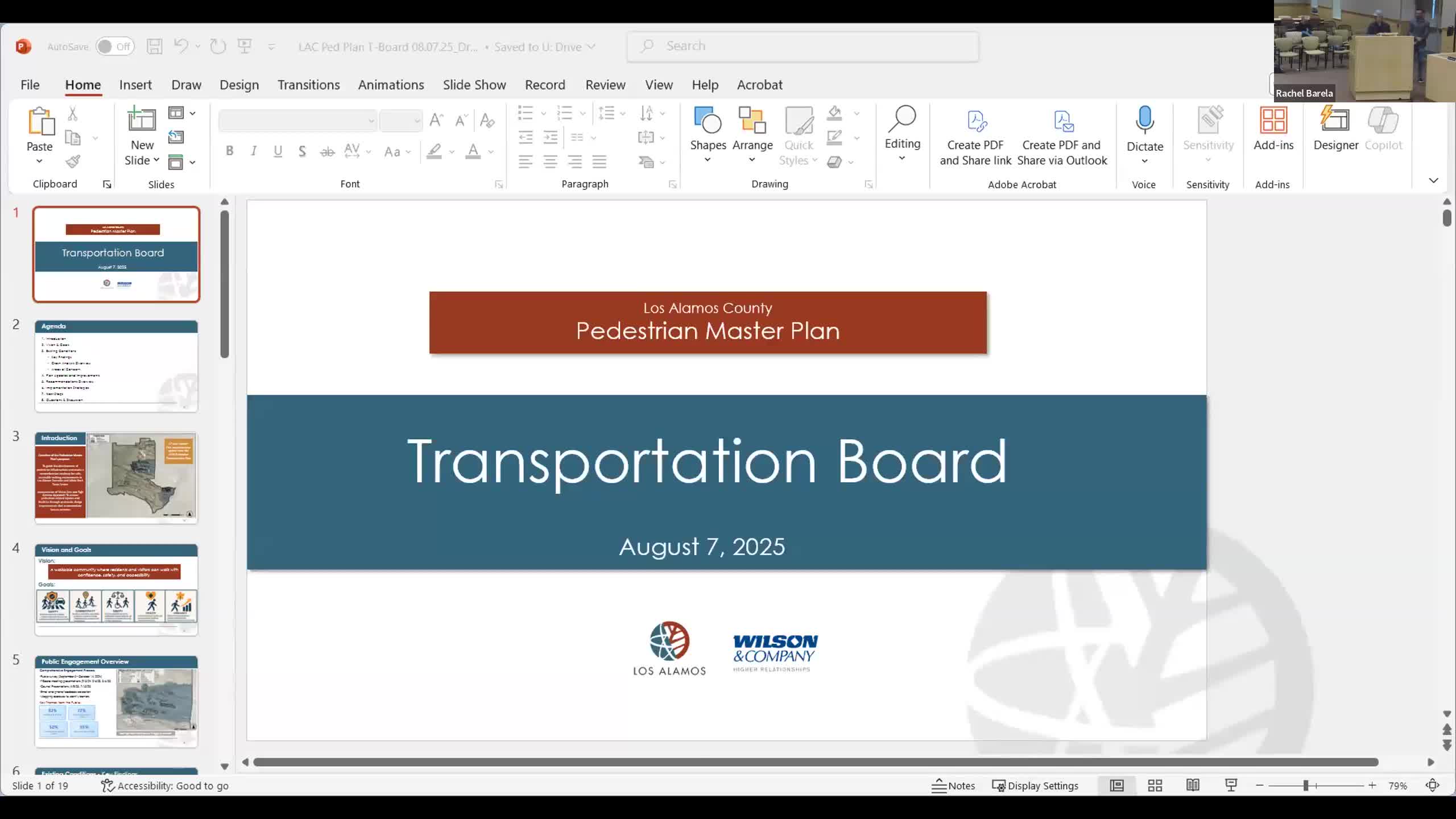
Transportation Board recommends adoption of Los Alamos County 2025 Pedestrian Master Plan, 3‑1
Summary
The Transportation Board voted 3‑1 to recommend the 2025 Pedestrian Master Plan to County Council. The plan updates the county's 1998 guidance, identifies 34 location‑specific countermeasures, and calls for a living‑document approach with short‑, mid‑ and long‑term actions.
The Los Alamos County Transportation Board voted 3‑1 on Aug. 7 to recommend the 2025 Los Alamos County Pedestrian Master Plan to the County Council for adoption. The board’s recommendation sends the draft plan to council with a request that staff pursue the implementation steps described in the document.
County Engineer Eric Ulibarri introduced the plan and said it is the first comprehensive update since the 1998 Pedestrian Transportation Plan. "We incorporated a Vision 0 and Safe Systems approach," consultant Noah Burke of Wilson and Company told the board, describing the plan's safety‑first framework and emphasis on designing for human error.
The plan summarizes existing conditions and public engagement and identifies key findings: approximately 102 miles of sidewalk and 152 miles of trail countywide, about 11 signalized intersections and 164 marked crosswalks; 85 percent of sidewalks are under 5 feet wide in many places, and curb‑ramp compliance has improved but remains incomplete. The consultant presented crash data from 2018 to Feb. 2022 (a period that included COVID‑era traffic reductions): 770 total crashes countywide and eight pedestrian‑involved crashes in that window.
Planners recommend a package of countermeasures and an implementation strategy tied to short (0–2 years), mid and long‑term time frames. The document lists 34 location‑specific recommendations with planning‑level cost estimates, priority scores and suggested phasing; it also calls for an interactive web page, ongoing public engagement, an annual review and an implementation monitoring framework. Short‑term examples include repainting crosswalks, updating signage and prioritizing ADA curb‑ramp upgrades; long‑term proposals include corridor reconstructions and complete‑streets projects.
Board discussion covered speed control, enforcement, and the relative pace of studies versus quick improvements. Member Altier said lowering posted speed limits could produce meaningful safety gains; staff responded that speed‑limit changes generally require a study and that traffic‑calming engineering (road diets, bulb‑outs, speed tables) is a primary tool. Staff said they are collecting speed and count data in some locations and will pursue engineering treatments where justified.
Public commenters and board members emphasized equity, accessibility for nonstandard mobility devices (tricycles, trailers and adaptive cycles), maintenance of existing sidewalks and clearer integration with school‑safety programs. Consultant Burke and staff said the plan incorporates Safe Routes to School recommendations and called for coordinating with the school district.
Board member Altier opposed the motion citing concern that the plan did not address a separate, immediate request to reduce posted speeds on Trinity Drive; Altier said Trinity’s existing 35‑mph limit made the corridor “pedestrian‑unfriendly” and that he would withhold support until speed reductions were pursued. The board nonetheless approved the motion by show of hands, 3 in favor, 1 opposed.
The board recommended that staff present the final plan to County Council for adoption; staff said they plan to present the document to council on Aug. 26 and will create the interactive web page and begin development of high‑priority projects if council approves the plan.