Get Full Government Meeting Transcripts, Videos, & Alerts Forever!
Get email alerts on the School Transportation topic
No spam. Unsubscribe anytime.
Nassau school district weighs $9.8 million bus purchase, financing options
Summary
At a board workshop, transportation staff outlined a plan to replace part of the fleet with 60 new buses and presented financing options including a revenue anticipation note; no formal vote was recorded.
Nassau County School District transportation staff presented options to buy new buses and finance them during a board workshop, saying the district could buy 60 buses at today’s prices and that several financing approaches — including a five‑year revenue anticipation note — are available to lower borrowing costs.
District staff said replacing older vehicles has cut maintenance, warranty and warranty‑service costs but that higher market prices and rising interest rates will increase near‑term borrowing costs if the board chooses to finance a large purchase.
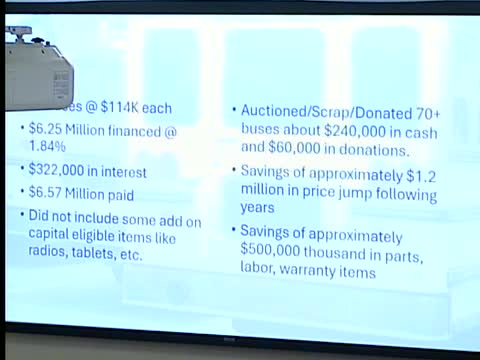
Transportation director John Underhill said the district previously bought 55 buses by financing $6,250,000 at 1.8 percent, paying roughly $114,000 per vehicle. “We bought 55 buses. We placed, just under half the fleet and we paid $114,000 for each of those buses,” Underhill told the workshop, and he said warranty coverage and standardized parts for a single bus model reduced repair time and inventory needs. Underhill said the district expects to re‑sell roughly 15 current buses at the end of their term and projected proceeds of about $750,000 to offset financing costs.
Underhill gave a price estimate for a new purchase cycle of about $9.8 million (including financing costs) and said bus manufacturers have raised prices since COVID; he cited an expected tariff and labor‑cost driven increase that could add “another 3 to 5,000” per bus before year‑end and an additional “5 to $8,000” in January. He said a straight purchase plan across five years at a projected annual price increase would cost about $10.61 million; financing the same program over five years at a projected 3.5 percent interest rate would bring total cost estimates in the $10.7–10.9 million range, depending on assumptions.
John Ford, financial adviser, described a revenue anticipation note under Florida statute 10‑1114 as a financing tool that allows up to five years of financing and could yield slightly better rates than a vehicle‑secured lease or loan because proceeds can be invested while the district awaits vehicle delivery. Ford said banks’ offers will vary and that the board’s finance director could place proceeds in short‑term investments while buses are built. “It’s found under statute 10 11 14. It allows for financing for up to 5 years,” Ford said.
Board members asked about trade‑in and resale assumptions, timing for delivery and warranty service. Underhill said the recommended manufacturer (Thomas Built Buses) offers a warranty program with mobile service and training that would allow district technicians to perform warranty repairs and recover labor costs. Underhill listed operational benefits from the prior multi‑bus purchase: fewer breakdowns, lower parts inventory, and improved driver satisfaction. He also warned of fleet‑wide downsides of a single‑model purchase (synchronous maintenance needs and recall exposure).
No motion or final vote on a purchase or financing plan appears in the workshop transcript. Staff recommended next steps that include soliciting pricing, continuing warranty and service‑provider negotiations and returning with a formal financing recommendation and resolution for board consideration at a future business meeting.
The workshop included detailed line‑item and financing scenarios; staff said they would provide updated lender responses, a list of other districts using the Florida Educator Health Trust (a separate agenda item), and more precise tariff‑driven price adjustments before the board’s next public meeting.