Get Full Government Meeting Transcripts, Videos, & Alerts Forever!
Get email alerts on the Police Substations topic
No spam. Unsubscribe anytime.
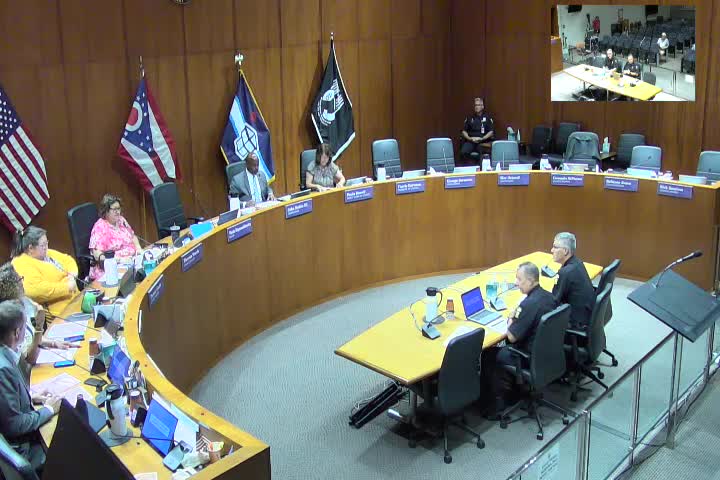
Toledo committee weighs alternatives after Northwest police station called unsafe
Summary
At a July 29 committee hearing, Toledo police described repeated flooding, mold and infrastructure failures at the D. Michael Collins Northwest District Station and outlined plans to relocate personnel to Mercy/Cherry Street and Ottawa Park while councilmembers and residents debated how to preserve a police presence in West Toledo.
The Toledo City Council Public Safety and Criminal Justice Reform Committee on July 29 heard detailed testimony that the D. Michael Collins Northwest District Station is unsafe for sustained operations and discussed short- and long-term alternatives, including using a Mercy campus building on Cherry Street and shifting some units to Ottawa Park.
Chief Mike Trendley told the committee the Northwest station has recurring parking‑lot and basement flooding that has damaged vehicles and interior spaces, caused mold, and produced safety hazards for staff. "It just does not make sense. It is not good for us to continue to place our officers in those kind of working conditions," Trendley said. He said fixes would require "tens of millions of dollars" because the site is a low point in the neighborhood that collects storm drainage.
Why it matters: The station’s condition affects officer safety and how police maintain a visible neighborhood presence. Committee members, neighborhood residents and police leaders debated tradeoffs between keeping a local substation and relocating units to safer, possibly more centralized facilities — decisions that would affect patrol patterns, community policing and budget priorities.
Trendley and Assistant Chief Kevin Braun outlined the department’s facility inventory and how units would be redistributed if Northwest is vacated. He said Central District (the Safety Building) and Scott Park remain the two 24/7 public stations; other sites are not open for walk‑in service. Trendley said the Mercy/Cherry Street building presented an opportunity large enough to rehouse the traffic unit, the special victims unit and other personnel, and that Ottawa Park — currently housing community service officers (CSOs) — is in relatively good condition and could house the special victims unit.
The chief described operational impacts: locker rooms and basements at Northwest have been gutted above flood lines, locker areas have lost drywall, and repeated flooding has caused officers to be reassigned. He said the department has tried interim fixes and ‘‘kicked the can down the road’’ but concluded the building is not suitable for long‑term occupancy.
Trendley also described broader options the department has considered, including a long‑term concept to centralize operations in a single new facility — proposals that have been studied in concept (including the former jobs and family services site at Monroe and Detroit). "Ideally, for the most efficient running of a police department...I would like to re‑centralize all of our operations," he said, adding that such a project is constrained by funding.
Council members emphasized different priorities. Committee chair Councilman John Hobbs opened the meeting by clarifying that the council "did not...take a vote to close the civilian station" and said misinformation had circulated. Councilman Melden said he supported maintaining a presence in the neighborhood but wanted a ‘‘big picture’’ discussion of what a modern, neighborhood‑focused public safety presence should look like. Councilwoman Vanice Williams (District 4) said she supported police presence in neighborhoods and thanked Mercy for offering space; she added the Northwest station is "still open, but no officers are there" and described the Safety Building as aging and inadequate.
Several council members and attendees raised community‑policing and staffing concerns. Councilwoman Teresa Morris (District 6) underscored the importance of CSOs and suggested placing them in community centers. Chief Trendley said the department is actively backfilling CSO vacancies and that CSOs typically work out of cars, on foot and at community sites rather than occupying a permanent office full time.
Residents urged a visible, ongoing police presence in West Toledo. Public commenter John Bibish urged city council to use available city funds and ARPA money to ensure coverage along Sylvania Avenue and proposed an ordinance to fund a stronger presence; he argued the city’s general fund and uncommitted ARPA funds could cover initial costs. The administration or council did not act on any ordinance during the committee hearing.
Other public commenters raised safety and policing concerns in the district. Michael Jones, a District 4 resident, described personal allegations about treatment by medical providers and police and urged council action on workplace violence and related complaints; Jones’s remarks included allegations the transcript records as his statements and not as committee findings.
No formal vote on closing Northwest or on reallocating facilities occurred at the hearing; councilmembers said the meeting was intended to inform future deliberations. Hobbs and other members indicated the committee will continue the discussion and solicit community input on what a sustained neighborhood presence should look like, including options such as expanded foot patrols, satellite offices in high‑traffic community sites and using Mercy/Cherry Street and Ottawa Park for relocated units.
The committee adjourned after public comment. The department and council signaled more study and follow‑up would be forthcoming.