Get Full Government Meeting Transcripts, Videos, & Alerts Forever!
Get email alerts on the School Transportation topic
No spam. Unsubscribe anytime.
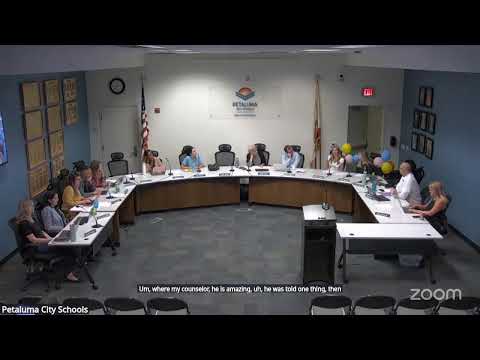
Board hears RESIG recommendation to raise parent-driver liability to $500,000 and discusses expanding 22-mile limit for district transportation
Summary
The board discussed recommended insurance minimums for parent drivers and the district's 22-mile policy; RESIG recommended increasing auto liability to $500,000 per vehicle and trustees asked staff to return with a recommendation on extending the mileage limit and a communications plan.
Petaluma City Schools trustees discussed parent-driver requirements and district transportation allocations after staff and the district's insurance administrator outlined recommended coverage levels and site funding changes.
Sandy, identified in the meeting as the executive director of RESIG (the district's joint insurance pool), recommended minimum coverages for parent drivers who transport students for district activities: auto liability of $500,000 per vehicle, $100,000 property damage, uninsured motorist coverage and medical-payments coverage of $10,000 per person. "These guidelines are set up to protect the district," Sandy said, explaining that auto claims have become a larger share of liability and that higher limits reduce exposure to excess carriers.
School staff and trustees said the district's practices had been inconsistent across sites: some sites had been requiring the higher limits for months, while older forms and local practices still referenced lower amounts. Jason (district director of transportation and fleet management) told the board the district has been following the 22-mile radius policy for parent drivers but that the requirement and form consistency needs improvement.
Board members raised equity and operational concerns: if transportation budgets are reduced, will parents be asked to drive farther for athletics or field trips, and will that create barriers? Trustees discussed whether the mileage limit should be expanded in targeted circumstances (for example, to include routes to Napa or American Canyon) and whether a transition period would be needed for families and booster organizations to comply with higher insurance levels.
Jason presented allocations for transportation and athletics that were reduced in the most recent budget decisions. Notable changes included reductions for secondary athletics and site transportation budgets: Casa Grande and Petaluma High School allocations were reduced from $40,000 to $25,000, Kenilworth and Petaluma Junior were reduced from $15,000 to $10,000, and other sites saw smaller adjustments. Jason said the district had relied where possible on its own vehicles and First Student service but will contract charters when district resources or First Student availability is limited.
Trustees asked staff to return with concrete recommendations and implementation steps: (1) a clear, districtwide statement of the required minimum auto-coverage for volunteer/parent drivers and the process for one-day or seasonal temporary coverage purchases; (2) an evaluation of whether to expand the current 22-mile radius to include problem areas that recur in travel requests (trustees suggested reviewing Napa and American Canyon); (3) a communications plan and transition timeline so parents and booster organizations are not surprised by any new requirements.
Why it matters: The limits on parent-driver liability and the mileage radius determine whether parents can legally drive students to events, whether the district must provide buses or charters, and how transportation costs are allocated. Changes affect families, booster clubs and school budgets, and raise questions about equity and student access to extracurricular activities.
Next steps: Staff will draft a recommendation on mileage, documentation templates and a communications plan; trustees asked staff to include a reasonable transition period if requirements are raised.