Get Full Government Meeting Transcripts, Videos, & Alerts Forever!
Get email alerts on the Energy Bess topic
No spam. Unsubscribe anytime.
Skowhegan planning board reviews draft rules for battery energy storage in solar projects
Summary
The Skowhegan Planning Board reviewed draft language to add battery energy storage systems (BESS) requirements to the town—s solar ordinance, including definitions, inspections, emergency plans, decommissioning bonds, setbacks, noise limits and a ban on PFAS firefighting foams. Board members agreed to seek public input and educational outreach.
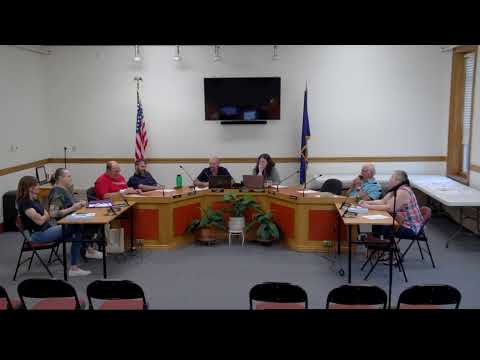
At a recent Skowhegan Planning Board meeting, members reviewed draft ordinance language to add battery energy storage systems, or BESS, to the town's solar regulations and agreed to solicit public comment and host educational outreach before any final action.
The draft adds a definition and multiple application and safety requirements. The planner presenting the changes read a proposed definition aloud: "a physical container, structure, or facility comprised of 1 or more battery units, associate electrical equipment, safety systems, and controls designed to store energy for later use. BESS may be integrated into or co located with a solar energy facility." The planner said the state handbook currently lists only six such systems in Maine.
Why it matters: The new language would govern where and how battery storage can be sited with solar projects, address fire and environmental risks, and set financial assurance requirements should operators need to remove or remediate a facility.
Key provisions discussed
- Inspections and planning review: The draft requires that "all BESS shall be subject to inspection by the code enforcement officer," and that any significant change to battery type or location requires planning-board review.
- Emergency management plans: Applicants would have to submit an emergency management plan covering anticipated hazards for the system, including "fire suppression methods, thermal control, battery failure protocols, and 24 7 contact information for designated emergency liaison." The planner said the requirement applies to BESS within applications under the ordinance.
- Decommissioning and financial assurance: The ordinance would require a decommissioning plan addressing lawful removal, transport and disposal of battery materials "in compliance with the main DEP and federal hazardous waste regulations." The draft asks for an itemized estimate of BESS decommissioning costs, updated every two years, and would require a performance bond, letter of credit or other mechanism to "cover a 100% of the BESS decommissioning costs." The planner added that "the owner or operator shall be fully liable for environmental remediation in the event of battery fire, leakage, or release of hazardous materials."
- Application details and standards: Applications proposing a BESS would need to provide battery description (for example, lithium-ion), rated capacity, number of battery units, cooling and fire-protection systems, a site plan showing battery container locations, and code-compliance certification. The applicant must provide written certification that the BESS will be designed and installed in compliance with the National Fire Protection Association standards, the National Electric Code, the Maine Uniform Building and Energy Code, and the International Fire Code, and must include manufacturer safety data sheets for batteries and cooling agents.
- Setbacks, signage and noise: The draft sets a minimum 250-foot setback from any existing residential dwelling unit and 100 feet from any property line; the planning board may reduce those setbacks with a written waiver from affected abutting landowners. Signage on BESS enclosures must identify hazard warnings, battery types and 24-hour emergency contact information. Noise from cooling or operational components would be limited to 55 dBA at any property line.
- PFAS and firefighting foams: The presenter said the draft prevents use of PFAS-containing firefighting foams or substances at BESS sites and places responsibility for any cleanup or remediation related to thermal runaway, leakage, or fire events on the owner.
Public engagement and next steps
Board members and staff discussed public outreach. The planner said the draft is being prepared for public comment and proposed distributing a survey and holding a panel of experts in Skowhegan, potentially in late September or early October, with invitations to neighboring towns through KVCOG. The planner also described using the town—s mass notification system and a Google-style form to collect feedback; board members discussed scheduling a formal public hearing later in the process and noted that final adoption is not imminent. One member cautioned that timeline is "long ways off," and suggested targeting the next town meeting cycle for formal actions.
No formal regulatory vote on the BESS language was recorded during this meeting; board members directed staff to publish the draft for engagement and to organize outreach and a survey. The meeting concluded with routine business and a motion to adjourn.
The planning board will gather public input and expert testimony before deciding whether to advance the draft for a public hearing or a formal vote.