Get Full Government Meeting Transcripts, Videos, & Alerts Forever!
Get email alerts on the Zoning topic
No spam. Unsubscribe anytime.
Tulsa County commissioners table rezoning for 38.48-acre Spring Hill Farms tract after residents cite runoff, traffic and septic concerns
Summary
At the Aug. 18 Tulsa County Board of County Commissioners meeting, the board tabled a rezoning request for a 38.48-acre tract owned by Spring Hill Farms LLC after residents raised stormwater, septic, traffic and public-safety concerns and staff flagged inconsistencies in the agenda packet.
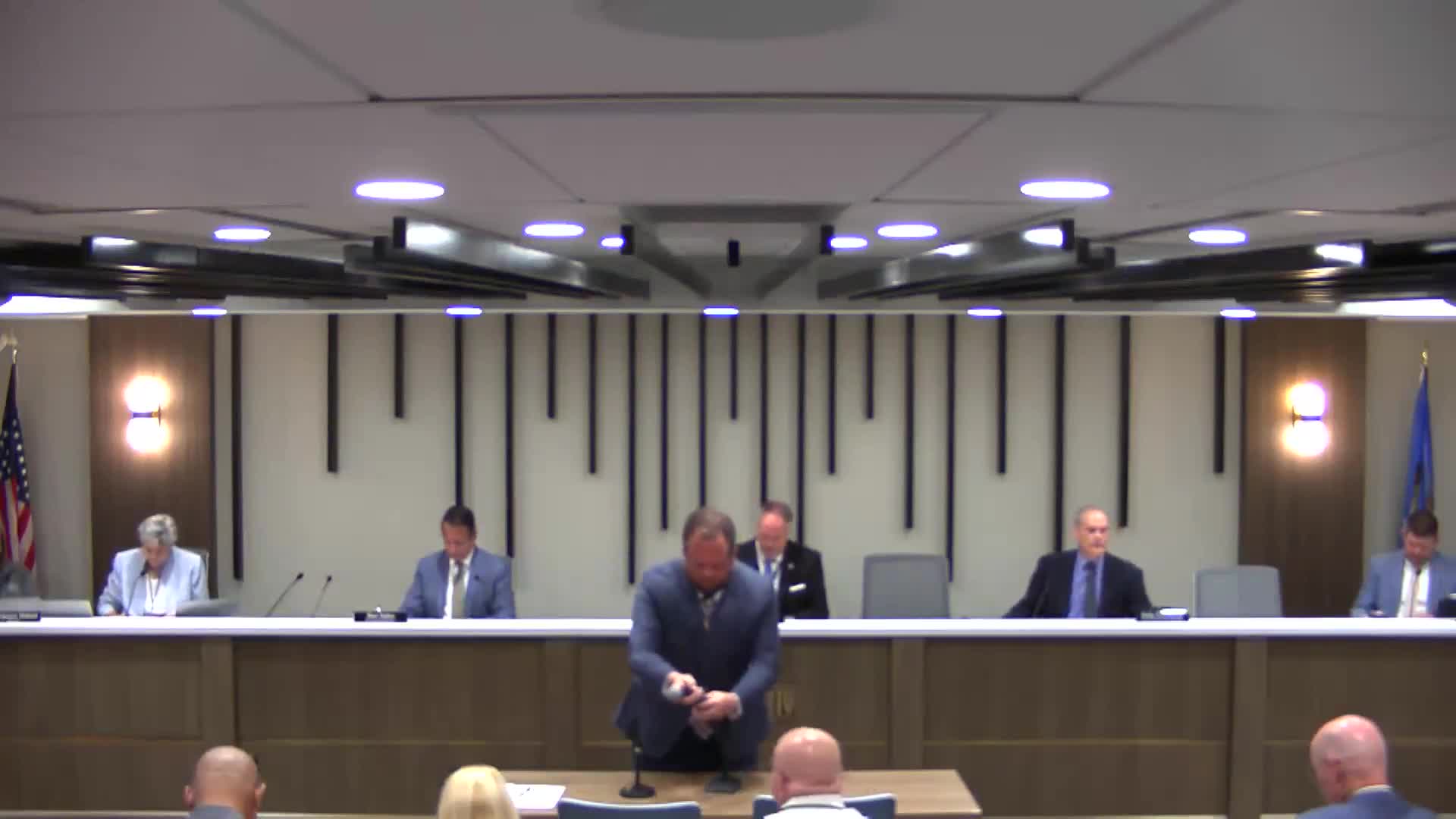
The Tulsa County Board of County Commissioners on Aug. 18 voted unanimously to table a rezoning request for a 38.48-acre tract owned by Spring Hill Farms LLC after residents raised runoff, traffic and septic-system concerns and county staff said the agenda packet contained inaccurate information.
Residents and nearby property owners said the rezoning — listed on the agenda as a request to change the parcel from AG (agricultural) to RS-2 (single-family, half-acre lots) — would allow dense development on steep ground near South Lewis Avenue and could bring as many as 108 homes if additional acres are rezoned. Valerie Coble, who said she spoke with the developer, told commissioners “this area presented today will actually be a total of a 108 homes, not 54,” and urged the board to deny the request and keep the land agricultural.
Why it matters: The parcel sits on a 50-foot rise above existing homes on Lewis Avenue, residents told the board, and they said erosion and stormwater already affect properties east of the road. Commenters said a half-acre subdivision with aerobic septic systems would increase runoff and risk contamination of ponds and home gardens. Residents also raised traffic and public-safety concerns tied to limited law-enforcement coverage and the single existing entrance to the proposed subdivision.
Public comments and staff responses Valerie Coble said the property owner had purchased roughly 90 acres and planned development in phases, and she called for minimum lot sizes similar to the surrounding rural lots: “leave this rural agricultural community as that rural agricultural is spread out.” Tyler Coble described wildlife and the risk of increased vehicle collisions with animals. Jason Morgan, who lives directly across from the parcel, urged the board to require “an independent engineering study as it relates to wastewater runoff” and said trees removed by recent clearing have already increased sediment runoff into county ditches.
County staff and the applicant replied that the planning and engineering process includes technical reviews and conditions. Bridal Davis, the planner on the case, told commissioners the application had been approved through the Planning Commission and that staff recommended approval. Alex from the county Engineering and Highway office said the MOU and development review processes require stormwater detention and that “as they're designed ... there will not be any more water running off of it than there is today regardless of how many homes there are,” provided the developer meets county engineering requirements.
Applicant and engineering statements Alan Betchen, the project's engineer and surveyor, said the development team had reduced its request after neighborhood feedback and that the ordinance packet before the board reflected RS-1 zoning language. He told the commission the developer holds an earth-change permit for current grading work and described the plan’s detention layout, saying the “bulk of the property ... drains to that existing pond” and that detention facilities would be provided along Lewis Avenue to mitigate post-development flows.
Betchen also described lot sizing and regulatory constraints: he said DEQ (the state environmental regulator) will not sign a final plat that includes lots smaller than a half acre where DEQ rules require larger lots for sanitary systems, and asserted that the development would not include lots under half an acre.
Commissioners' action and next steps Commissioners said they found inaccuracies in how the item appeared on the agenda packet — specifically conflicting zoning classifications recorded in the transmittal and ordinance — and moved to table the matter to the next available meeting so staff could correct the record and provide additional technical detail. The motion to table carried unanimously (three yes votes).
The commission and county engineering staff reiterated that a preliminary plat will not move forward without required stormwater detention and engineering approvals, that the county will enforce requirements for a second entrance or equivalent means of safe egress, and that DEQ approvals for on-site sanitary systems are prerequisites to final plat approval.
Officials did not set a new hearing date at the Aug. 18 meeting. The item will return to the board after county staff correct the agenda materials and provide the engineering and planning clarifications requested by commissioners and residents.