Get Full Government Meeting Transcripts, Videos, & Alerts Forever!
Get email alerts on the Land Use Alcohol Permit topic
No spam. Unsubscribe anytime.
Council approves special-use permit allowing alcohol sales for karaoke restaurant at 2113 S. Air Depot Blvd.
Summary
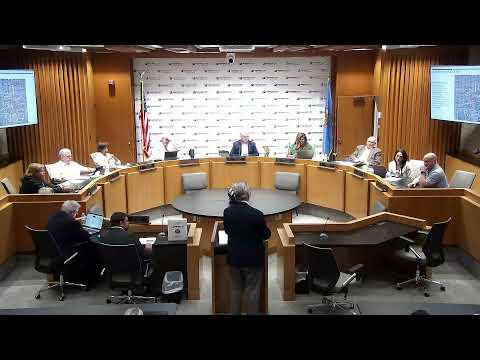
After debate about noise, security and room configuration, the Midwest City Council approved a special-use permit to allow alcoholic beverage service at an existing karaoke/restaurant at 2113 South Air Depot Boulevard with conditions discussed during the hearing.
Midwest City ' The Midwest City Council on Aug. 26 approved a special-use permit allowing a restaurant at 2113 South Air Depot Boulevard to sell alcoholic beverages, following public testimony and a planning commission recommendation to deny the application.
The applicant operates a restaurant and karaoke business at the site and sought permission for alcoholic beverage sales. At the Planning Commission the application had been recommended for denial; staff outlined that the property already operated as a restaurant and karaoke facility with a certificate of occupancy but that restaurants in the C-3 district require a special-use permit to permit on-site alcohol sales.
Opposition and support: The council heard one nearby property owner who opposed the permit, citing noise and potential loitering. Several supporters and the applicant's representative addressed those concerns. A resident who visited the facility and "cranked up" interior karaoke during a site visit said he could not hear the music at the property boundary and described the applicant's soundproofing and insulation. The applicant's attorney said the owner spent roughly $4,000 commissioning a decibel study showing that interior sound levels do not transmit to surrounding property boundaries.
Applicant's operations and controls: The business representative said the operation consists of multiple private, sound-insulated karaoke suites (several different room sizes) rather than a single open karaoke floor. The applicant described installed soundproofing, locked audio controls, plans for on-site security (including retired law-enforcement officers), wristbanding for patrons of legal drinking age, and in-room video monitoring to document incidents if they occur.
Police and safety questions: A retired police officer and other council members raised enforcement concerns about separated soundproof rooms, underage drinking and the challenge of supervising multiple closed rooms. Supporters responded that security plans, cameras and visible staff controls reduce those risks and that the business had operated as a carryout/restaurant for months without police complaints. Council members noted the special-use permit can be revoked if violations occur.
Vote: The council approved the special-use permit by roll-call vote. Conditions discussed included hours of operation and 21+ access after 10 p.m., security arrangements, and compliance with ABLE (state alcohol licensing) requirements; the ABLE Commission had indicated the applicant could receive a state license if the council approved the zoning/special-use permit.
Ending: The council's approval allows the applicant to complete ABLE licensing steps and operate with alcohol sales subject to municipal zoning conditions and state licensing. Council members said they would monitor complaints and that revocation remains an enforcement option if required.