Get Full Government Meeting Transcripts, Videos, & Alerts Forever!
Get email alerts on the Board Governance topic
No spam. Unsubscribe anytime.
Robbinsdale board splits over bylaws, special-meeting rights; legal counsel role draws sharp criticism
Summary
A lengthy dispute over whether three board members may 'call' a special meeting — and who may decide its timing and agenda — dominated the Robbinsdale Public School District board meeting, prompting motions limiting reconsideration of recent budget votes and a failed attempt to suspend part of the bylaws.
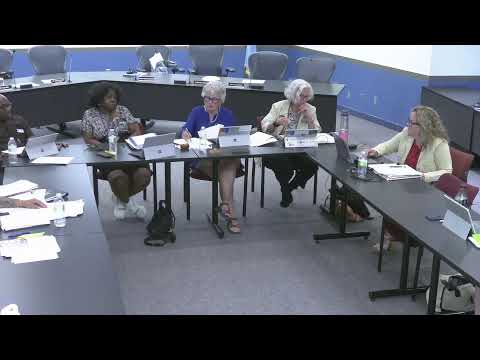
The Robbinsdale Public School District Board of Education spent the bulk of its Monday meeting arguing over the board’s bylaws, when three directors may call a special meeting and what role legal counsel may play in moderating those disputes.
The disagreement started after three directors — Director Long, Director Bassett and Director Holmes — asked the board to convene a special meeting to consider budget items, newly created positions and other matters. The chair and the board’s legal counsel advised that the bylaws do not permit three directors to set the special meeting’s time or agenda without the board’s approval, triggering hours of debate about procedure, precedent and the involvement of attorneys.
Why it matters: Board members and outside stakeholders said the outcome will affect how directors raise urgent matters between regular sessions, how the district schedules and staffs additional meetings and whether community-appointed advisory committees will have a clear path to input. Several directors described the dispute as symptomatic of deeper trust and governance issues on the board.
Discussion and motions: Director Bassett moved to add an item titled “bylaw infractions” to the agenda; the board approved that amendment and later debated whether budget items already adopted could be reconsidered at a special meeting. Legal counsel advised members that, under Robert’s Rules of Order and the district’s bylaws, a motion to reconsider must generally be made either the same day as the original vote or the next succeeding day and only by someone who voted on the prevailing side; counsel said several budget actions already were being implemented and therefore could not be reconsidered. Based on that advice, the board voted to determine that three specific budget items (listed in the special-meeting request as items 1a–1c) could not be reconsidered at a special meeting; that motion carried.
Board members pressed contrasting views. Director Holmes said she felt the chair had “stifled” discussion by inserting legal advice and urged more direct board deliberation: “When you shut down discussion and call them legal to silence board members, I am floored that we’re at this point.” Director Hillenbrand and others defended seeking legal counsel to ensure compliance with open-meeting requirements and Robert’s Rules, saying legal input helps prevent litigation risks and procedural errors. As one board member put it, “Robert’s Rules can be gnarly.”
Repeated themes: Several directors expressed frustration with how committees and staff liaisons have managed agenda-setting and how legal counsel has been engaged. Director Bassett argued three members have long exercised the right to call meetings and that the chair lacked authority to preempt that practice. Others said the board should update bylaws and policies to clarify the special-meeting process and to determine how the board — not the chair alone — will direct any outside legal counsel.
Next steps: The board voted to consider the special-meeting process as an agenda item at an upcoming work session. A later roll call to temporarily suspend the bylaw provision cited as 5b (the section covering special meetings) failed to reach the two-thirds threshold needed, so the bylaws remain in force while the board develops clearer procedures. Several directors urged the board to expedite a review and to decide whether any policy or bylaw amendments are needed.
Ending note: The session stretched past evening business into the board’s study session, as members also covered a separate agenda of operations and the reImagine/visioning work (discussed in the study session). The dispute left unresolved tensions about counsel’s role, how the board will structure committee work going forward and how to bring community participants and advisory groups into time-sensitive planning.