Get Full Government Meeting Transcripts, Videos, & Alerts Forever!
Get email alerts on the Regional Transportation topic
No spam. Unsubscribe anytime.
Local borough and township managers warn proposed MPO voting formula would reduce city representation
Summary
Managers from Leslieville and Lawrence Park told Erie City Council the Metropolitan Planning Organization’s proposed switch to a vehicle‑miles‑traveled formula would reduce the city’s votes and cut smaller municipalities’ representation, and urged council to request alternative distribution models.
Two regional municipal managers told Erie City Council during public comment that a proposed change to the Metropolitan Planning Organization’s voting structure would significantly reduce representation for the city and nearby boroughs.
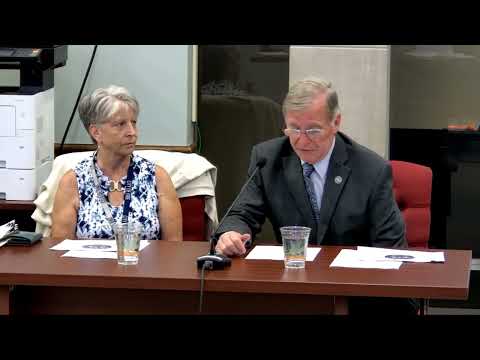
Marcus Jacobs, borough manager of Leslieville, and Spencer Caton, township manager for Lawrence Park Township, said the MPO proposal bases votes on vehicle miles traveled (VMT), a metric the managers said is complex, locally devised and not federally or statutorily required. “Right now, the city has six votes in this organization… under this proposed change the city is losing one third of their representation,” Jacobs said. He and Caton told council that Wesleyville and Lawrence Park could lose votes entirely and that even the airport could lose its vote under the proposed formula.
Jacobs said VMT “punishes efficiency” by reducing representation for municipalities that prioritize transit, sidewalks or bike infrastructure, because those modes lower vehicle miles traveled. He and Caton argued the MPO applied the proposed formula inconsistently by preserving votes for entities that do not own roads while reallocating municipal votes based on VMT.
Both speakers urged the council to ask MPO decision‑makers for additional options and a broader analysis rather than a single proposed distribution model. “We should be presented multiple potential alternatives for how our votes get distributed, and then we’ll see the pros and cons of each,” Caton said. The managers cited recent MPO involvement in federal funding decisions, including waterfront projects and road work, and said representation affects allocation of federal transportation dollars in the region.
Council did not take formal action on the MPO item during the meeting. The speakers’ comments were part of the council’s public comment period and serve as a record of local governments’ concerns about the proposed MPO bylaws and voting changes.