Get Full Government Meeting Transcripts, Videos, & Alerts Forever!
Get email alerts on the Transportation Road Maintenance topic
No spam. Unsubscribe anytime.
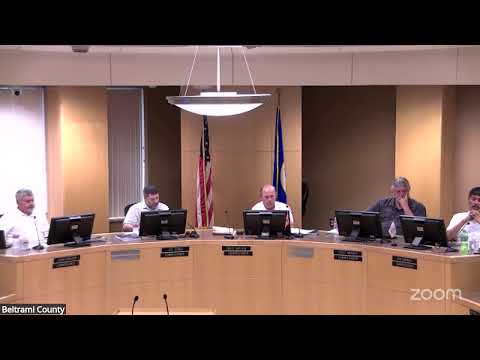
Beltrami County presents options after township concerns about calcium chloride dust control
Summary
Highway staff outlined dust-control practices and offered a menu of options for townships after residents and some townships raised concerns about corrosive effects of calcium chloride. The board directed staff to work with affected townships on options (excluding a full township-maintenance takeover option) and return with a policy.
Beltrami County highway staff explained the county—s dust-control program, the relative scale of chloride use, and a range of options for townships that object to calcium chloride use on specific roads.
Bruce (county highway staff) said the county applies dust control to roughly 150 miles of road at an annual cost of about $650,000. He described calcium chloride as the county—s typical product (magnesium chloride was used this year), and said the product reduces regraveling and overall maintenance costs by keeping fines in the road surface. He acknowledged the product—s corrosive qualities and cited statewide research showing winter road-salt use accounts for far more chloride loading than summer dust-control applications.
Options and board direction Bruce presented a menu of options for townships that oppose chloride use on particular roads: 1) do nothing (county continues current practice), 2) township takes full ownership of the road (township assumes all responsibility), 3) township maintains the county road under agreement (county retains ownership), 4) township pays the county the incremental cost of increased maintenance if chloride is withheld, 5) township pays the cost difference to use an alternative, non-chloride product.
After discussion, commissioners agreed the county should present those options to townships and that staff should work directly with townships to develop agreements; the board indicated it would not favor option 2 (full township takeover) as a default. County Administrator Tom and several commissioners emphasized the need to limit the number of different product options because multiple products would increase administrative complexity and costs.
Why it matters: the county—s approach balances road-maintenance cost savings with local concerns about corrosivity and environmental effects. The outcome will influence road maintenance budgets and township-county agreements.
Next steps and implementation - Highway staff will develop a policy document and cost estimates for the options menu and begin direct outreach to townships. - Commissioners suggested a small working group (highway staff, two commissioners and township representatives) to review options and return recommendations to the board.
The board did not adopt a countywide prohibition; instead it directed staff to pursue township-level solutions and to return with a policy for board approval.