Get Full Government Meeting Transcripts, Videos, & Alerts Forever!
Get email alerts on the Tpa Budget Opportunity Fund topic
No spam. Unsubscribe anytime.
Spokane Valley TPA commission backs 2026 budget, proposes Opportunity Fund and data tool
Summary
The Spokane Valley Tourism Promotion Area Commission recommended a $1.775 million 2026 TPA budget, including a proposed Opportunity Fund to help secure events and a $20,000–$35,000 annual purchase for place‑based visitor data to measure event impact. The commission voted to forward the budget and concepts to city council.
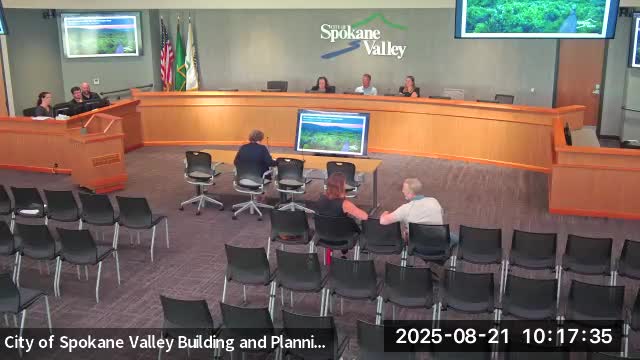
The Spokane Valley Tourism Promotion Area Commission on Aug. 21 recommended that city council approve a proposed 2026 TPA (tourism promotion area) budget totaling $1,775,000 and supported creating an Opportunity Fund to help secure destination events, along with setting aside funds to buy place‑based visitor and retail data services.
The recommendation matters because the TPA is the commission’s primary tool to promote Spokane Valley lodging and attractions; staff said better event measurement and a nimble Opportunity Fund could help the city target resources where they generate hotel nights and economic impact.
City finance staff reported revenue through June and a 2025 projection. “Year to date, we are down about 3%,” Chelsea, city finance staff, told commissioners, and she said staff is projecting roughly $1,300,000 in TPA revenue for 2025. Staff proposed rolling about $450,000 in unspent 2025 funds into next year, producing the $1,775,000 total that staff presented as the working 2026 budget.
City staff described the Opportunity Fund as a flexible pool “to secure destination events such as conventions, conferences, large meetings, trade shows, sports events and tournaments,” Leslie Brassfield, city staff, told the commission, and said events would need to meet criteria demonstrating likely hotel lodging. Staff did not present final criteria or an operating procedure at the meeting; they said those details and any necessary code changes would be developed with city attorney and finance offices and returned to the commission for review.
Commissioners discussed whether lodging tax (LTAC) funds could be included; staff said the Opportunity Fund under consideration at this meeting would use TPA funds and that lodging tax processes are separate and would require discussion in their own forum. Several commissioners urged designing the fund to be “nimble” so it could respond quickly to recruitment opportunities that often arise on short notice.
Staff also proposed funding place‑based and economic data tools to better measure event impact. “We feel that this data would be invaluable in helping us to determine whether a past or future event could draw from beyond the local geographical area,” Brassfield said, and estimated subscription costs in the neighborhood of $20,000–$35,000 annually depending on the vendor and package. Staff named example providers discussed in demos: Placer.ai, Lightcast and others.
The commission moved and voted to forward the 2026 work plan and budget concepts to city council with a recommendation to establish an Opportunity Fund and to include a small set‑aside for data research. The motion (to form an Opportunity Fund using TPA funding and to reserve $20,000–$35,000 for data services) was made by Lee (commission member) and seconded by Amanda (commission member); commissioners present voted in favor and the chair declared the recommendation unanimous. Staff said it will present the work plan and budget concepts to city council in September and return to the commission with consultant proposals and draft Opportunity Fund criteria in October.
Staff emphasized next steps and timing: the commission’s summary report was scheduled for council as an information item; staff planned a two‑step presentation to council (a summary and then a work‑plan approval request) so that consultant scopes and fees from destination marketing and sports recruitment firms can be considered before final allocations are set.
The commission’s recommended 2026 budget and the Opportunity Fund concept do not by themselves authorize expenditures beyond the council appropriation process. Staff said any specific awards from an Opportunity Fund would follow an approval process the commission and city council would adopt.