Get Full Government Meeting Transcripts, Videos, & Alerts Forever!
Assembly subcommittee warned HR 1 will cut Medi‑Cal, food aid, clean‑energy incentives and tighten student‑loan rules
Summary
California lawmakers and state officials told an Assembly Budget subcommittee that HR 1, now federal law, could reduce Medicaid funding, restrict CalFresh eligibility, rescind Inflation Reduction Act programs and change student loan repayment — and that many implementation details still depend on federal guidance.
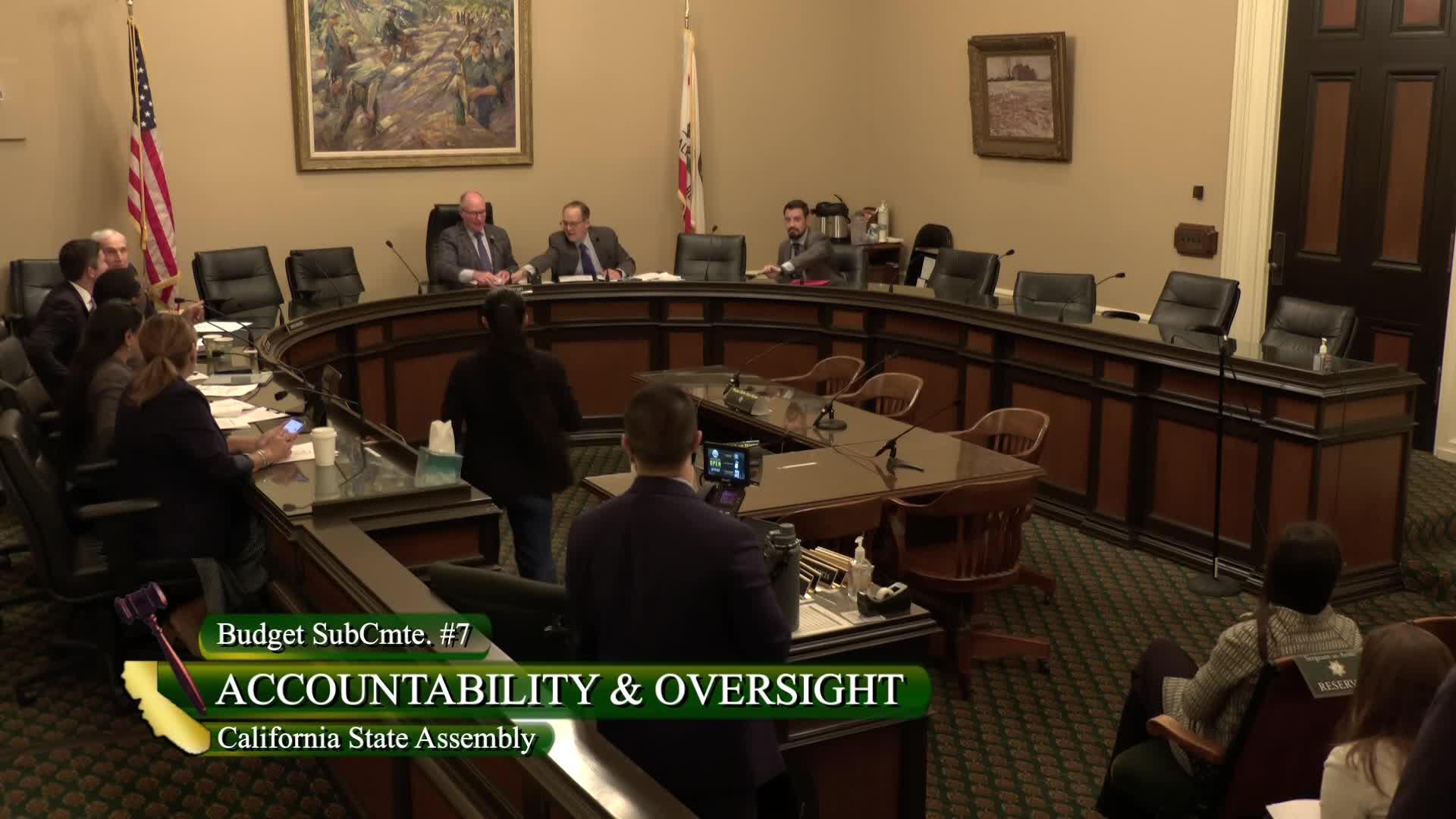
Chair Hart convened the Assembly Budget Subcommittee on Accountability and Oversight for an informational hearing on HR 1, the federal law enacted in mid‑2025, saying, "Now that HR 1 has passed congress and been signed by the president, we can now begin to assess its full and significant impact." The chair told members the hearing would map programs most vulnerable to the law and start planning California's response.
The Legislative Analyst's Office and the Department of Finance delivered the hearing's technical outline: the law immediately restricts states' ability to levy many provider taxes that underpin Medi‑Cal funding; tightens eligibility and verification requirements for Medi‑Cal and CalFresh (SNAP); sunsets or rescinds several clean‑energy and electric vehicle tax credits; and changes federal student loan and Pell eligibility rules. Carolyn Chu of the Legislative Analyst's Office told the committee her review focuses on "first‑order effects" — actions the state must take to implement the law — and stressed that significant federal guidance is still pending.
Mary Halterman of the Department of Finance summarized the statute's timing and scale, saying HR 1 "was signed by the president on 07/04/2025" and listing immediate, near‑term and later implementation deadlines. Halterman flagged a possible immediate restriction on provider taxes and noted the administration was awaiting federal rules that will determine how work requirements, redeterminations and other changes are implemented at the state and county level.
Both fiscal advisers flagged a central near‑term budget risk: the state's managed care organization (MCO) tax and related provider…
Already have an account? Log in
Subscribe to keep reading
Unlock the rest of this article — and every article on Citizen Portal.
- Unlimited articles
- AI-powered breakdowns of topics, speakers, decisions, and budgets
- Instant alerts when your location has a new meeting
- Follow topics and more locations
- 1,000 AI Insights / month, plus AI Chat