Get Full Government Meeting Transcripts, Videos, & Alerts Forever!
Get email alerts on the DTSC Reform topic
No spam. Unsubscribe anytime.
Lawmakers press DTSC on enforcement, permits, fees and consumer-chemical work four years after SB 158
Summary
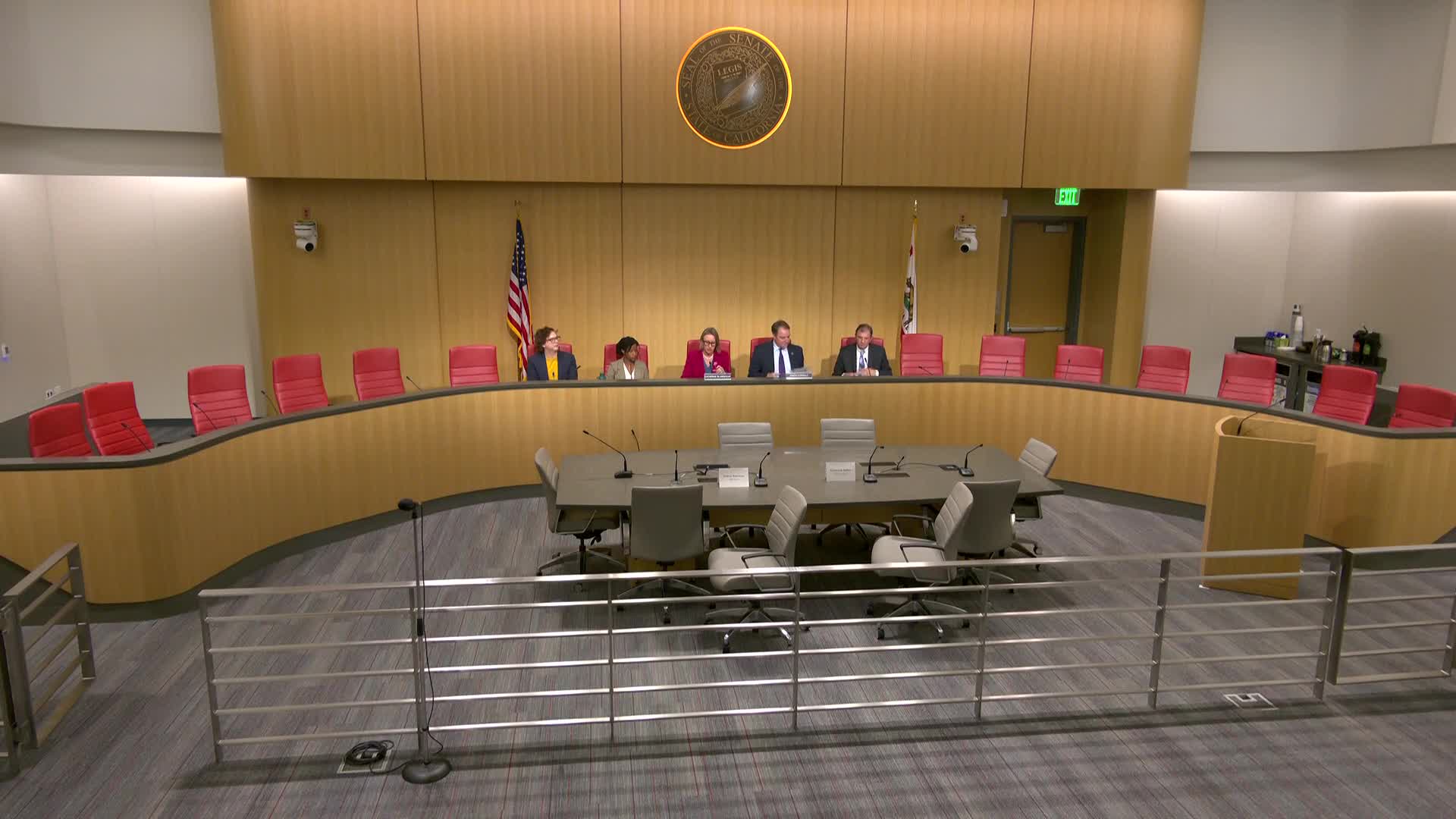
A joint oversight hearing of the Senate Environmental Quality Committee and the Assembly Environmental Safety and Toxic Materials Committee reviewed implementation of SB 158 reforms at the Department of Toxic Substances Control (DTSC) and pressed officials on permits, fees, enforcement and chemical‑safety work.
A joint oversight hearing of the Senate Environmental Quality Committee and the Assembly Environmental Safety and Toxic Materials Committee reviewed implementation of reforms enacted by SB 158 in 2021 and pressed the Department of Toxic Substances Control on permits, fees, enforcement and safer consumer-products work. Senators and assemblymembers heard testimony from DTSC Director Katie Butler, Board of Environmental Safety Chair Andrew Raikstra, regulated-industry and environmental groups, and a range of community members directly affected by legacy contamination.
The hearing focused on whether reforms passed four years ago have delivered sustained transparency, fiscal stability and stronger enforcement. Director Katie Butler told lawmakers she has organized the department’s work around three pillars — enforcement, improved community engagement and cross‑agency collaboration — and described recent enforcement and outreach steps that she said reflect that strategy.
Why it matters: DTSC enforces hazardous‑waste law across California and oversees cleanup of legacy sites. Lawmakers and advocates said timely permitting, clear performance metrics and stronger public engagement are necessary to protect communities — especially those overburdened by pollution.
Director Butler highlighted enforcement actions and community outreach as evidence of progress. "First, enforcement, strength, strengthening our enforcement culture at the department," Butler said, and described criminal‑investigation collaboration with the Los Angeles District Attorney that led to charges against Atlas Metals and the facility’s shutdown because it operated adjacent to a high school. She also said DTSC issued an "imminent and substantial endangerment order" for Chiquita Canyon Landfill, ordered corrective actions including adding a geomembrane and warned of penalties up to "$70,000 per day" if the landfill did not act.
Butler described tools intended to improve public access to information, including an online interactive inspection map and an Exide cleanup feedback portal to allow residents to submit and track comments. She said DTSC has launched an Environmental Justice Advisory Council and that the department allocated more than "$129,000,000 through 90 grants" to the Equitable Community Revitalization Grant program for cleanup and reuse projects (affordable housing, parks and other community uses).
Board Chair Andrew Raikstra outlined the Board of Environmental Safety’s role under SB 158 and said the Board will vote on fee rates for fiscal years 2025–26 and anticipates voting on the Hazardous Waste Management Plan in November. "SB 158 created the Board of Environmental Safety as a board with a focused oversight role of DTSC rather than serving as a full governing body," Raikstra said, and emphasized the Board’s work on performance metrics and public hearings for the hazardous-waste plan.
Fiscal stability and fees: Director Butler said fee reforms and recent regulatory changes improved revenues: DTSC moved from roughly $40 million in receipts to about $67 million in the most recent fiscal year after adjustments and budget reductions; the agency also reduced its budget by nearly $18 million. Raikstra and others warned that the generation and handling fee remains in structural deficit and that the Board is considering options — including modest increases — while being constrained by a statutory 10% reserve cap.
Hazardous Waste Management Plan and permitting: DTSC released a draft hazardous waste management plan and the Board held four public hearings in Fresno, Berkeley, Los Angeles and Sacramento. Both DTSC and the Board reported extensive public comment and said they had removed a proposal to divert certain contaminated soils to municipal landfills after opposition. Raikstra said the Board expects to release a revised draft in September and vote on a final plan in November. DTSC acknowledged data gaps that complicate setting quantitative waste‑reduction goals.
Permitting improvements and community concerns drew sustained attention. Butler said DTSC has cleared several long‑expired permits and issued a draft permit for the Buttonwillow Clean Harbors Landfill, and that some renewals have been limited to five years to create earlier checkpoints tied to compliance history. She described permit conditions for some sites — for example, requiring community air monitoring, health‑and‑safety plans and stronger engineering controls — and noted that the Board is handling appeals for some permits, including FiberTech in Santa Fe Springs.
Safer Consumer Products: Lawmakers and witnesses pressed the department on the pace of the Safer Consumer Products (SCP) program. Director Butler said SCP has expanded scientific projects and that the program projects it will regulate roughly 13 consumer‑product/chemical combinations over the next two to three years, moving toward a target of roughly five listings per year. NRDC Senior Director Avi Carr said the program "needs to do a lot more to deliver on public health" and urged DTSC to use SB 502 tools (authorities passed in 2022) to speed regulatory action. Industry witnesses emphasized the program’s technical work and urged legislative patience for agency science while also urging clarity and timely signals to manufacturers.
Community testimony and environmental justice: Dozens of public commenters urged stronger action. Residents from the Santa Susana Field Laboratory, Exide cleanup communities and other frontline areas urged more aggressive cleanups and criticized DTSC for slow processes and limited authority. "It feels like DTSC still hasn't found its way," said Angela Johnson Mazaros of Earthjustice in her testimony describing persistent permitting delays and unmet regulatory obligations. Melissa Bumstead, who represents parents near the Santa Susana site, urged expanded Board authority and asked the legislature for more direct oversight and hearings focused on affected communities.
Looking ahead: The Board will vote on fee rates in an upcoming meeting and anticipates a final vote on the Hazardous Waste Management Plan in November. Lawmakers asked for clearer performance metrics, tighter timelines where possible, stronger public engagement, and legislative follow‑up on data, funding and statutory gaps the department identifies. Multiple witnesses suggested targeted legislative or budget action to accelerate reforms — particularly for permitting capacity, source‑reduction goals and SCP enforcement.
The hearing closed with committee chairs and members urging continued oversight and follow‑up briefings on specific elements of DTSC’s work, including extended producer responsibility, hazardous‑waste fees and the implementation timetable for the hazardous waste management plan.