Get Full Government Meeting Transcripts, Videos, & Alerts Forever!
Get email alerts on the Housing topic
No spam. Unsubscribe anytime.
Arvada staff recommend joining DRCOG regional housing needs assessment to meet SB 24-174 requirements
Summary
Arvada city staff recommended that the City Council participate in the Denver Regional Council of Governments (DRCOG) Regional Housing Needs Assessment (RHNA) to satisfy administrative requirements created by Senate Bill 24-174.
Arvada city staff recommended that the City Council participate in the Denver Regional Council of Governments (DRCOG) Regional Housing Needs Assessment (RHNA) to satisfy administrative requirements created by Senate Bill 24-174.
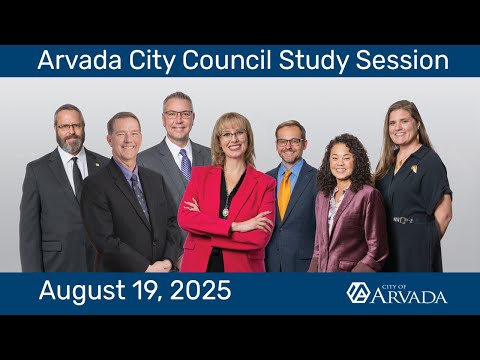
Sam Bradley, the city’s affordable housing development specialist, told the council the immediate requirement is a housing needs assessment (HNA) due to the Colorado Department of Local Affairs (DOLA) in 2026 and a city-specific housing action plan (HAP) due in 2028. "The purpose of today's session is we're going to provide council with some information on Senate Bill 24-174 and the new requirements that it brings to our municipality," Bradley said.
The nut of staff’s recommendation is practical: Arvada completed its own HNA and a 27-page strategic housing plan before the state issued guidance, and those local documents do not match every administrative item the state now requires. DRCOG has produced a regional RHNA that DOLA has already reviewed; staff proposed that Arvada "participate" by submitting council comments to DRCOG and using the approved RHNA as a free supplement to Arvada’s existing work rather than commissioning a paid consultant to rework local datasets.
Participation, staff emphasized, would not mean adopting DRCOG’s document as the city’s HAP or surrendering local control. "Participating does not mean consensus with the findings. It does not obligate us to do anything at all," Bradley said. Under the proposed process, council would review the RHNA at a public meeting, staff would collect council comments and attach them to a resolution, and if council votes to participate on Sept. 2 staff would forward those comments to DRCOG and report to DOLA that Arvada reviewed the RHNA.
City legal counsel warned of a practical consequence tied to compliance. "If they deem us not compliant, we will not be eligible to apply for those grants," Rachel, city legal counsel, said, referring to guidance the governor’s office provided to municipalities about eligibility for some state grants. Legal staff and outside counsel have drafted resolution language intended to preserve Arvada’s ability to challenge other state laws in pending litigation while still taking the limited step of participating in the regional assessment.
Council members expressed a range of views. Some said the DRCOG RHNA provides useful regional context and can be a tool Arvada uses selectively; others warned that accepting regional facts could set a policy table the city did not intend to adopt. "I am afraid to accept a table set that is, kind of an amalgamation of the region," said Councilmember John (last name not specified), adding that Arvada’s suburban character differs from other cities in the metro area and that residents should have a voice in tailoring any final action plan. Another councilmember described the RHNA as a helpful, no-cost way to fill administrative gaps and avoid hiring consultants, calling the document "a tool in the toolbox."
Staff outlined specific differences between Arvada’s locally produced HNA and the DRCOG RHNA. Arvada’s HNA was completed earlier and intentionally treated homelessness and water supply as separate or out-of-scope topics; DRCOG’s RHNA includes forward projections, a more recent data cut, and regional analyses such as displacement risk that Arvada did not analyze in the same way. Staff said Arvada’s local document remains a robust source of city-specific survey and inventory data and that the two documents would be used together when the city prepares its required housing action plan by 2028.
Staff also summarized several substantive data points from the DRCOG materials that informed the recommendation: DRCOG projects roughly 5,000 housing units as Arvada’s 10-year local need, with about 3,000 of those units falling into the 0–50% area median income bracket; DRCOG projects larger regional needs (roughly 223,000 new homes in 10 years and 500,000 by 2050) based on historical trends; and DRCOG’s interactive tools can be filtered to show Arvada-specific outputs. Bradley noted local market nuances captured in Arvada’s HNA — for example, a substantial share of workers commute into Arvada and many residents commute out — and said those local details would remain central to Arvada’s future HAP.
Councilmembers asked how individual council comments would be recorded. Staff said they would collect comments from each councilmember and, if desired, attach names to individual comments in the resolution packet. The council will consider a formal resolution on Sept. 2 that would instruct staff to forward council comments to DRCOG and notify DOLA that Arvada participated in the RHNA public comment period. If the council decides not to participate, staff said the city would likely need to hire a consultant to update its HNA to the state’s checklist ahead of the 2026 deadline.
The council did not vote at the study session. Staff will circulate the DRCOG RHNA and Arvada’s existing HNA and solicit additional written comments from council members before the Sept. 2 vote.