Get Full Government Meeting Transcripts, Videos, & Alerts Forever!
Get email alerts on the Insurance Fraud Legislation topic
No spam. Unsubscribe anytime.
House committee hears bipartisan package to strengthen insurance-fraud reporting, penalties
Summary
The Michigan House Insurance Committee heard testimony on a bipartisan package (House Bills 4713–4719) that would mandate fraud reporting, expand civil fines, and add insurance fraud to the state racketeering statute; sponsors said the committee will consider the bills for a vote at a future meeting.
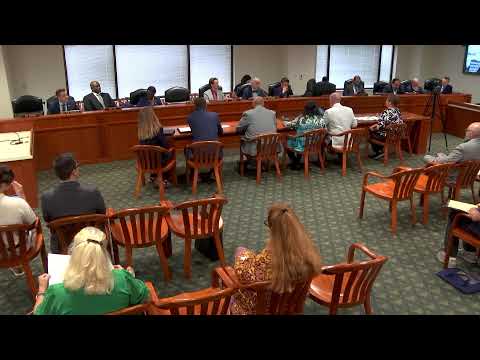
The Michigan House Insurance Committee heard testimony on a bipartisan package of bills (House Bills 4713–4719) aimed at strengthening reporting, civil penalties and criminal penalties for insurance fraud, and members said they plan to take the package up for a vote at the committee's next meeting.
Committee members and witnesses said the package is intended to improve information sharing, give the Department of Insurance and Financial Services (DIFS) additional civil-authority tools, and enable prosecutors to pursue organized fraud rings under the state's racketeering laws. Craig Sepich, director of strategy, policy and government affairs at the National Insurance Crime Bureau, testified that "insurance fraud is not a victimless crime" and cited a joint industry estimate that the total cost of non-health, non-life insurance fraud in the United States is $306,000,000,000 per year.
The bills would: make reporting of suspected insurance fraud mandatory (bringing Michigan in line with 45 states, the District of Columbia and Puerto Rico, according to testimony); enhance Michigan's fraud immunity statute to encourage information sharing; add insurance fraud to the state's racketeering statute; and create tiered criminal penalties and separate civil fines and restitution authorities. Representative Leitner described the change to the racketeering definition as straightforward and said it would make insurance fraud eligible for a 20-year felony sentence under the racketeering provision.
Testimony and sponsor remarks Craig Sepich of the National Insurance Crime Bureau (NICB) told the committee the organization works with insurers and law enforcement to "detect, prevent, and deter insurance crime." Sepich said mandatory reporting is "the cornerstone of a united effort of insurers, law enforcement, and the public to proactively identify and combat insurance crime" and that the NICB has used fraud reporting to identify complex fraud rings and provide "actionable intelligence to law enforcement partners." The committee also heard an FBI-based estimate cited by Sepich that over a 10-year period insurance fraud cost the average U.S. family between $4,000 and $7,000 in increased premiums.
Several bill sponsors summarized individual measures in the package. Representative Robinson introduced House Bill 4713, which sponsors said would expand covered conduct for billing-related fraud involving personal injury protection (PIP). Representative Leitner said House Bill 4717 would amend the penal code to include insurance fraud in the state's racketeering definition and said the amendment is a "20 year felony." Representative Leitner and other sponsors described the package as creating tiered penalties that range from misdemeanor penalties (for smaller or fewer incidents) up to more serious felonies for larger or repeated schemes. Representative Leitner and other sponsors also said the package improves information sharing between insurers, DIFS and national organizations such as NICB.
DIFS clarification on civil penalties Joe Garsha, general counsel and senior deputy director at the Department of Insurance and Financial Services, told the committee the package's civil-penalty provisions would shore up the director's authority to impose civil fines in addition to criminal penalties. "It gives the director additional tools to combat this activity short of engaging fully within the criminal, criminal process," Garsha said, clarifying that the civil fines are intended to supplement, not replace, criminal prosecution where appropriate.
Penalty and restitution details discussed on the record included sponsors' descriptions that smaller-scale fraud (for example, an amount under $1,000 or fewer than five fraudulent claims, as described by one sponsor) could be treated as a misdemeanor punishable by up to one year in jail and a fine (sponsors noted a sanction of up to three times the fraudulent claim amount in some tiers). Sponsors said higher tiers would carry stiffer penalties and that the racketeering change would permit felony prosecution for organized schemes; committee members noted racketeering convictions can include fines (sponsors cited up to $100,000) in addition to other criminal penalties.
Procedure, next steps and committee business Committee chair Harris announced that the committee's plan is to take the package up for a vote at the next meeting. No committee vote on the bills occurred during this hearing. Procedural actions taken during the session included approval of the minutes from the June 25 meeting (motion by Representative Schutte; approved "seeing no objection") and a motion by Vice Chair Carter to excuse absent members (carried without objection). The committee adjourned with the chair noting there was no further business.
Written positions on the package filed with the committee and announced during the hearing included support or neutral positions from the Insurance Alliance of Michigan, the Life Insurance Association of Michigan, the American Council of Life Insurers, the Michigan Association of Health Plans, and DIFS representatives. Several sponsors and witnesses told the committee they consider the package bipartisan and aimed at reducing costs to consumers by deterring fraud.
Questions and concerns raised Committee members raised operational and practical questions about who initiates fraud investigations (insurers typically initiate them) and whether higher penalties and expanded civil authorities would change insurers' incentives to investigate smaller claims. One member asked whether the increased penalties and restitution formulas would encourage insurers to pursue recoveries when investigation costs might exceed recoverable amounts; sponsors responded that the tiered penalties and the director's civil authority are intended to strengthen deterrence and recovery options but did not claim the package eliminates insurers' practical cost considerations.
What happens next The committee did not vote on the bills Thursday. Chair Harris said the package will be scheduled for a committee vote at a future meeting, at which time members may move the bills out of committee, amend them, or take other formal action.