Get Full Government Meeting Transcripts, Videos, & Alerts Forever!
Get email alerts on the Land Use Subdivision topic
No spam. Unsubscribe anytime.
Torrington conservation commission to send memo on open‑space options for 660 Touringford Street resubdivision
Summary
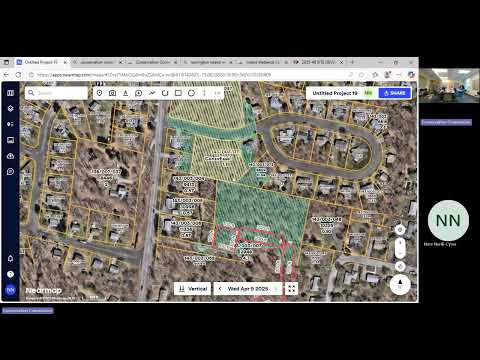
The commission voted to authorize staff to prepare a memo to Planning and Zoning outlining open‑space options — including a conservation easement wrapping the developable envelope or fee‑in‑lieu — for a resubdivision at 660 Touringford Street where most of the parcel is wetlands.
The Torrington Conservation Commission on Aug. 19 authorized staff to prepare a memorandum to the Planning and Zoning Commission outlining open‑space options for a resubdivision application at 660 Touringford Street.
Assistant city planner Nate Nardi Cyrus explained the property is nearly five acres and largely constrained by wetlands, leaving a relatively small developable footprint. Under the city’s subdivision rules the applicant must provide a 20% open‑space set‑aside or pay a fee in lieu. Cyrus said the commission should weigh three options: a fee in lieu, a conservation easement surrounding the buildable envelope, or transfer of the open area to the city where it would join existing conservation land.
Why it matters: the parcel sits at the top of a hill near Nutmeg Village and drains to Lehi Mine Brook. Commissioners and staff raised concerns that houses sited close to wetlands often prompt subsequent clearing up to the wetland edge; a monitored easement would create an enforceable annual check, they said. Cyrus told the commission the wetlands and an existing easement on adjacent property make a contiguous easement attractive in this case.
Cyrus noted the fee‑in‑lieu calculation is based on an appraisal of the entire parcel and is capped under local rules at 10% of fair market value, not 20% of acreage; he estimated the parcel’s fair market value could be in the tens of thousands of dollars, making the fee modest and subject to the timing of any sale. The commission discussed enforcement and monitoring: easements are inspected annually and can trigger city enforcement if violations are found; a fee in lieu, by contrast, would be collected only when the property is sold.
Commissioners also discussed how accessory‑apartment rules affect the developer’s plans. Cyrus explained the site is in a single‑family district; the applicant’s approach was to build two single‑family houses with accessory apartments in each, producing up to four dwelling units while remaining technically in a single‑family zone.
Action: the commission voted to authorize staff to prepare and circulate a memo to Planning and Zoning describing the conservation‑easement option, wrapping the developable envelope and monitoring language, and identifying fee‑in‑lieu as an alternative; the motion carried.
The commission asked staff to circulate the draft memo to members before it goes to Planning and Zoning and to return to the commission if the applicant proposes a materially different plan that changes open‑space impacts.