Get Full Government Meeting Transcripts, Videos, & Alerts Forever!
Get email alerts on the Veterans Recreation Pass topic
No spam. Unsubscribe anytime.
Committee hears testimony on bill to waive Michigan recreation passport fee for veterans
Summary
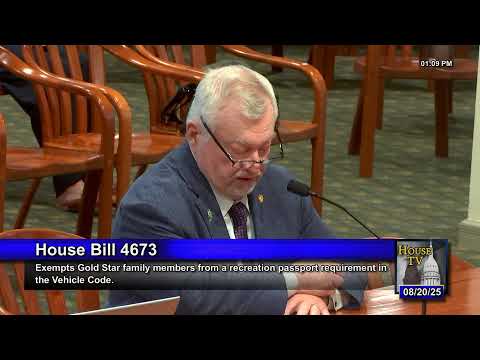
The Michigan House Committee on Natural Resources and Tourism on Aug. 20 heard testimony on House Bill 4743, sponsored by Representative Aaron Wolford, which would exempt honorably discharged Michigan veterans from the recreation passport fee that funds state parks.
The Michigan House Committee on Natural Resources and Tourism on Aug. 20 heard testimony on House Bill 4743, sponsored by Representative Aaron Wolford, a measure that would exempt Michigan veterans from the state recreation passport fee required to enter state parks.
A veteran testifying in support told the committee that veterans ‘‘have answered the call to defend freedom, often at extreme personal cost’’ and that state parks ‘‘provide spaces for peace, reflection, and connection.’’ The witness said the exemption would apply to ‘‘all veterans regardless of discharge status or service era’’ and framed the bill as ‘‘practical’’ and ‘‘respectful.’’
The bill drew broad sympathetic remarks from lawmakers, who cited mental-health benefits and opportunities for families. Representative Matt McFall, vice chair of the committee, said he is ‘‘a big mental-health proponent’’ and noted testimony about nature’s therapeutic value. Representative Jordan Hoadley urged the committee to treat the exemption as recognition of earned service rather than a giveaway.
Department of Natural Resources legislative liaison Chris (last name not specified) said the department has ‘‘supported this legislation in the past’’ but maintained a formal ‘‘no position’’ at the hearing pending a budgetary solution. He told members the parks system relies heavily on user fees: the department receives roughly $20–21 million per year from recreation passport sales and camping fees, and that about 77% of the parks’ operating budget comes from those restricted funds. The DNR also reported roughly 38 million annual visitors to the state park system and more than $500 million in capital outlay needs statewide.
On potential fiscal impact, the committee heard an estimate — described by the testifier and repeated in committee discussion — that the exemption could reduce recreation-passport revenue by about $2 million to $4 million annually. The DNR added that the Department of Military and Veterans Affairs has estimated roughly $1 million per year to operate verification and distribute hang tags under the bill’s current language.
Witnesses and members discussed implementation details. Representative Jim Weiss and others clarified that the bill’s verification language would follow existing DD-214 or veterans-plate rules and that active-duty service members already receive certain access. Representative Nicole Woodin asked about the bill’s requirement that the Department of Military and Veterans Affairs develop an alternative hang tag; the testifier said that requirement was intended to provide an appropriate verification tool rather than simply waiving the passport fee.
MParks Executive Director Nicole Fisher testified in general support of efforts to honor veterans while urging legislators to consider the broader Recreation Passport program and revenue distribution to local parks. She outlined the passport revenue allocation under current law and warned that local grant requests exceed available funds.
Michael Green of the American Legion Department of Michigan said the exemption could encourage veterans to use park resources and potentially increase campsite and related revenue. He also emphasized veterans’ mental-health needs and urged lawmakers to consider broader outreach and participation.
No committee vote on House Bill 4743 took place at the hearing; the item was taken up for testimony and discussion only. Committee members and agency representatives said they are open to further conversations about budget offsets and implementation.
The committee continued its agenda after the testimony and did not adopt or reject the bill at the Aug. 20 session.