Get Full Government Meeting Transcripts, Videos, & Alerts Forever!
Get email alerts on the Substance Use And Treatment topic
No spam. Unsubscribe anytime.
Burke County approves opioid-settlement programs and contracts to expand overdose response and treatment
Summary
The Board of Commissioners unanimously approved a county-led overdose response team and performance-based contracts with three providers using opioid settlement funds to expand naloxone distribution, low-barrier medication treatment and family-centered recovery services.
The Burke County Board of Commissioners on Aug. 19 unanimously approved two resolutions to use opioid settlement funds for a county-led overdose response program and for provider-led treatment contracts, county officials said.
County staff said the county-led plan will fund a 24/7 co-response team and related community outreach, and the board approved contracts with three community providers totaling $957,305 to expand local treatment options.
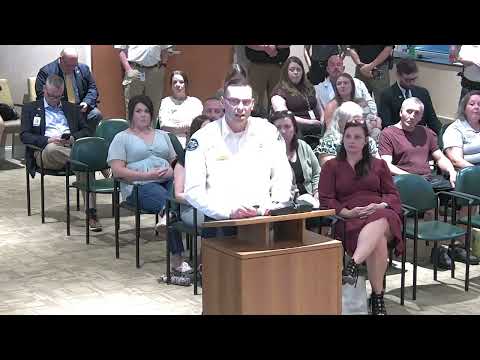
The county-led strategy will create a persistent response team (referred to in presentations as a “PORT” team) staffed by four community paramedics and four peer support specialists to co-respond to overdose calls and to conduct proactive community engagement. The plan also includes hiring a peer community navigator to work across systems — including emergency departments and social services — and continued communitywide naloxone distribution, officials said. “We’re really looking at investing these settlement funds into something that will have a huge impact on the county here,” Doctor Samuels said during the presentation.
Separately, commissioners approved performance-based contracts with three providers chosen through a request-for-proposals process. The county received 11 proposals; staff advanced three to contract, placed three in a revisit tier, and did not advance five. The approved contracts are: - A Caring Alternative: $300,000 for intensive outpatient and related services described in the application as SACOT/SAIOP-level outpatient care; - High Country Community Health: $267,305 to expand low-barrier medication-assisted treatment (MAT) in Burke County; - Spark (family-centered treatment): $390,000 for in-home, family-centered treatment that pairs clinical addiction specialists with social workers and peer supports.
Doctor Samuels told the board the county structured the provider agreements with specific performance milestones and a fee-for-service orientation so payments follow delivered services and measurable outcomes. She said the opioid advisory committee reviewed the proposals and unanimously recommended the three strategies to the board. Commissioners asked that reporting from the providers be routed to the advisory committee; Samuels said the contracts require regular reporting to that committee.
County Manager Brian Eppley and other staff linked the funding decisions to an ongoing focus on foster care and family stability. Eppley’s presentation earlier at the meeting cited local child-welfare data and argued that substance use contributes heavily to children entering foster care in Burke County, and he described the opioid-related initiatives as part of a broader strategy to reduce that upstream driver.
All motions to adopt the two resolutions carried by voice/show-of-hands votes recorded as unanimous (4–0). Staff said the county will begin contract implementation and that provider performance will be reviewed by the opioid advisory committee. Providers were given implementation milestones in the presentations and the county said it will monitor intake, retention, treatment completion and other agreed performance measures.
Implementation steps noted by staff include co-responder hiring and training, a warm handoff between the PORT team and treatment providers, and continued naloxone saturation (including an existing naloxone vending machine referenced on Valdez). Officials said they expect to track community-level indicators — overdoses, overdose calls and treatment engagement — and report outcomes to the advisory committee and the board.
The board’s action directs the county manager to execute contracts and related documents subject to any final review by county counsel and county staff. No additional appropriations beyond the settlement allocations were approved at the meeting; staff characterized the contracts as within the county’s opioid settlement allocation and consistent with the county’s memorandum of agreement for settlement funds.
Commissioners and staff described the actions as intended to expand local treatment capacity so residents can access intensive outpatient services, medication-assisted treatment and family-centered recovery without leaving the county. The county's next steps are to finalize contracts, begin recruitment for PORT team positions, and start provider reporting under the agreed performance metrics.