Get Full Government Meeting Transcripts, Videos, & Alerts Forever!
Get email alerts on the Foster Care Financial Benefits topic
No spam. Unsubscribe anytime.
Michigan committee hears bill to preserve federal benefits for foster youth
Summary
The Michigan House Families and Veterans Committee heard testimony on House Bill 4570 on Aug. 12 regarding how the state handles federal benefits for children in foster care.
The Michigan House Families and Veterans Committee heard testimony on House Bill 4570 on Aug. 12 regarding how the state handles federal benefits for children in foster care.
Representative Schmaltz, sponsor of House Bill 4570, told the committee that federal benefits collected on behalf of children in foster care — including Social Security, Supplemental Security Income (SSI) and Veterans Administration benefits — “are really the child's money and should go to the child.” The bill would set those funds aside for the child’s future needs rather than using them to reimburse the state for the cost of care, and would require financial literacy training and notice to the child’s representative about benefits applied for and collected on the child’s behalf.
The bill’s sponsor said the change aims to create a “financial nest egg” for young people who age out of foster care. “Many of these young people have nothing, especially financially,” the sponsor said, and cited national and state data, noting that roughly 1,600 children age out of foster care in Michigan each year and that some who leave care experience homelessness or involvement with the criminal-justice system.
Committee members pressed for details on implementation. Representative Fox asked whether an existing Department of Education model curriculum would be used for the financial literacy component; the sponsor said the bill would rely on established financial literacy models and that schools or outside providers such as Junior Achievement could deliver training. Representative Johnson and others said they wanted more specificity on how training delivery and safeguards would be formalized.
Several members asked about the process for appointing fiduciaries or payees who would manage a child’s benefits. Representative Burns asked whether the Michigan Department of Health and Human Services (MDHHS) would vet potential payees. The sponsor said there is not currently a uniform vetting process and that courts in some locales are working to require judges to record reasons for appointing fiduciaries; the sponsor said similar safeguards would be desirable in Michigan.
Committee members and witnesses also discussed how the state currently uses collected benefits. The sponsor said the state collected approximately $3,200,000 in federal benefits on behalf of foster children in the 2022–2023 fiscal year and argued those funds should be conserved for the children. Representative Thompson and others asked staff to follow up with MDHHS for details about how the agency is currently applying those benefits and what administrative changes would be needed to implement HB 4570.
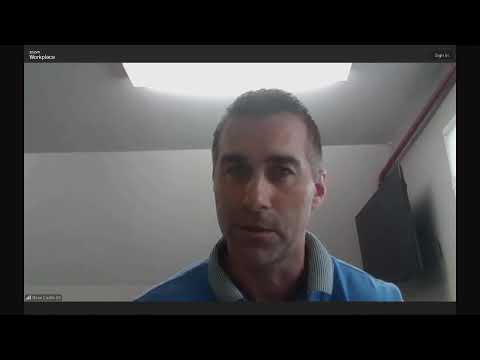
Steve Castle, who identified himself as affiliated with the Jackson Interfaith Shelter and as a foster parent, testified in support and described program-level experience serving youth who age out of care. He said community-based organizations have sometimes created targeted programs to ensure funds reach children and stressed the importance of local accountability and wraparound services alongside any change in benefit handling.
The committee did not take a vote on HB 4570 at the hearing. The meeting record shows routine committee business approved without objection earlier in the session, including excusing absent members and adopting the minutes of the committee’s Aug. 12 meeting.
Supporters who registered in favor on the committee record included representatives of Michigan Poverty Law Program, the Michigan Association of United Ways, and the Michigan Federation for Children and Families. Committee members said additional technical details about notification procedures, vetting of fiduciaries, and how financial literacy would be delivered should be worked out before the bill advances.
No formal committee vote on HB 4570 was recorded during this session; the matter proceeded as a public hearing with testimony and questions for the sponsor and witnesses.