Get Full Government Meeting Transcripts, Videos, & Alerts Forever!
Get email alerts on the Psychiatric Bed Shortage topic
No spam. Unsubscribe anytime.
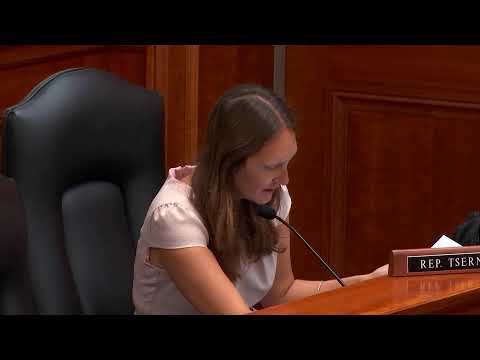
House subcommittee discusses psychiatric bed shortage, eyes quick policy changes for capacity
Summary
The Michigan House Oversight Committee on Public Health and Food Security held a working meeting to refine findings and recommend actions to address a statewide psychiatric bed shortage, including allowing private providers to flex beds between adolescent and adult populations and gathering data from mental health courts and sheriffs.
The House Oversight Committee on Public Health and Food Security met in a working session to refine findings and shape recommendations addressing Michigan's psychiatric bed shortage, Chair Bierlein said at the opening of the meeting.
"When someone in Michigan is in crisis, help is available. Not a wait list, not a jail cell, and not another roadblock," Chair Bierlein said, framing the subcommittee's goal of producing a final report and policy recommendations for the full oversight committee.
The subcommittee reviewed a packet summarizing months of testimony from judges, law enforcement, providers, advocates and families about limited inpatient psychiatric capacity and long waits for placement. Members discussed near-term options the subcommittee could recommend before pursuing longer-term system changes.
One proposal members singled out as potentially quick to implement would remove limits that now prevent some private facilities from shifting beds between adolescent and adult patients. Committee members said those rules prohibit a facility that converts adolescent beds from later using the same rooms for adults, even when physical separation can be maintained. A member characterized that change as among the "lowest hanging fruit" likely to increase bed availability quickly.
Staff clarified that existing rules do not require separation by floor; separation can be achieved by locked doors, separate wings, or other measures. The transcript notes that, under current practice, once a unit is designated for adolescents it cannot be converted back to adults, which members said limits flexible responses to fluctuating demand.
Members also discussed gaps in data and funding. The packet included references to funding recommendations but did not include an overall cost estimate for the changes discussed. "No, we don't at this time," Chair Bierlein said when asked whether the subcommittee had compiled price estimates; she added that much of the state spending may already occur in other systems, such as emergency departments and county jails.
Committee members asked for additional data to inform final recommendations, including: - An inventory of rules and licensing limits that prevent bed flexibility between adolescent and adult populations; - Cost estimates for proposed policy changes and for potential investments in county mental health facilities; - Data from existing mental health courts and substance-abuse diversion courts to measure diversion effectiveness; - Input from sheriffs and county corrections officials about how many people entering jails have mental health conditions.
During the discussion the chair said sheriffs estimate about 30 percent of people processed through county jails have some sort of mental health condition; members flagged that as a point to verify and to include in the final report.
Members referenced Macomb County as an example where the county has been developing a separate mental health facility; they discussed whether the state could incentivize counties to develop similar infrastructure or support grant programs to encourage local capacity-building.
The subcommittee asked members to provide their priority recommendations by the end of the week so staff can draft a final report over the weekend. The chair said the goal is to present a compilation of findings and recommended policy steps to the full oversight committee next Tuesday.
Before adjourning, Representative Green moved to approve the minutes of the July 22 meeting; there was no objection and the minutes were approved. The committee then adjourned.
The meeting was conducted as a working session with no outside testimony; members concentrated on drafting a final product that lists short-term operational fixes and longer-term investments for the oversight committee to consider.