Get Full Government Meeting Transcripts, Videos, & Alerts Forever!
Get email alerts on the Waste Management topic
No spam. Unsubscribe anytime.
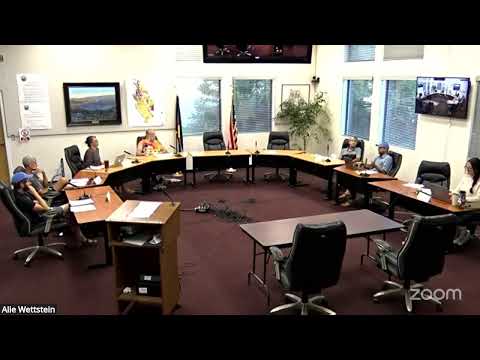
Carbondale environmental board recommends using bag-fee fund for composting trial, multifamily pilot and outreach
Summary
The Carbondale Environmental Board voted to recommend that trustees allocate bag-fee monies toward a public-awareness campaign, a 6-month 50% composting trial for homes and restaurants, a pilot to cover composting for multifamily properties for one year (subject to annual renewal), and negotiations to fund a composting training video.
The Carbondale Environmental Board voted to recommend that the town trustees allocate money from the municipality's bag-fee fund toward composting and public-education initiatives.
Board members recommended a package that would: fund a public-awareness campaign (including PSAs and print ads); offer a 50% discount on composting for six months to single-family homes and restaurants; pilot providing one year of fully funded compost collection for multifamily buildings (with bear-proof enclosures and targeted education), subject to annual renewal and budget availability; and enter negotiations to financially assist Alyssa Rendell in producing a training video for event organizers on composting and zero-waste event practices.
The board’s motion, approved at the meeting, recommended an initial ramp-up budget of around $25,000 in 2026 and an annual target of about $10,000 thereafter, drawn from the bag-fee fund principal and ongoing fee revenues. Board members noted the fund currently holds about $80,000, with roughly $35,000 expected to be collected annually and about $25,000 currently spent each year, yielding an estimated net increase of about $10,000 per year if current patterns continue.
Why it matters: Board members said dedicating bag-fee revenue to composting and education could increase diversion of organic material from the town’s waste stream and capture greater participation among multifamily households, which they said offer disproportionate opportunity for impact per collection account.
Details and debate - Trial terms: The board discussed offering a 50% discount for a limited trial period to encourage sign-ups. Members proposed a six-month trial for single-family residences and restaurants; some members favored six months over three to improve habit formation. - Multifamily pilot: Members proposed covering one year of compost service for multifamily buildings (and HOAs where applicable), supplying a one-time stipend to install bear-proof enclosures and providing targeted education. Board members said Carbondale likely has on the order of “not more than 20” multifamily buildings; the $45/month per building figure (cited during the meeting) was used as an example for cost estimates. Final eligibility and the exact building list will rely on follow-up from staff (Scott) to identify registered multifamily properties. - Cardboard drop-off: The board discussed whether to use bag-fee funds to pay the town’s current cardboard drop-off costs. Several members raised concerns about “additionality” — that spending the bag-fee money on services the town already pays for would not expand diversion. The board voted to remove the cardboard drop-off payment from its recommendation. - Outreach and education: The board proposed a modest public-awareness budget (the draft recommended about $2,000) for radio PSAs ("Katie and Kay" was cited as an outlet) and print ads in local papers (the minutes refer to a local paper, the Sopris Sun). Members also discussed bilingual flyers and partnerships with local events (Mountain Fair, Dandelion Days) and students for low-cost media production. - Training video: The board unanimously supported entering negotiations to help fund a composting training video proposed by Alyssa Rendell; initial quotes discussed during the meeting were in the low thousands ("7,000–8,000" was mentioned as an earlier figure), but members asked staff to negotiate costs and consider student partnerships before committing to a dollar amount.
Formal action A motion capturing the four recommendations above was made and approved. One board member, Doug Goldsmith, stated he had a conflict and abstained from the vote. The final recorded tally was 4 yes, 0 no, 1 abstain; the board characterized the recommendation as advice to the trustees, not a direct appropriation.
Quotes from the meeting - Patrick Hunter (former environmental board member): "I've been watching you guys, and I thought he's probably got the best board that we've had in many years right now. I think you guys can get a lot done." (public comment) - Doug Goldsmith (board member, service provider): "I have to abstain from this vote." (declaring a conflict of interest before the board's vote)
Next steps and implementation risk The board will present its recommendation to the Board of Trustees for approval. Members flagged several follow-ups: staff must confirm the number of eligible multifamily buildings and which already have composting; trustees must indicate how much they are willing to authorize; and staff will obtain cost estimates from vendors and negotiate the video contract. The board judged implementation risk as medium because the proposal requires trustee approval and vendor agreements.
Ending Board members said they plan to present a concise, costed proposal to trustees at the next meeting so trustees can decide whether to adopt the recommendations and authorize spending from the bag-fee fund.