
Broadwater County to craft application process for DEQ sign‑off on accessory dwelling units in subdivisions
Get AI-powered insights, summaries, and transcripts
Subscribe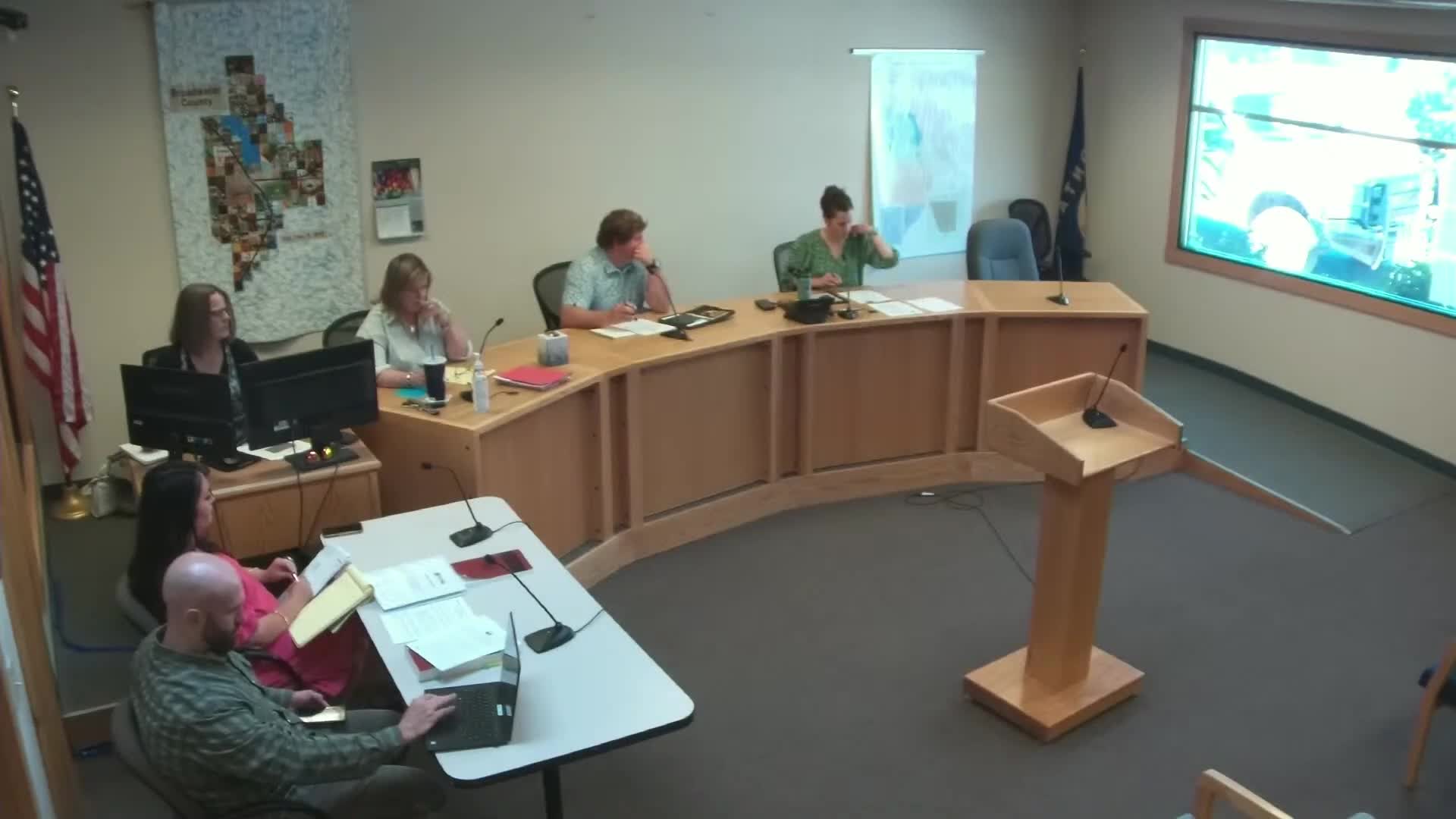
Summary
Broadwater County commissioners and staff discussed creating a local application and review process so the county can provide the Department of Environmental Quality (DEQ) the planning approval DEQ requires for accessory dwelling units (ADUs) in recorded subdivisions, while clarifying limits created by subdivision plats, covenants and state law.
Broadwater County commissioners, planning staff and members of the public spent a meeting focused on how the county should respond when the Montana Department of Environmental Quality (DEQ) requests planning approval for accessory dwelling units within subdivisions, concluding that county staff should draft a formal ADU application and review process for commissioners to consider.
Nicole Brown, Broadwater County community development director and planner, told the commission she currently bases any DEQ-related planning approval solely on the original subdivision application and cannot approve an ADU where that application states “1 single family residence per lot.” Brown said she will draft a proposed ADU application process and research how other counties handle similar requests.
The issue matters because DEQ’s sanitation rules require an applicant to submit planning approval and supporting findings when a proposed change triggers the planning act; if an ADU is an independent living unit (with kitchen, laundry, sleeping and sanitation), DEQ generally requires a rewrite of the subdivision’s COSA (certificate of subdivision approval). That rewrite can change the sanitation approval recorded with a plat even if the plat itself is not amended, but recorded final plats are difficult to change under Broadwater County’s subdivision regulations and state law.
Under current practice, Brown said, she reviews only the subdivision application in the county file and not recorded private covenants. “If the application was for 1 single family residence per lot, I cannot give my approval to … DEQ simply because that application states if it's for 1 single family residence per lot, I can't go against that,” Brown said. County sanitarian Megan Bullock explained the DEQ side: when planning approval is required under Title 76, chapter 3, applicants must provide a copy of the planning approval, findings of fact and public comments to DEQ. Bullock said the distinction between an accessory building (for example a guest house without cooking/laundry) and an independent living unit matters because the latter typically triggers DEQ’s rewrite process.
Commissioners, staff and commenters identified several constraints and possible paths forward. Broadwater County’s subdivision regulation language says recorded final plats may not be amended except to correct a surveying error and that any other changes require a new subdivision application or exemption claim. That makes a post‑recordation amendment costly and procedurally burdensome, Brown and staff said. County attorney Kevin Bratcher warned that adopting countywide zoning to conform to Senate Bill 532 would be a major policy change; staff and commissioners discussed instead preparing a targeted ADU application and regulation within existing subdivision authority so staff could lawfully approve or deny the DEQ‑requested planning confirmation.
Public commenters and technical witnesses urged speed and clarity. JJ Connor of JJC Consulting LLC said DEQ’s technical standard is whether the site meets state sanitation and nondegradation rules and suggested the county concentrate on the sanitation/COSA rewrite pathway where possible. Planning board member and licensed engineer Charles Freshman, a former DEQ reviewer, suggested the county could do preliminary technical screening to shorten and lower the cost of DEQ rewrites — for example, by confirming on the front end whether a proposed ADU’s septic and well information meets DEQ standards before the applicant submits a full DEQ rewrite package.
Speakers emphasized private covenants will remain a separate legal issue. Brown and others repeatedly noted that covenants are private contracts between landowners; the county does not enforce covenants but can ask applicants to certify they have checked covenants before the county processes an ADU application. Commissioners discussed requiring applicants to notify other subdivision residents and holding a public hearing for any county process that could alter subdivision expectations.
Next steps: Brown said she will research other counties’ ADU regulations and application processes, consult with County Attorney Kevin Bratcher and the Montana Association of Counties, and draft a proposed ADU application and related regulatory language for the commission to review. “I can do some work on that — working with other counties … and get some best practice tips,” Brown said. Commissioners said they regard the matter as a priority and asked staff to return with legally defensible options that provide DEQ the planning documentation it needs while minimizing county exposure to private covenant disputes.
No formal motions or votes were recorded on the transcript; the commission directed staff to prepare options and report back.