Get Full Government Meeting Transcripts, Videos, & Alerts Forever!
Get email alerts on the Education Budget topic
No spam. Unsubscribe anytime.
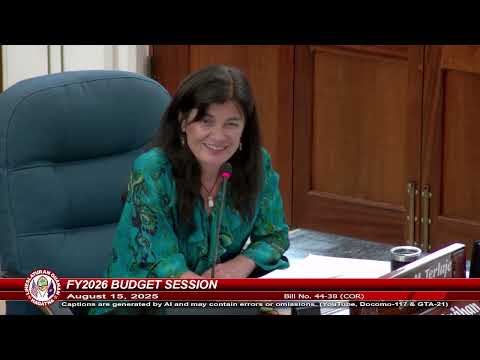
Lawmakers press Guam Department of Education on cuts, facilities and procurement as budget talks continue
Summary
During a legislative budget hearing, Guam Department of Education officials warned that a status‑quo local budget could force major layoffs, school consolidations and cutbacks to essential services. Senators pressed GDOE on procurement delays, unpaid ARP invoices, an ADA audit and staffing shortfalls.
Senators at a budget hearing were warned that the Guam Department of Education could face large staff reductions and campus consolidations if the legislature approves only a status‑quo local budget for FY 2026.
The hearing focused on the GDOE request for $306.3 million in local funds and the agency’s warning that the bill being considered would leave the department at roughly FY 2025 funding levels. Superintendent Swanson told the panel that, in a planning scenario presented to the department, a $20 million personnel shortfall “would require closing roughly 10 schools” based on an estimated $2 million in annual savings per closed campus.
The warning came alongside detailed questioning from senators about year‑to‑year budget increases, lapses in procurement, unpaid federal invoices and the operational impact of cutting personnel and contracts. Senator Borja said she was alarmed by projections that the department might have to reduce force and “close at least another 10 school communities,” and urged the panel not to return the system to pre‑improvement conditions.
Lawmakers drilled into three recurring operational problems: stalled procurements and protested contracts that have kept locally‑appropriated funds from being spent, a backlog of unpaid ARP invoices that GDOE is fronting with one‑time local funds, and persistent maintenance and accessibility needs across the island’s school facilities.
On procurement and federal grants, GDOE officials described a chain of delays. The department said several IFBs and contracts did not proceed because of protests or procurement capacity limits at DOA; the mold‑mitigation solicitation for Ocean View Middle School and Southern High School was protested and cancelled, and officials said DOA must reissue the solicitation. GDOE staff said they have advanced roughly $10–11 million in local monies (drawing on limited gaming and other internal sources) to pay backlog ARP bills so work and vendor payments could proceed while awaiting federal reimbursement. The department reported having received about $30 million in reimbursements to date and said it expected remaining reimbursements ahead of the ARP liquidation deadline in March 2026.
The panel pressed GDOE on several specific outstanding invoices and projects: a Siemens facilities audit and ADA assessment that GDOE said is about 50% complete and requires an outstanding payment of $1.2 million to resume final reporting; a change order to the CoreTech refurbishment contract that GDOE said totals $10.4 million; a separate change order for the FBLG project at about $3.4 million; and elevator repairs and replacements listed at roughly $2.7 million to refurbish 14 existing elevators. GDOE said the Siemens report would include per‑site dollar estimates for ADA fixes once the invoice is paid and the audit is finalized.
Staffing and service impacts were a central concern. GDOE said its most recent staffing pattern shows 3,126 employees total, about 1,650 of whom are paid as classroom teachers, and that the system is currently short 54 certified teachers. Officials told senators they intend to use natural attrition where possible to avoid layoffs but also cautioned that, if deeper personnel cuts are required, reductions could affect school aides, clerks, trades and maintenance staff. Facilities staff hired under a supplemental last year (about 90–93 positions) were credited with helping open schools on time; GDOE warned those hires could be at risk if the department must absorb the proposed reductions.
Senators repeatedly pressed GDOE on deferred maintenance and accessibility. The committee referenced the Public Schools ADA Compliance Act (Public Law 37‑69) and the Adequate Education Act; GDOE said an ADA study funded through ARP and conducted by Siemens is pending final payment and that the audit will identify the total cost and list of sites requiring lifts or elevator replacements. Officials also described a prioritized list of critical facilities work (elevator and restroom refurbishments, roof coating, HVAC and electrical upgrades) and estimated a facilities maintenance critical‑services need of roughly $5.6 million over five years (distinct from capital improvements).
On personnel costs and benefits, GDOE told legislators it expects higher retirement contributions (an estimated $4.7 million increase tied to Guam retirement rates) and said merit bonuses for FY 2024 that were held during the year are being processed and “will be paid out before the end of the fiscal year.”
No formal votes were taken during the hearing. Senators urged the administration and the Legislature to find ways to protect the instructional core and keep facilities‑critical positions funded. Several members said they would seek additional appropriations or moves within caucuses to protect education funding.
GDOE officials identified short‑term directions for follow up: restart procurement for mold mitigation and fencing solicitations, finalize the memorandum of agreement and scope of work for temporary classrooms at Simon Sanchez High School with DPW and Guam Housing, pay Siemens to complete the ADA/facilities audit, continue maximizing existing contracts and seek reimbursements from the U.S. Department of Education on ARP obligations before the March 2026 deadline.