Get Full Government Meeting Transcripts, Videos, & Alerts Forever!
Get email alerts on the Seabright Bridge Business Support topic
No spam. Unsubscribe anytime.
Santa Cruz directs staff to shore up aid for Seabright, harbor businesses during Murray Street Bridge closure
Summary
The City Council approved a package of measures directing staff to pursue transit, parking, marketing and financial-support options to help Seabright and harbor businesses affected by the multi‑year Murray Street Bridge project.
The Santa Cruz City Council voted to direct staff to pursue a package of transportation, signage, marketing and financial measures to support Seabright and harbor businesses affected by the Murray Street Bridge closure.
Councilmember Sonia Bruner moved the measure after hearing more than a dozen business owners describe diminished trade and staff shortages caused by the bridge work. The motion directed staff to explore use of the Regional Transportation Commission's rail bridge, Santa Cruz Metro and harbor‑ferry options, free or reduced‑cost parking in Seabright, new signage and citywide marketing, extensions of temporary outdoor‑dining approvals, and potential forgivable‑loan programs or other financial relief. The council also asked staff to return with additional options within two council meetings and to examine traffic‑control options to allow two‑way traffic on a single open lane when feasible.
Why it matters: Lower Seabright businesses reported sharp revenue drops and some imminent closures, and council members said quick action was needed because the project is expected to affect the neighborhood for an extended period. The motion bundles immediate operational fixes (signage, promotions, shuttle/ferry evaluation) with a request for staff analysis of longer‑term policies and funding options.
The council emphasized coordination with outside partners. Bruner said she had secured permission from the Regional Transportation Commission to explore use of the rail bridge for pedestrian and bicycle access, and staff confirmed they were coordinating with the Santa Cruz Port District about an existing trial ferry. Vice Mayor Kalantari Johnson and others said they wanted weekly or near‑term updates for businesses while staff pursues options.
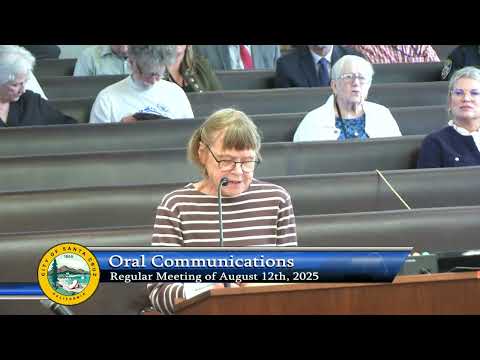
Business owners who spoke at the hearing described steep revenue declines and employment impacts. One Seabright business owner told the council, “our sales are down about 25%,” and others warned that tenants and operators were considering not renewing leases. Several speakers urged the council to require contractors to work Saturdays to shorten the construction window and to prioritize traffic‑management measures that improve access to the district.
The motion also directed staff to consider extensions for COVID‑era temporary patios and other efforts to retain customers, and to report back on the feasibility and costs of relocating or expanding shuttle/ferry service beyond the Labor Day pilot. Councilmembers said they would also seek options for a single point of contact to improve communication with affected businesses.
Council action: The motion passed by roll call vote with the following recorded: Councilmember Gabriela Triguero (Aye); Sonia Bruner (Aye); Newsom (Aye); Golder (Aye); O’Hara (Aye); Vice Mayor Kalantari Johnson (Aye); Mary Keeler (Aye). The council instructed staff to return with implementation details and cost estimates at upcoming meetings.
What’s next: Staff will pursue the items directed by the council and return with a report that includes transportation options, feasibility of financial assistance (including forgivable loan models used during COVID), signage and marketing plans, and an analysis of whether Saturday construction or traffic‑control changes can safely accelerate the schedule.