Get Full Government Meeting Transcripts, Videos, & Alerts Forever!
Get email alerts on the George Crady Bridge topic
No spam. Unsubscribe anytime.
Residents and officials press for repair plan, accountability on George Crady Bridge
Summary
Multiple residents urged repairs and transparency for the George Crady Bridge during public comment at the Aug. 13 Jacksonville Waterways Commission meeting; officials said the city contributes $35,000 annually and the state is contractually responsible for maintenance, and they discussed phased repairs and funding gaps.
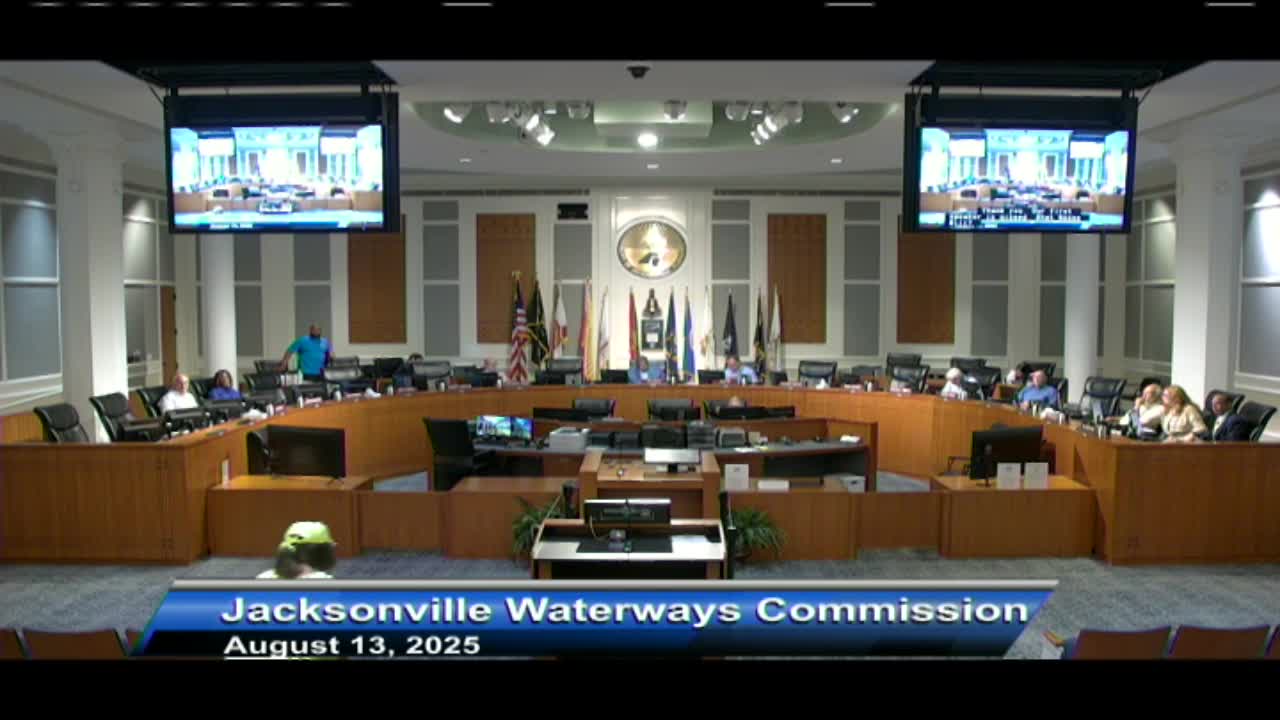
Residents and public officials urged action and clearer accounting for maintenance funding for the George Crady Bridge (also referred to in testimony as the Crady Bridge) during public comment at the Jacksonville Waterways Commission meeting on Aug. 13.
Why it matters: The historic bridge links Duval and Nassau counties for pedestrians and anglers; residents and officials said portions of the Duval-side structure have been closed for safety and that repairs will require significant funding and intergovernmental coordination.
Several speakers described persistent local loss of access and amenities. "We just want to find out if they applied for FEMA money — did they receive monies? Did they not use the money there for the road?" Latrice Bell, a resident, said, asking whether funds used for a Nassau-side boat ramp left Duval residents without pier access or the promised amenities.
Tommy Rodell and Johnny Turner, who identified themselves as frequent users of the bridge and local fishing advocates, said the Duval side has been closed for years while the Nassau side remains open. Rodell asked where annual maintenance contributions and other project funds had been spent, saying a previously promised bait-cleaning table and water supply were removed. "We don't have a fishing table out there, a bait table. We don't have no water," he said.
Council Member Gaye and other commissioners described recent meetings with state representatives and said the parties are seeking a phased approach to restoration. "The city of Jacksonville contributes $35,000 a year to the maintenance of the bridge. Nassau County contributes $15,000 ... and the agreement is that the state, DEP maintains the bridge," Gaye said, adding that the state's obligation under the contract had not been fulfilled. He urged state engagement on phased funding to reopen portions of the Duval side.
Commissioner John Barker and Commissioner Grit (committee members) said the structure's underlying condition on the Duval side is significantly worse than on Nassau's side. Barker said photographic inspections show concrete deterioration under the Duval spans and that the city contribution was intended to keep the facility clean and safe, not to perform large structural rehabilitation. "There's no way you're gonna maintain that structure with $30,000 a year," Barker said.
Commissioner Grit cited the contract's language — "paragraph article number 7" — and said it "explicitly states that the state will fully maintain that pier/slash bridge," adding that the city had met its contribution. He urged pursuit of a plan to phase work and hold the state accountable for its contractual maintenance obligations.
Several commissioners and staff proposed forming a subcommittee or working group to convene partners, review inspection criteria (FDOT bridge standards versus fishing-pier standards) and explore phased funding to reopen safe portions of the pier without attempting a single, full $15 million reconstruction up front.
No formal votes were held. Commissioners and state representatives at the meeting pledged follow-up: a state representative said she would follow up on getting water and bait tables restored and staff said they would pursue further coordination with state parks, FDOT and the Florida Department of Environmental Protection.
Ending: Community members said they would press for inspection records, accounting for previous funds and a phased restoration plan; commission members said they will continue intergovernmental outreach and consider options that could reopen portions of the Duval side while planning larger repairs.