Get Full Government Meeting Transcripts, Videos, & Alerts Forever!
Get email alerts on the Manatees topic
No spam. Unsubscribe anytime.
Jacksonville scientist reports normal salinity, low toxins and recent manatee deaths on St. Johns River
Summary
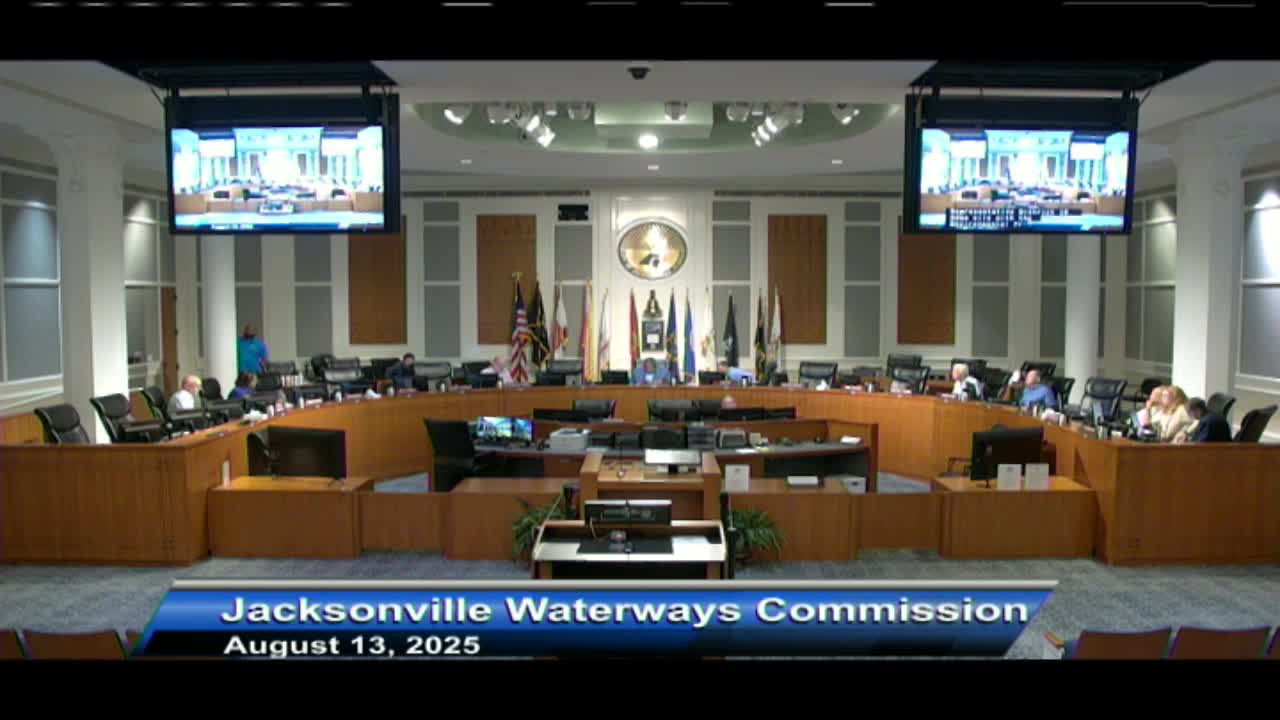
Dr. Jerry Pinto told the Jacksonville Waterways Commission on Aug. 13 that salinities and harmful-algae-toxin levels in much of the St. Johns River are near normal but that the commission should watch localized blooms and recent manatee mortalities, including a probable channel-lock death.
Dr. Jerry Pinto, a researcher at Jacksonville University, told the Jacksonville Waterways Commission on Aug. 13 that salinity and temperature patterns in the St. Johns River are within expected ranges for this rainy season but that localized harmful-algae blooms and a recent cluster of manatee deaths merit continued monitoring.
Pinto said salinity at Mayport measured about 18 to 22 parts per thousand, slightly lower than normal at that station, and that rainfall in Duval County was roughly 2 inches above normal for the period. "These high temperatures and rain kind of come together to bring conditions that might promote algae blooms," Pinto said.
Why it matters: manatee mortalities and algae blooms can signal larger ecosystem stress and affect recreational use of the river, commercial activity and local wildlife management decisions.
Pinto reported approximately five manatee deaths since the commission's previous meeting in June and said the current total for the area he monitors is about 14, with three identified as perinatal deaths. "I've kind of highlighted those in yellow in the handout. You'll see that 3 of those are perinatal deaths," Pinto said, adding that higher perinatal counts can reflect increased calf production as adult manatees recover and reproduce.
At the state level, Pinto said Florida had recorded 73 manatee mortalities year-to-date out of nearly 500 statewide — a figure he described as slightly elevated but within expected ranges outside of major events such as red tide or cold-stress events. "When we have those red tide events or cold stress events ... the numbers kick up to double that. So right now we're at about what we would expect," he said.
Pinto described one case he believes was linked to a channel lock at Queens Harbour Yacht and Country Club, where he said he spoke with the lockmaster and observed bruising consistent with being struck or trapped by flood/lock gates. "It looks like this animal was impacted by the flood lock gates in some way from the bruising and the damaging damages on it," he said, noting he did not yet have a necropsy report to confirm the cause.
On harmful-algae blooms, Pinto said agencies detected mixed algae in the river but toxin readings have been low in Duval County. He noted toxin detections farther downstream near the Shands Bridge area. "There's been mixed algae in the river, but there's not been any toxin detected until you get down to about the Shands Bridge," Pinto said.
Commissioners asked follow-up questions about human health risks from Vibrio "flesh-eating" bacteria and manatee susceptibility. Pinto said Vibrio species are present year-round in coastal waters and thrive in warmer months, and that people with open wounds or compromised immune systems are most at risk. He said he had not heard of manatees commonly experiencing Vibrio infections but noted wounded animals are more vulnerable to secondary infection and are candidates for rescue.
Pinto also said seagrass — a key manatee food source — has shown some regrowth after storm impacts, though recovery has taken longer than usual. "We have 14 different species in the river. One that's predominant is the tape grass ... that's what's coming back," he said, noting that loss of seagrass has contributed to manatees moving farther south in search of forage.
The commission did not take formal action on the report; Pinto concluded by inviting questions and recommending continued monitoring and sampling.
Ending: The commission heard the report during its Aug. 13 meeting and did not vote on specific follow-up measures. Commissioners and staff discussed local enforcement and rescue coordination; any formal requests for additional sampling or funding would require placement on a future agenda.