Get Full Government Meeting Transcripts, Videos, & Alerts Forever!
Get email alerts on the General Government Operations And Appropriations topic
No spam. Unsubscribe anytime.
Legislators Press Finance Panel on Bill 44, Tax‑refunds, rainy‑day fund and grant reimbursements
Summary
During a late hearing on the FY2026 substitute budget (Bill 44), legislators pressed Department of Administration and fiscal offices about tax‑refund payments, rainy‑day fund calculations, delayed audits and outstanding grant reimbursements, with officials saying refunds are court‑ordered and statutory triggers exist for fiscal realignment.
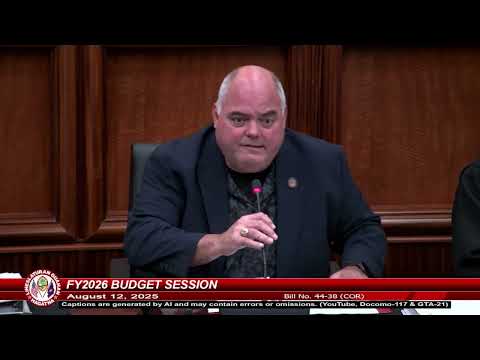
Legislators questioned finance officials late Wednesday about how the proposed FY2026 substitute budget (Bill 44) would handle tax refunds, fund balances and a backlog of grant reimbursements.
In opening exchanges about tax refunds, Marie Flores, Department of Administration grants staff, described the agency's processing sequence: "they file... our team processes the returns. And then for refunds themselves, once we... have a summary... then the summary goes to Director Berne for approval... and then our team processes that, and then it goes back to DOA for signature and mailing." Flores added that a record labeled "status A" generally signals that an item is clear and ready for payment, though staff sometimes review holds when they appear.
Lawmakers pressed officials about whether the government can withhold refunds while litigation proceeds. A panelist responded succinctly: "There's an injunction," which the panel said requires payment under the court order. Officials told the committee the administration has been paying refunds in accordance with that injunction and that, in some cases, paying earlier reduced interest costs the government otherwise would have borne.
Why it matters: Tax refunds, the composition of the rainy‑day fund and the true unassigned fund balance affect how much the Legislature can appropriate to agencies and capital projects in Bill 44. Lawmakers repeatedly asked whether the substitute budget uses conservative or more expansive assumptions about available funds.
On fund balances and the audit: Committee members asked about differences between the quarterly CRER reports and audited fund balances. A DOA official said the CRER is prepared on a budgetary basis and includes encumbrances that the audited fund‑balance presentation does not; that can create material variances between the two reports. During the hearing, the panel said the unassigned fund balance figure under discussion was $29,000,000, and that the 2023 audited figure had been referenced earlier as $15,000,000 (the panel acknowledged differing presentations and said a true reconciled amount will not be known until the FY2024 audit is complete).
Officials also told the committee the FY2024 audit remains overdue because component‑unit reports (notably from the Guam Department of Education) and other adjusting entries have delayed completion. DOA said staff are preparing internal reconciled numbers and a report of prior appropriations the Legislature requested.
Rainy‑day fund cap and interpretation: Senators pressed fiscal staff about two competing legal interpretations of the statutory rainy‑day formula and the resulting cap. One member asked why the Legislature would not adopt the administration’s higher cap (discussed in testimony as roughly $94 million) rather than a lower interpretation the committee staff has used (figures cited during questioning included an $85 million‑range cap and a specific gap of about $8.29 million to reach that cap). Fiscal staff said their calculation follows the method they have used historically and that the difference hinges on how prior years are treated under the statute; counsel told the committee the law can be read multiple ways and recommended legislative clarification.
Debt service and BPT history: Panelists summarized why the business privilege tax (BPT) was raised from 4% to 5% in 2018. A fiscal official said the 2017 federal Tax Cuts and Jobs Act depressed corporate collections and the territory faced a revenue shortfall in 2018; the administration and Legislature combined expenditure reductions and a BPT increase to address an estimated cumulative shortfall. The official added that the 2018 law included a sunset provision that, by the account of some lawmakers, was not later implemented and that the government now tells bond investors the pledge is three of the four‑percent BPT (meaning a rollback would not necessarily affect the pledged base used for debt service).
Debt service sustainability and refunding: Fiscal staff told senators the budget’s debt‑service line rests on schedules prepared by the Guam Economic Development Authority and the Bureau of Budget; officials said they continuously look for refunding opportunities when economically sensible and when the Legislature authorizes them.
Contingency mechanisms and statutory triggers: The Bureau of Budget and Management Research representative said statute already requires a fiscal realignment plan if quarterly revenue tracking is 3% or more below projections; that statutory trigger was used in 2018. The BBMR representative summarized the mechanism: "If we hit that 3% negative in a quarter, then we automatically have to submit to the Legislature a fiscal realignment plan." Panelists said the executive would propose measures and the Legislature would review and act.
Grant reimbursements and FEMA question costs: Lawmakers repeatedly raised homeland security and federal grant reimbursements, asking how much the government has fronted and how much remains outstanding. Officials responded that the general fund frequently fronts grant costs (including for programs that are ultimately 100% federal but where the territory must pay first and seek reimbursement) and that reimbursements arrive in installments. One finance official estimated reimbursements had reduced some liabilities but said they could not state the exact outstanding amount from memory.
What the committee requested: Legislators asked DOA and other fiscal offices to produce (1) a reconciled fund‑balance report reflecting accruals and adjusting entries, (2) a list of prior appropriations and encumbrances that remain unpaid, and (3) historic rainy‑day fund deposits for FY2022–FY2024 to settle the statutory cap calculation. Officials said they would provide that information for a follow‑up session.
The hearing continued with additional questioning; the panel and members scheduled continuation of the review and reconciliation work in the next session.
Ending: The committee did not take formal votes during the session reported here. Lawmakers said they will resume the budget review the following day to examine the requested reconciliations and the outstanding audit work before advancing final appropriation decisions on Bill 44.