Get Full Government Meeting Transcripts, Videos, & Alerts Forever!
Get email alerts on the Extracurriculars And Student Safety topic
No spam. Unsubscribe anytime.
Board considers High School Activities Association's spectator-ejection policy; administration, board and public seek clarifying language and legal review
Summary
The school's activities director presented a model spectator/coach/student ejection policy from the activities association; board members and public commenters questioned severity tiers, who has authority to eject and whether law enforcement should be involved; the board asked the activities director to draft clarifying language for the policy
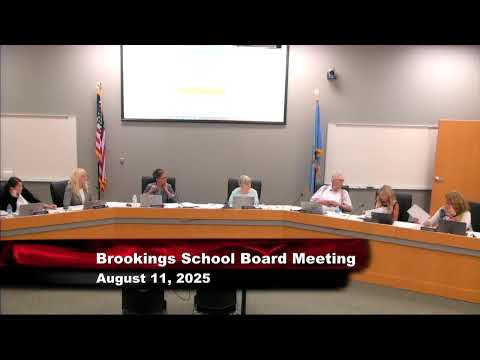
The Brookings School District activities director presented a spectator- and coach-ejection policy recommended by the South Dakota High School Activities Association and asked the board to consider adopting it as district policy. Board members, the activities director and members of the public discussed enforcement, penalties and how the policy should apply to away games and out-of-town spectators.
Activities director Jeff Dvorak (referred to in the meeting as mister Dvorak) told the board the policy fills gaps that exist for spectators because student-athlete and coach behavior is already governed by codes of conduct and officials; the policy provides a formal progression of penalties for spectators and coaches when incidents occur. Dvorak said the Brookings community generally supports school activities and that ejection incidents have been rare; his review of last season prompted him to bring the association policy forward.
Board members questioned whether the policy should allow a single severe incident to result in a longer penalty than the model's staged progression, and whether the policy should better define who is authorized to eject spectators (game administration, athletic director, principal). They also raised enforcement questions for away events and the feasibility of preventing an ejected spectator from attending events in other towns.
Public commenter Jess Drewy asked whether the policy would clarify when district staff should call law enforcement to assist with removals; the board said that is a point the policy committee and legal counsel should review. Board members suggested adding language that allows penalties to be scaled to the severity of an offense (for example, an assault could trigger a longer prohibition than a single-game ejection).
Why it matters: The policy determines how the district will respond when spectators, coaches or others disrupt activities or commit misconduct at athletic events. Board members said they want a clear, enforceable policy that protects students, coaches and officials while preserving community access to events.
Next steps and follow-up
- The activities director agreed to draft suggested language clarifying: (1) who can eject spectators and game administration roles, (2) how penalties are applied across levels (varsity/JV/junior varsity/junior high), and (3) how out-of-town attendance and enforcement will be handled.
- Board members recommended a legal review of the model policy and asked the activities director to send proposed revisions to the policy committee (Terry and Deb noted they are on the policy committee) and to the district attorney for review.
Public comment
Jess Drewy, a Brookings resident with long family ties to local sports, asked whether the policy would include a provision that allows athletic directors to call law enforcement when an incident becomes egregious. The board responded that some events already have law enforcement present by request, but that using officers regularly can require additional contracted fees and is not standard across all events; the policy revision will consider criteria for when to engage law enforcement.
Attribution and limits
The board did not adopt final policy language at the meeting. The activities director's presentation was informational and the board asked staff to provide proposed clarifying edits and seek legal review before bringing a formal policy adoption to the board.