Get Full Government Meeting Transcripts, Videos, & Alerts Forever!
Get email alerts on the Hermosa Minerals Deis topic
No spam. Unsubscribe anytime.
Conservation groups and residents tell Nogales council draft EIS for Hermosa mine understates water, air and biodiversity risks
Summary
On Aug. 6, 2025, Patagonia Area Resource Alliance and residents told the Nogales City Council that the U.S. Forest Service draft environmental impact statement for the Hermosa Minerals Project fails to analyze water, air and biodiversity risks fully and urged the city to press for stronger protections and independent monitoring.
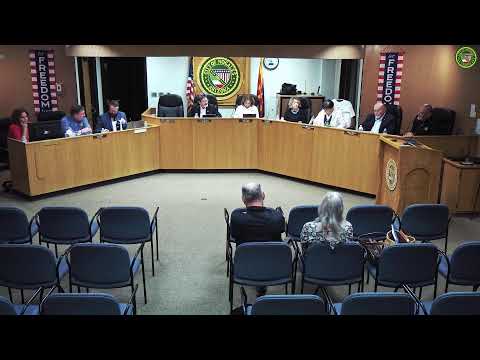
Carolyn Schafer, a board member with the Patagonia Area Resource Alliance, told the Nogales City Council on Aug. 6, 2025, that the Forest Service’s draft environmental impact statement (DEIS) for the proposed Hermosa Minerals Project is legally and scientifically inadequate and understates risks to groundwater, air and imperiled species.
Schafer said PARA coordinated a team of roughly two dozen subject-matter experts and submitted a 221‑page organizational comment during the DEIS comment period, which closed June 23. "The draft environmental impact statement failed to fully analyze the baseline conditions of all potentially affected resources — water, air, wildlife, cultural and recreation," she said, and asked the Forest Service to prepare a revised draft DEIS before any approval.
The presentation drew multiple residents who described water and health problems they tie to local mining activities. Susan Weddington, who said she lives 4.5 miles downstream from the mine and has relied on delivered water since 2021, told council members her well now tests with lead concentrations "over 3,000% over the maximum contaminant level for drinking water." John Ball, a retired mayor and fire chief, and other speakers warned of traffic and public‑safety risks from heavy truck traffic on Highway 82 and potential hazardous spills.
Local groups raised several technical complaints the DEIS, as summarized in PARA’s submission: - Water: 77 pages of PARA’s comments focus on water concerns, including questionable groundwater modeling choices, calibration problems and insufficient baseline data for a region where half the county is inside an Active Management Area, Schafer said. - Biodiversity: PARA devoted 54 pages to biodiversity and said the project footprint lies in a high‑value Madrean Pine‑Oak woodland and a global biodiversity hotspot; the group warned that approving the operation as proposed could push already imperiled species closer to extinction. - Air and public health: Schafer said the DEIS’s air analysis uses limited screening and omits full analysis of hazardous pollutant impacts beyond manganese; PARA urged a more comprehensive health assessment and raised questions about deposition of dust and emissions onto soils and wildlife. - Tailings and paste backfill: PARA called the mine’s tailings management plan “fundamentally flawed and premature” for environmental review, citing missing data and unrealistic assumptions.
Residents and community organizations echoed those concerns. John Nordstrom, who described himself as a geologist and said he is building a grassroots well‑monitoring network, announced a community website to collect well data and warned about a Forest Service estimate that a mine‑related cone of depression could be roughly 58 miles in diameter. Robert Paulson told council members he had received a certified letter from South32 saying mine operations could lower his well by as much as 10 feet and noted South32’s projected daily water use during operations.
Several council members said they recognized the complexity of the DEIS and the need for technical input. Councilman Buria acknowledged the volume of the federal documents and said the city should work to mitigate risks; other council members asked staff and the city attorney about the legal status of a community protections and benefits agreement that local governments and South32 are negotiating.
PARA recommended that the city consult the 16 organizations that signed PARA’s comments and use their independent technical reviews when negotiating the protections and benefits agreement. Schafer said PARA would deliver the 221‑page comments and a 40‑page plain‑language summary to the city clerk for council review.
Why this matters: the Hermosa project is on public National Forest lands and triggers federal review under the National Environmental Policy Act; it has potential cross‑boundary effects on groundwater, endangered species and community health in Santa Cruz County. Council members did not approve any permits or take a formal vote on the DEIS itself during the meeting, but the presentations and public testimony signaled strong local concern and a request for more technical review and independent monitoring.
Next steps: PARA requested a revised DEIS and urged independent oversight of monitoring and bonding. Council members signaled willingness to participate in the protection‑and‑benefits conversation and to consult PARA and other signatory organizations as the city negotiates terms with South32 and reviews federal documents.