Get Full Government Meeting Transcripts, Videos, & Alerts Forever!
Get email alerts on the Ineffective Assistance topic
No spam. Unsubscribe anytime.
Appeals court hears Mendoza claim that trial counsel was ineffective for not seeking medical expert and for failing to object to state's expert
Summary
The Utah Court of Appeals heard arguments in State v. Mendoza, in which defense counsel argued trial counsel was ineffective for failing to investigate and present medical evidence about the defendant's alleged testicular hernia and for not timely objecting to the state's "blind" child-abuse expert.
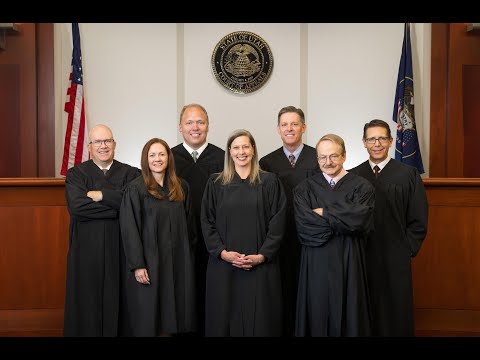
A three-judge panel of the Utah Court of Appeals heard oral argument in State v. Mendoza, where the appellant seeks relief based principally on an asserted failure by trial counsel to investigate and present medical evidence and by not timely objecting to the scope of the prosecution’s expert witness.
Appellant’s position and 23B proffer
Defense counsel Davis Pope told the court the defendant’s primary trial defense was that a medical condition — three testicular hernias described in later medical records — would have made sexual contact or certain sexual acts unlikely or physically painful and thus undermined the prosecution’s claims. On appeal, counsel asked the court either to reverse directly or to remand under Utah Rule of Civil Procedure 23B to develop record evidence (affidavits and an expert examination) that was not presented at trial. The 23B proffer included a declaration from a nurse practitioner (identified in the record as Jeanette Carver) who said she had reviewed post‑trial medical records from the Department of Corrections and would, if permitted, explain how the injuries described would likely reduce sexual drive and make sustained erection unlikely. Defense counsel argued that the nurse’s proffered testimony would corroborate the defendant’s testimony and that failing to develop that testimony at trial showed ineffective assistance.
State’s response and thresholds for remand
The state, represented by Daniel Day, argued the proffer could not support a remand. The state noted the records relied on by the proffer post‑date the trial (a surgery in 2023) and said the items could not have been presented at trial; the state also contended the nurse practitioner’s affidavit, as filed, was too speculative to establish a Strickland prejudice showing and that the nurse may lack the specialized qualifications (for example, urological training) to opine about erectile function or sexual drive. On the question of the blind expert that the state called at trial to explain victim behavior in child abuse cases, counsel for the state pointed to State v. Francis and related Utah precedent permitting a qualified “blind” expert who does not evaluate credibility but can explain typical victim responses; the state argued defense counsel reasonably could have concluded a challenge to that expert under Rule 702 would not succeed and therefore declining to press certain pretrial Rule 702 fights did not equal deficient performance.
Procedure, counsel questioning and Strickland framework
The judges focused on multiple procedural and evidentiary thresholds. They asked whether the 23B affidavit showed what trial counsel did or did not do (the record lacks an affidavit from trial counsel explaining his strategic choices), whether the proffered expert is qualified under Rule 702 to opine about the physical effects the defense relies on, and whether ordering a remand would meaningfully advance the record or only produce another round of expert dueling. The panel also wrestled with whether counsel’s failure to seek or to present an expert could be explained by reasonable strategy (for example, fear of rebuttal experts or viewing the defendant’s own testimony as preferable to an expert), and whether remand would be appropriate in light of Strickland’s deference to reasonable tactical decisions.
Outcome and significance
After extended questioning, the panel took the matter under submission. The argument highlighted two frequent appellate themes: the difficulty of proving ineffective assistance on direct appeal absent record evidence about counsel’s reasons for chosen tactics, and the limited role of post‑trial proffers that rely on records created after trial. The judges emphasized that a remand under Rule 23B typically requires a proffer that, if believed, would create a plausible claim of ineffective assistance; the state and the judges questioned whether the current affidavit and records meet that standard without additional records or a statement from trial counsel.
Speakers
- Ryan Tenney — Judge, Utah Court of Appeals (chairing panel) (government) - Amy Oliver — Judge, Utah Court of Appeals (government) - Greg Orm — Judge, Utah Court of Appeals (government) - Davis Pope — Appellant counsel for Mr. Mendoza (unknown) - Daniel Day — Counsel for the State (government) - Jeanette Carver — Nurse practitioner (proffered expert; affidavit referenced) (nonprofit/health)
Authorities
- court_case: State v. Francis (Rule 702 / blind expert precedent) (referenced_by:["mendoza-ineffective-assistance-23b-expert"]) - court_case: State v. Burnett (referenced_by:["mendoza-ineffective-assistance-23b-expert"]) - court_case: Hales (referenced_by:["mendoza-ineffective-assistance-23b-expert"]) - court_case: Strickland v. Washington (U.S. Supreme Court) (referenced_by:["mendoza-ineffective-assistance-23b-expert"]) - other: Utah Rule 23B (postconviction/record‑development remand) (referenced_by:["mendoza-ineffective-assistance-23b-expert"]) - other: Rule 702 (expert witness admissibility) (referenced_by:["mendoza-ineffective-assistance-23b-expert"])
Clarifying details
- Jail/medical records proffer: defense proffer identified three testicular hernias that were surgically repaired in 2023; those records post‑date the trial and thus could not have been introduced at trial. - Affidavit specifics: proffered nurse-practitioner affidavit (paragraphs cited in argument) said the records corroborate the defendant’s claim and that the pain would "likely decrease" sexual drive and make a sustained erection unlikely (transcript cites paragraphs 11, 16–17 of the affidavit). - Trial record: the defense put the defendant on the stand and elicited testimony about the medical condition at trial, but no medical records or medical expert testimony were admitted at trial.
Proper_names
[{"name":"Mr. Mendoza","type":"person"},{"name":"Davis Pope","type":"person"},{"name":"Daniel Day","type":"person"},{"name":"Jeanette Carver","type":"person"},{"name":"Utah Department of Corrections","type":"agency"},{"name":"Utah Court of Appeals","type":"agency"}]
Community_relevance
- geographies: ["Utah"] - impact_groups: ["defendants in sexual-abuse cases","criminal defense attorneys","appellate practitioners"]
Meeting_context
- engagement_level: {"speakers_count":6,"duration_minutes":~140,"items_count":1} - implementation_risk: "medium" - history: [{"date":"not specified","note":"Rule 23B proffer and direct appeal both advanced; panel to decide"}]
searchable_tags:["ineffective assistance","Rule 23B","expert admissibility","Rule 702","State v. Francis","post-trial medical records","sexual assault defense","Utah Court of Appeals"]
provenance:{"transcript_segments":[{"block_id":"b4594.27","local_start":0,"local_end":120,"evidence_excerpt":"This will be time for argument on our second case of the morning, which is state versus Mendoza.","global_start":4594,"global_end":4612,"tc_start":"01:16:34","tc_end":"01:16:52","reason_code":"topicintro"},{"block_id":"b7281.015","local_start":0,"local_end":120,"evidence_excerpt":"We will do our very best issue decision as soon as we can. With that, the case will be submitted.","global_start":7276,"global_end":7281,"tc_start":"02:01:16","tc_end":"02:01:21","reason_code":"topicfinish"}]}
salience:{"overall":0.55,"overall_justification":"Claims raise common appellate problems about post‑trial proffers, counsel performance and expert admissibility that can trigger remands or counsel‑investigation standards.","impact_scope":"regional","impact_scope_justification":"Decisions affect Utah criminal practice and Rule 23B remand standards.","attention_level":"medium","attention_level_justification":"Important to defense community and appellate courts; limited broader public interest.","novelty":0.35,"novelty_justification":"Applies existing Strickland and Rule 702 standards to a fact‑specific proffer rather than creating new law.","timeliness_urgency":0.4,"timeliness_urgency_justification":"Decision matters for this defendant and counsel decisions in similar cases, but is not emergent.","legal_significance":0.6,"legal_significance_justification":"Could clarify how 23B proffers and post‑trial records bear on ineffective‑assistance claims.","budgetary_significance":0.0,"budgetary_significance_justification":"No budget impact.","public_safety_risk":0.0,"public_safety_risk_justification":"No direct public safety implication.","affected_population_estimate":500,"affected_population_estimate_justification":"Estimate of Utah criminal defendants in similar evidentiary postures annually.","affected_population_confidence":0.3,"affected_population_confidence_justification":"Rough estimate; case‑specific."},