Get Full Government Meeting Transcripts, Videos, & Alerts Forever!
Utah Court of Appeals hears appeal in alleged exploitation and theft case over notice, unanimity and jury instructions
Summary
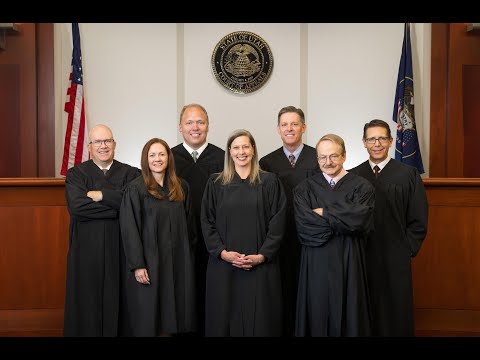
A three-judge panel of the Utah Court of Appeals heard oral argument in the appeal by Debbie Yourren, who was convicted on charges including exploitation of a vulnerable adult and theft.
A three-judge panel of the Utah Court of Appeals heard oral argument on an appeal brought by Debbie Yourren, who was convicted on charges including exploitation of a vulnerable adult and theft. Appellant counsel argued the state failed to provide constitutionally adequate notice through a bill of particulars and that the trial record left open a unanimity problem that requires reversal or further proceedings.
The issue at the center of argument was whether the prosecution’s pretrial disclosures and the trial court’s handling of procedural requests gave Yourren fair notice of the state’s precise theory and, relatedly, whether the jury was required to be unanimous about which particular acts supported a multi-act theft or exploitation count. Appellate counsel said the bill of particulars and other pretrial materials left the defense unable to prepare and that the district court’s refusal to adopt a defense special verdict form — and the absence of an instruction tying jurors to a single incident — meant the jury could have convicted without agreeing on the same underlying act.
Appellant’s argument
Appellant counsel (identified in the transcript as Miss Taliaferra) told the court the prosecution presented a “throw everything against the wall” theory that forced the defense to prepare for many different contingencies. Counsel said the defense requested a bill of particulars more than once and that the instrument the court supplied did not meaningfully narrow the state’s theory. Counsel argued that, as a result, pretrial preparation and the trial itself were prejudiced: the defense had to present cross-examination and testimony against multiple hypothetical theories rather than a focused defense to a single, identified act or set of acts. Counsel also said the defense filed a special verdict form that would have required the jury to identify which incidents supported each count and that the court’s rejection of that form — coupled with no unanimity instruction about incidents — left the convictions vulnerable on appeal.
Counsel further contended the “single larceny” aggregation rule ought not to swallow distinct wrongdoing when the alleged acts differ in kind (for example, transfers of real property, post-death withdrawals, and grazing-permit actions). Counsel argued that the exploitation statute’s $5,000 threshold means the jury must be tied to a particular unit of prosecution or shown to have…
Already have an account? Log in
Subscribe to keep reading
Unlock the rest of this article — and every article on Citizen Portal.
- Unlimited articles
- AI-powered breakdowns of topics, speakers, decisions, and budgets
- Instant alerts when your location has a new meeting
- Follow topics and more locations
- 1,000 AI Insights / month, plus AI Chat