Get Full Government Meeting Transcripts, Videos, & Alerts Forever!
Get email alerts on the Criminal Procedure topic
No spam. Unsubscribe anytime.
Utah Court of Appeals hears appeal in alleged exploitation and theft case over notice, unanimity and jury instructions
Summary
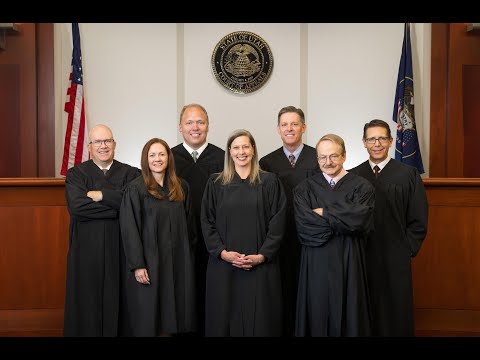
A three-judge panel of the Utah Court of Appeals heard oral argument in the appeal by Debbie Yourren, who was convicted on charges including exploitation of a vulnerable adult and theft.
A three-judge panel of the Utah Court of Appeals heard oral argument on an appeal brought by Debbie Yourren, who was convicted on charges including exploitation of a vulnerable adult and theft. Appellant counsel argued the state failed to provide constitutionally adequate notice through a bill of particulars and that the trial record left open a unanimity problem that requires reversal or further proceedings.
The issue at the center of argument was whether the prosecution’s pretrial disclosures and the trial court’s handling of procedural requests gave Yourren fair notice of the state’s precise theory and, relatedly, whether the jury was required to be unanimous about which particular acts supported a multi-act theft or exploitation count. Appellate counsel said the bill of particulars and other pretrial materials left the defense unable to prepare and that the district court’s refusal to adopt a defense special verdict form — and the absence of an instruction tying jurors to a single incident — meant the jury could have convicted without agreeing on the same underlying act.
Appellant’s argument
Appellant counsel (identified in the transcript as Miss Taliaferra) told the court the prosecution presented a “throw everything against the wall” theory that forced the defense to prepare for many different contingencies. Counsel said the defense requested a bill of particulars more than once and that the instrument the court supplied did not meaningfully narrow the state’s theory. Counsel argued that, as a result, pretrial preparation and the trial itself were prejudiced: the defense had to present cross-examination and testimony against multiple hypothetical theories rather than a focused defense to a single, identified act or set of acts. Counsel also said the defense filed a special verdict form that would have required the jury to identify which incidents supported each count and that the court’s rejection of that form — coupled with no unanimity instruction about incidents — left the convictions vulnerable on appeal.
Counsel further contended the “single larceny” aggregation rule ought not to swallow distinct wrongdoing when the alleged acts differ in kind (for example, transfers of real property, post-death withdrawals, and grazing-permit actions). Counsel argued that the exploitation statute’s $5,000 threshold means the jury must be tied to a particular unit of prosecution or shown to have unanimously agreed on the incidents that aggregate to that dollar amount; without that specificity, the defense said, the verdict cannot stand. Appellant also raised related claims that trial counsel’s special-verdict request and objections were preserved adequately and, alternatively, that any preservation failure warranted either plain-error relief or a finding of ineffective assistance.
State’s response and legal framing
The state, represented at oral argument by William Haynes, told the panel that even if the trial court had used narrower language in pretrial filings or the defense had asked differently, the substantial record (information, preliminary-hearing testimony and other sources) provided notice and that the outcome would not have been different. The state argued that the unit of prosecution for the exploitation statute is the victim and that multiple misuses of the same victim’s resources can be aggregated to a single count when they form a common plan or scheme. On the theft count, the state pressed that single-larceny doctrine and evidence of a continuous scheme narrowed the legal inquiry and that the jury need not be told to pick only one of many acts when the law treats the conduct as an aggregate offense.
Several statutory and precedential lines were litigated in the argument: counsel debated the Bell standard for prejudice in notice cases versus the higher harmless-beyond-a-reasonable-doubt standard applied when a defendant raises a constitutional claim that was not preserved; the panel questioned where Chadwick, Hummel, Taylor and more recent decisions (including a 2024 Baugh citation raised by appellant) fit in the preservation/ plain-error analysis. The panel probed whether simply submitting a special verdict form preserved a unanimity claim or whether counsel needed to obtain a more explicit ruling (or use the word “unanimous” or “unanimity”) to preserve the point for appeal.
Procedural posture and next steps
After extended questioning from all three judges about preservation, the scope of the single-larceny doctrine, the scope of the exploitation statute and whether defense counsel’s actions preserved the claims, the panel took the case under advisement. At the close of the argument the court indicated it would issue a decision in due course.
Why it matters
The appeal presses legal questions that recur in prosecutions that allege multi-act financial wrongdoing: how specific must pretrial notice be, what procedural steps preserve a unanimity challenge, and when multiple acts may be charged or treated in the aggregate. The answers affect how prosecutors charge multi-transaction schemes, how trial counsel prepares special-verdict requests and unanimity instructions, and what appellate showing is required to reverse convictions on notice or unanimity grounds.
Speakers
- Ryan Tenney — Judge, Utah Court of Appeals (chairing panel) (government) - Amy Oliver — Judge, Utah Court of Appeals (government) - Greg Orm — Judge, Utah Court of Appeals (appearing remotely) (government) - Miss Taliaferra — Appellant counsel for Debbie Yourren (unknown) - William Haynes — Counsel for the State (government)
Authorities
- court_case: Bell (referenced_by:["yoren-exploitation-theft-appeal"]) - court_case: Chadwick (referenced_by:["yoren-exploitation-theft-appeal"]) - court_case: Baugh (2024) (referenced_by:["yoren-exploitation-theft-appeal"]) - court_case: Taylor (referenced_by:["yoren-exploitation-theft-appeal"]) - court_case: Hummel (referenced_by:["yoren-exploitation-theft-appeal"]) - statute: exploitation-of-a-vulnerable-adult statute (threshold $5,000; exact citation not specified) (referenced_by:["yoren-exploitation-theft-appeal"]) - court_case: Strickland (referenced_by:["yoren-exploitation-theft-appeal"])
Clarifying details
- $5,000 threshold: the exploitation count discussed turns on whether aggregate misuse "exceeds $5,000". - Special verdict form: defense submitted a special verdict form; the district court said "I don't think we need it" (record cited at trial record page ~2287 in argument). - Trial narrowing: at directed-verdict stage the state limited the theft charge to transactions after the victim's death (as described in argument). - Preservation posture: panel repeatedly questioned whether merely submitting a verdict form preserved unanimity or whether counsel had to explicitly argue unanimity before the trial court.
Proper_names
[{"name":"Utah Court of Appeals","type":"agency"},{"name":"Ryan Tenney","type":"person"},{"name":"Amy Oliver","type":"person"},{"name":"Greg Orm","type":"person"},{"name":"Debbie Yourren","type":"person"},{"name":"Bill Henroyd","type":"person"},{"name":"Miss Taliaferra","type":"person"},{"name":"William Haynes","type":"person"}]
Community_relevance
- geographies: ["Utah"] - impact_groups: ["defendants in multi-transaction financial prosecutions","criminal defense attorneys","prosecutors"]
Meeting_context
- engagement_level: {"speakers_count":6,"duration_minutes":~120,"items_count":1} - implementation_risk: "low" - history: [{"date":"not specified","note":"Appeal argued, decision to follow"}]
searchable_tags:["criminal appeals","exploitation of vulnerable adult","unanimity","special verdict","single larceny","notice","bill of particulars","Utah Court of Appeals"]
provenance:{"transcript_segments":[{"block_id":"b1004.475","local_start":0,"local_end":120,"evidence_excerpt":"We have 2 cases set for argument today. The first of which is state versus I'm gonna let you pronounce the last name for me the first time.","tc_start":"00:16:44","tc_end":"00:17:44","reason_code":"topicintro"},{"block_id":"b2762.125","local_start":0,"local_end":120,"evidence_excerpt":"We will do our very best issue decision as soon as we can. Without the case, we'll be submitted.","tc_start":"00:45:62","tc_end":"00:46:02","reason_code":"topicfinish"}]}
salience:{"overall":0.62,"overall_justification":"Appeal addresses core criminal-procedure questions (notice/unanimity) that commonly affect convictions and appellate standards.","impact_scope":"regional","impact_scope_justification":"Issues govern Utah trial and appellate practice and could influence charging and defense strategy statewide.","attention_level":"medium","attention_level_justification":"Practitioners and defense bar will track outcome; limited immediate public policy impact.","novelty":0.3,"novelty_justification":"Doctrinal application of existing doctrines rather than novel statutory interpretation.","timeliness_urgency":0.45,"timeliness_urgency_justification":"Case already on appeal; decision will affect ongoing and future cases but is not emergency.","legal_significance":0.67,"legal_significance_justification":"Could change how unanimity and notice preservation are applied in multi-act prosecutions.","budgetary_significance":0.0,"budgetary_significance_justification":"No budgetary impacts noted.","public_safety_risk":0.0,"public_safety_risk_justification":"No immediate public safety implications.","affected_population_estimate":1000,"affected_population_estimate_justification":"Estimate of Utah criminal defendants and attorneys affected annually.","affected_population_confidence":0.4,"affected_population_confidence_justification":"Rough projection based on typical number of related prosecutions per year."},