Get Full Government Meeting Transcripts, Videos, & Alerts Forever!
Get email alerts on the Taxes Fees topic
No spam. Unsubscribe anytime.
Mat-Su Assembly advances advisory ballot question on 7¢ motor-fuel excise tax after weeks of debate; ordinance continued to December
Summary
The Matanuska-Susitna Borough Assembly approved an amendment to put a proposed 7¢ per-gallon motor-fuel excise tax on the November advisory ballot, adopted a tied 50/50 revenue-allocation amendment and continued formal action on the ordinance to the first meeting in December.
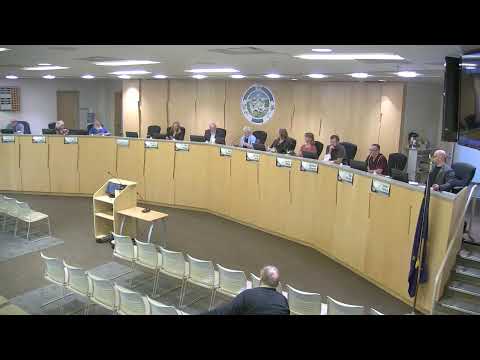
The Matanuska-Susitna Borough Assembly voted on multiple amendments to a proposed 7¢ per-gallon motor-fuel excise tax ordinance on Aug. 5, approving an amendment to place an advisory question about the tax on the November ballot, adopting a change to the proposed revenue allocation and continuing final consideration of the ordinance until the assembly’s Dec. 2 meeting.
The advisory ballot amendment, moved by Assemblymember Stephanie Nowers and described to the assembly as nonbinding, would ask voters whether the borough should adopt a 7¢ motor-fuel tax for a 1½-year trial period and direct the borough manager to propose budgets that allocate 30% of revenue to reduce property taxes and 70% to voter-approved road projects. Nowers told the assembly, “My amendment is to place this on the ballot for an advisory vote in November.”
The assembly then amended the advisory language to change the proposed allocation, with Assemblymember Maxwell Sumner successfully proposing a 50/50 split between property-tax reduction and voter-approved road projects. Sumner said the change would frame the question voters would consider about how any revenue should be spent. The 50/50 amendment passed; the record shows Assemblymember Dee McKee voted against that change.
Members then voted to continue formal action on the underlying ordinance (Ordinance 25-076) until the assembly meeting on Dec. 2, 2025, allowing additional public engagement between now and the ballot. The assembly also recorded the primary advisory-amendment vote as passing with two members opposed (Assemblymember Dimitri Fonoff and Assemblymember Tim Hale).
Why it matters: The fuel excise tax would create a revenue source that proponents say could reduce pressure on property taxes and provide up-front funding for road projects without selling more bonds. Opponents described the tax as regressive and warned it would raise costs for commuters and for goods moved by diesel trucks, which would affect grocery and building costs. The debate exposed sharp disagreement among residents and assembly members about how to pay for repairs and expansions of roads across a borough that has grown rapidly in recent decades.
What the assembly discussed: Proponents and several assembly members stressed two recurring points: (1) the tax would capture contributions from non-resident drivers who use Mat-Su roads, and (2) a limited-duration excise tax with explicit accounting and a sunset clause might build public trust. Opponents — including many people who spoke during audience participation — argued the borough should first find internal cuts or other revenue sources (marijuana, alcohol, or other excises were suggested) and that a fuel tax would disproportionately affect low-income households, seniors and commuters.
Public engagement and next steps: Dozens of residents testified during the public-comment period, the majority urging rejection of a gax tax and asking the assembly to find cuts in the budget first. Borough staff and the manager offered to hold town-hall meetings before the election to explain rate scenarios and bond versus tax trade-offs. The assembly left the ordinance itself open for amendment and final vote at its Dec. 2 meeting but directed staff to place the advisory question on the Nov. ballot as amended.
What the advisory question says (as read in the meeting): the advisory question would ask whether the borough should adopt a 7¢ per-gallon motor-fuel tax for 1½ years, automatically ending after that period, and would estimate it to generate roughly $5 million annually. The advisory language included a recommended allocation of revenue; the assembly changed that allocation in its amendment to 50% for property-tax reduction and 50% for voter-approved road projects.
Budget context: Assembly and staff discussed the difficulty of producing precise revenue or taxpayer-impact estimates for a fuel excise tax because Mat-Su lacks a historical local fuel-excise dataset; staff used DMV registration data and other proxies for projections and said the borough would use a short initial term and accounting transparency to evaluate actual collections before committing long-term.
Ending: The assembly’s amendments mean voters will see a nonbinding question about a 7¢ fuel excise tax on the November ballot, with the ordinance itself returned to the assembly’s agenda for final action on Dec. 2. The debate highlighted competing priorities for borough revenue — reducing property-tax pressure, funding roads, limiting bond financing costs, and protecting low-income and rural households from regressive charges.