Get Full Government Meeting Transcripts, Videos, & Alerts Forever!
Get email alerts on the Public Safety topic
No spam. Unsubscribe anytime.
Michigan State Police detective outlines UPSET drug‑task‑force structure, funding and local impacts in Delta County meeting
Summary
Detective Lieutenant Tim Schollinger of the Michigan State Police told the Delta County Board on Aug. 5 that the Upper Peninsula Substance Enforcement Team (UPSET) is a multiagency task force that relies on local contributions, Byrne JAG grant reimbursements and tribal 2% funds to sustain officer positions and operations.
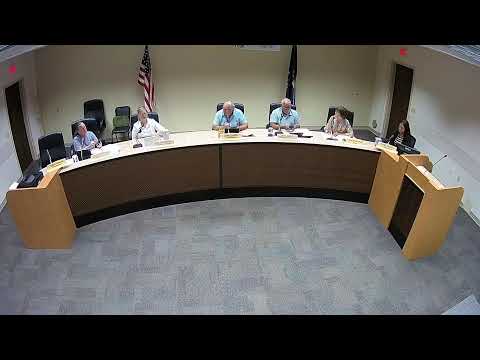
Detective Lieutenant Tim Schollinger of the Michigan State Police told the Delta County Board of Commissioners on Aug. 5 that the Upper Peninsula Substance Enforcement Team (UPSET) operates as a multiagency regional drug‑investigations task force that relies primarily on local contributions, federal Byrne JAG grant reimbursements and tribal 2% funds to support officer positions and operational expenses.
Schollinger described UPSET’s four offices across the Upper Peninsula and its federal partnerships, saying the FBI has deputized task‑force officers through a Safe Trails Task Force agreement so investigations can proceed on and off tribal lands and be forwarded to the U.S. Attorney’s Office for potential federal prosecution. He said UPSET also receives assistance from the Bureau of Indian Affairs, ATF, DEA and Homeland Security Investigations and that National Guard and Michigan State Police analysts provide local intelligence support.
The presentation focused on how UPSET is funded and why local agencies provide officers. Schollinger said local municipalities that assign a detective to UPSET are eligible for partial reimbursement of that officer’s salary through the Byrne JAG grant (he described a reimbursement rate of roughly 35%); he also said UPSET applies for other grants, and that tribal 2% funds and one‑time private donations (he cited a past $200,000 donation from Cleveland‑Cliffs) have helped the team expand. "When you give one detective off the road, you don't just lose a detective in uniform—you gain a plethora of detectives, federal agents that will come and help you on any UPSET investigation when you ask," Schollinger said.
Commissioners asked several funding and allocation questions. A commissioner noted Delta County’s recent allocation of about $99,600 to UPSET and asked why Delta and Marquette appear to be the largest contributors; Schollinger explained that the Byrne JAG reimbursement applies only when a county or city places an officer on UPSET (he named Marquette City, Marquette County, Delta County, Escanaba Public Safety and Menominee as jurisdictions that have received that reimbursement) and that variations in individual officers’ pay rates and the inclusion of an administrative assistant in UPSET’s budget can change the dollar amounts allocated to a given county. A county staff member (identified in the meeting as "Sherry") confirmed that Delta County had received reimbursements and that spreadsheet differences could reflect those reimbursements being shown separately.
Schollinger provided examples of recent UPSET cases and operational results, including seizures he said included a pound of crystal meth, an interdiction which yielded 150 fentanyl pills concealed internally, and arrests that were later prosecuted in federal court. He said some investigations have identified out‑of‑state sources and that several ongoing federal indictments were pending in the U.S. Attorney’s Office. He also described UPSET’s administrative improvements in recent years, including hiring a paid MSP administrative assistant and placing intel analysts in the region.
Schollinger told commissioners that UPSET’s primary funding model remains local contributions supplemented by grants and federal reimbursements, and he urged continuing Delta County support for maintaining a county detective on the team: "I do encourage that. Whatever you can do to maintain your officer on UPSET, I really support," he said. He provided contact information for UPSET including an office phone ((906) 228‑1002), PO Box 86, Marquette, MI 49855, and the website upsetdrugs.com for tips and questions.
The board took no formal action on the presentation. Commissioners thanked Schollinger and discussed how Delta County’s prior allocation relates to UPSET reimbursements; Schollinger said UPSET will continue to apply for federal and community grants to keep reimbursement levels for local partners high.
Ending note: Schollinger requested continued county support for local officers on UPSET and offered to provide business cards and follow up with township officials who had asked about contributing to the team.