Get Full Government Meeting Transcripts, Videos, & Alerts Forever!
Get email alerts on the Unified Development Ordinance topic
No spam. Unsubscribe anytime.
Overland Park council reviews Unified Development Ordinance update; debate centers on flexibility, open space and local oversight
Summary
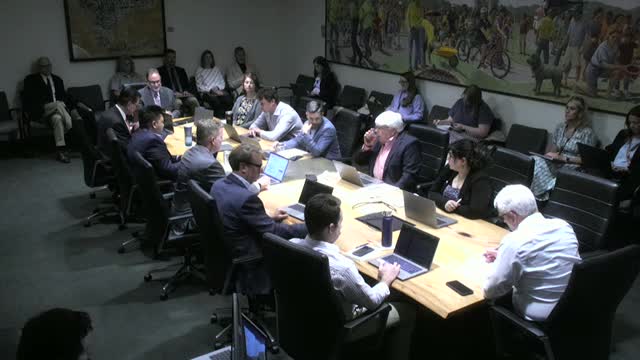
At its Aug. 4, 2025 meeting, the Overland Park City Council heard a presentation on the Unified Development Ordinance (UDO) update and discussed options for district consolidation, open-space requirements and administrative relief mechanisms intended to implement Framework OP.
At its Aug. 4, 2025 meeting, the Overland Park City Council heard a presentation on the Unified Development Ordinance (UDO) update and discussed options for district consolidation, open-space requirements and administrative relief mechanisms intended to implement Framework OP.
The UDO update, the presenter said, is intended to align zoning code language with Framework OP and make the ordinance easier to read and apply. Mark, the project presenter, told the council the team held 14 stakeholder meetings and completed an initial code-audit background report. "Framework OP is basically a policy document, has some legal standing, but it all the nice things in the plan don't happen unless the ordinance lines up with it," he said.
Why it matters: the UDO sets zoning districts, allowed uses, dimensional standards and procedures that determine what can be built and when projects must seek variances, deviations or rezoning. Changes to the UDO would affect developers, property owners and neighboring residents citywide, and could reduce the number of cases needing public hearings if more administrative options are built into the code.
Key points from the presentation
- Stakeholder outreach and background: The team reported 14 stakeholder meetings and an initial background/code-audit document that synthesizes issues into roughly 25 topic headings for review. The presenter described the current body of code and related materials as about "a little over a thousand pages." (presentation summary)
- District structure and consolidation: The consultant said Overland Park currently has about 56 mapped districts when legacy Johnson County and Oxford Township regulations are included; roughly 33 districts appear in the city UDO alone. About 80% of the city is zoned under the UDO and about 20% under legacy county/township rules. The team proposed evaluating consolidation (fewer districts with layered options) to streamline the code and reduce rezoning needs.
- Planned development and deviations: Roughly 21% of the mapped area is under plan development. The presenter outlined the difference between conventional districts, planned development (which allows deviations through the preliminary/final plan process) and open-ended planned unit development (PUD) approaches for exceptional projects.
- Uses, dimensional standards and relief mechanisms: The team recommended reorganizing the long lists of uses into charts/matrices to improve usability. They discussed existing relief routes: variances (Board of Zoning Appeals), deviations through plan development, staff-processed modifications and possible use of "special exceptions" as an alternate path to process some encroachments or rooftop/screening exceptions without the strict legal hardship standard that governs variances.
- Open space options: The consultant reviewed options ranging from keeping current voluntary approaches to mandating specific open-space amounts by district, by planned development, or using "layered" districts that permit smaller lots in exchange for required open space. He cited existing RPOE/RPOS districts that require about 30–40% open space with 10–20% of that accessible to residents as an example of how mandatory open-space programs function in the code.
Council discussion and concerns
Councilmembers broadly supported the UDO update's goals but raised three recurring themes: (1) how much authority the council wants to retain versus delegating to administrative staff; (2) the need for predictability for neighbors and developers; and (3) how to address South Overland Park, where stakeholders and councilmembers said current mapped districts create gaps between very large (20-acre) and much smaller (1-acre or 8,000-square-foot) options.
Several councilmembers said they favor more administrative review to speed projects that clearly meet objective standards, while reserving council review for rezonings, major deviations or controversial proposals. Councilmember Drew noted the downtown form-based code envisioned administrative certainty but observed it has produced few fully administrative approvals in practice. Councilmember Sam urged that predictability be extended to neighbors as well as to developers: "...the promise of Framework OP and revising the UDO...was to eliminate a lot of this contention," he said.
On the southern areas of the city, councilmembers asked for targeted stakeholder work and early council touchpoints so that ward-specific concerns—particularly about density and the appropriate range of lot sizes—are surfaced before a final draft is released.
Project status and next steps
The presenter said the project is in an early stage: the background study and stakeholder outreach are complete and staff estimates the work is about 20–25% finished. Next steps include rolling the code changes into district and standards drafts, preparing shorter issue white papers on topics such as the downtown/farm district or drive-through businesses, and continued consultation with the technical advisory panel and stakeholders. Staff indicated they will return with drafts and want continued council feedback on the balance between administrative review and cases that should return to the council for decision.
Ending
No formal motions or votes were recorded on the UDO update during the meeting; the council asked staff and the consultant to continue drafting code options and to engage additional stakeholders, particularly for South Overland Park. The council directed staff to keep members informed as drafts and specific recommendations are prepared.